The Great Australian Holiday Park Boom: How Caravanning Became Big Business
- Written by: The Times
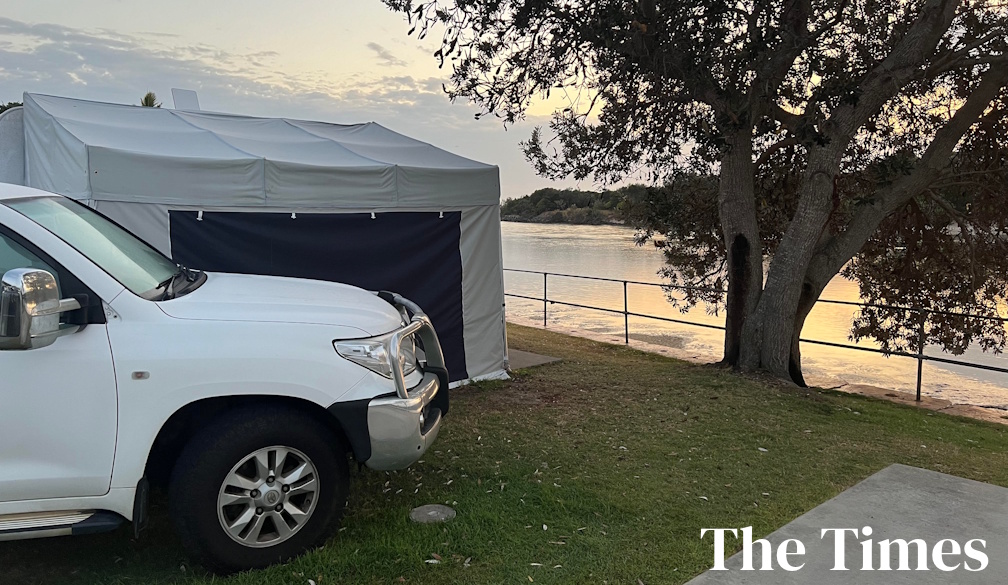
For generations, the Australian caravan park was one of the simplest businesses in tourism.
There was a patch of ground for the caravan, a power point if you paid a little more, an amenities block, perhaps a swimming pool and a kiosk selling ice creams.
Families arrived with tents. Retirees arrived towing caravans. Children disappeared on bicycles until dinner.
Much of that still exists.
But surrounding it is an increasingly sophisticated multibillion-dollar leisure industry.
The humble caravan park has evolved into the holiday park.
Prime waterfront land that once accommodated inexpensive caravans and basic cabins can now contain premium villas, swimming pools, water parks, playgrounds, restaurants, camp kitchens, entertainment facilities and accommodation capable of competing with conventional resorts.
Australians haven't stopped camping.
We have industrialised leisure.
Australians are taking to the road
The scale of the market is extraordinary.
Tourism Research Australia recorded 17.3 million domestic overnight caravan and camping trips during 2025 — the highest annual figure on record.
Those travellers spent 57.9 million nights away and approximately $12.6 billion during their trips.
Almost one in every seven domestic overnight trips in Australia involved caravanning or camping.
This is no longer a tourism niche.
It is an important component of the Australian visitor economy.
The caravan is only part of the story
The expression "caravan park" increasingly understates what many properties have become.
Modern holiday parks accommodate several markets simultaneously.
One guest arrives towing a caravan.
Another drives a motorhome.
A young couple pitches a tent.
A family books a two-bedroom cabin.
Another family books what amounts to a waterfront villa, complete with kitchen, bathroom, air conditioning, television and deck.
They may all use the same swimming pool, barbecue area, playground and beach access.
That ability to sell very different accommodation products from the same property is part of the attraction of the business model.
The valuable square metre
There is another economic transformation taking place.
Holiday park operators have become increasingly sophisticated about what every square metre of their properties can produce.
A piece of land occupied by inexpensive long-term accommodation may potentially generate considerably more revenue as tourist accommodation.
An older cabin can potentially be replaced by a modern villa commanding a substantially higher nightly tariff.
A basic powered site can become particularly valuable during Christmas, Easter, school holidays, long weekends and major events.
The location hasn't changed.
The economics have.
Welcome to demand pricing
Australians are already familiar with variable pricing when buying airline tickets and hotel rooms.
Holiday parks increasingly operate within the same tourism economy.
A cabin or caravan site that has one value during a quiet midweek period can have a substantially different value when almost every available site in a coastal destination is wanted simultaneously.
That can frustrate travellers accustomed to thinking of caravan parks as inexpensive accommodation.
But commercially, the logic is straightforward.
There are only so many waterfront sites.
When demand exceeds supply, their value rises.
The caravan site has become a perishable tourism product: if tonight passes without somebody occupying it, tonight's revenue can never be recovered.
Corporate Australia has noticed
The transformation is visible in the growth of large holiday-park groups.
G'day Group, for example, has grown from three caravan parks in Western Australia in 2004 into Australia's largest regional accommodation business.
Its Discovery network now encompasses more than 90 owned and operated holiday parks and resorts, while the broader G'day Parks network incorporates hundreds of independently operated properties.
Its interests extend beyond caravan sites into resorts, tourism experiences, digital booking technology and WikiCamps.
This is not simply a company selling camping sites.
It is a vertically expanding tourism business.
Why investors like holiday parks
A well-located holiday park possesses characteristics that are difficult to reproduce.
Beachfront land is finite.
Riverfront land is finite.
Land beside major national parks and tourist attractions is finite.
Planning restrictions can make the creation of competing properties difficult.
Meanwhile, the operator can potentially improve the revenue generated from the existing property through better cabins, additional tourist sites, improved facilities, stronger marketing and sophisticated online booking systems.
That combination helps explain why major operators continue acquiring and redeveloping parks.
Councils have valuable assets too
Not every holiday park belongs to a corporation.
Australian councils control some exceptionally valuable holiday-park locations, particularly along the coast.
Properties historically regarded as community caravan parks can now represent important tourism infrastructure and potentially substantial sources of revenue.
That creates an interesting public-policy question.
A council holiday park has competing objectives.
It can provide affordable access to prime holiday destinations.
It can support surrounding businesses by attracting visitors.
It can also generate revenue from publicly controlled land.
Finding the appropriate balance between community access and commercial return is becoming increasingly important as the value of these properties rises.
The luxury cabin changed everything
Perhaps nothing demonstrates the transformation better than the cabin.
The old caravan-park cabin was often deliberately basic.
The modern premium holiday-park cabin can resemble a small resort apartment.
Some have multiple bedrooms, ensuites, full kitchens, large decks and extraordinary waterfront positions.
This opened the holiday-park industry to people who have absolutely no intention of buying a caravan.
You don't need a recreational vehicle to participate in the caravan economy anymore.
You need a booking.
The family gathering economy
There is another reason holiday parks work particularly well.
They accommodate groups unusually efficiently.
Grandparents can arrive in their caravan.
Their adult children can book a cabin.
Another branch of the family can occupy a nearby powered site.
Everyone has separate accommodation but shares the same recreational environment.
Weddings, birthdays, reunions, sporting weekends and extended-family gatherings consequently become part of the holiday-park economy.
That helps explain why popular coastal parks can be heavily booked on ordinary weekends, not merely during traditional holiday periods.
Regional Australia is the enormous beneficiary
The economic importance extends well beyond park owners.
Most caravan and camping activity occurs outside Australia's capitals.
Travellers buy fuel.
They visit supermarkets.
They eat at pubs and restaurants.
They buy coffee.
They pay for attractions.
They repair vehicles.
They buy fishing tackle, groceries, clothing and pharmaceuticals.
They stay another night because they like the town.
Tourism Research Australia says 87 per cent of caravan and camping nights in 2025 occurred in regional Australia.
Approximately $8.6 billion of expenditure while travelling was spent in regional Australia.
For many communities, the caravan and camping traveller isn't a peripheral visitor.
They are an important customer.
Shorter holidays can still mean enormous business
Cost-of-living pressures haven't destroyed the market.
Instead, traveller behaviour appears to be adapting.
Industry research indicates Australians are increasingly taking shorter trips and staying closer to home.
That potentially favours the holiday-park model.
A family doesn't necessarily need an airline ticket or a week away.
They can load the car on Friday afternoon and be somewhere entirely different by dinner.
The weekend itself becomes a tourism product.
Leisure has become an industry
This is perhaps the larger story.
Australians increasingly spend significant amounts of money creating experiences.
Caravans, motorhomes, boats, four-wheel drives, e-bikes and camping equipment are part of an enormous recreation economy.
But once those assets have been purchased, people need somewhere to use them.
Every evening thousands of recreational vehicles require somewhere to stop.
The most desirable locations are frequently beside beaches, rivers, lakes and tourist towns.
The site itself therefore becomes valuable.
And for travellers without the caravan, increasingly luxurious cabins allow them to purchase the same location.
The Times View
Australia's caravan parks haven't disappeared.
They have evolved.
The powered site, the tent and the communal barbecue remain, but around them has developed an increasingly sophisticated tourism industry.
Corporations are acquiring parks. Councils are recognising the value of their assets. Cabins have become villas. Booking systems have become sophisticated. Prime sites are increasingly priced according to demand.
Most importantly, Australians continue taking to the road.
Seventeen million trips in a year tell us something important about the way Australians want to spend their leisure time.
We still want the beach, the river, the open road and the freedom to explore.
Business has simply discovered how valuable that desire has become.