Dutton’s 2025 launch still leaves voters needing answers on key policies
- Written by: Michelle Grattan, Professorial Fellow, University of Canberra
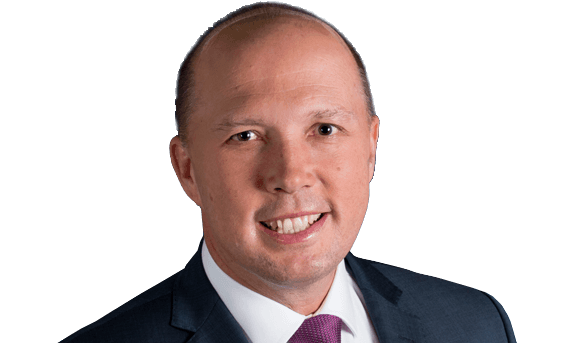
Opposition Leader Peter Dutton’s Sunday “soft launch” of his campaign for election year was carefully calibrated to pitch to the party faithful while seeking to project enough nuance to avoid alienating centrist voters.
It contained nothing new – there was no attention-catching big announcement to start the year.
Rather, this was Dutton (re)introducing himself (“I was born into an outer suburbs working-class family”) with a back story focusing on aspiration; canvassing Coalition priorities and policy offerings to date, and delivering the usual critique of Labor’s alleged incompetence and Prime Minister Anthony Albanese’s “weak” leadership.
“Weak leaders create hard times – but strong leaders create better times. And the next federal election is a sliding doors moment for our nation,” Dutton told his handpicked Melbourne audience. “A returned Labor government – in majority or minority – will see setbacks set in stone.”
Tony Barry, a one-time Liberal advisor who is now with Redbridge political consultancy, says: “In our research the biggest differentiated but salient leadership attribute between the two contestants [Dutton and Albanese] is strength and weakness. Dutton has a huge lead on perceived strength versus the perceived weakness of Albanese.
"So he’s framing his campaign around that attribute. But it’s important he also uses shared values to demonstrate other leadership attributes – trust, empathy, vision and hope.”
Barry also says it’s vital in appealing to “soft” (that is, undecided) voters to make clear the contest involves a choice, which Dutton played up on Sunday with the “sliding doors” reference.
A man who often appears two-dimensional and sometimes sounds extreme, Dutton in his address sought to present tonally as rounded and reasonable, while giving plenty to his base, including his stress on the importance of “coming together under our one flag”.
In outlining his credo, Dutton declared he believed, among other things, in egalitarianism, individual freedom, the rule of law and “in pushing back on identity politics”.
He also tried directly to counter what will be a sharp point of Labor attack in the campaign – his record as health minister in the Abbott government.
“As health minister, I created the $20 billion Medical Research Future Fund and increased hospital funding. Indeed, bulk billing was 84% under me compared to 77% today.” After the speech, the government was quickly out to remind us that Dutton had tried to introduce a co-payment for people to see their GP.
There were some neat lines in the address. “Mr Albanese says ‘this election is about the future versus the past’. I think the past three years are a good indication of what the future will look like under a returned Labor government.”
And, “with Labor acting like an opposition in government, we’ve acted like a government in opposition.”
There was also some wild, inaccurate exaggeration. Condemning the surge of antisemitism in Australia, Dutton claimed, “every incident of antisemitism can be traced back to the prime minister’s dereliction of leadership in response to the sordid events on the steps of the Sydney Opera House”.
It was notable Dutton chose Victoria for the event. Two years ago he was routinely described as being “toxic” in that state. Now Liberal sources say things have changed – there are still challenges with him there but he is more palatable.
The Victorian state Liberals have been a shambles, however, in the wake of the extraordinary Moira Deeming affair, culminating in the state party replacing its leader just before Christmas. Liberals worry about the preparedness of the Victorian party organisation ahead of the federal battle.
Nevertheless, the Liberals are in a serious hunt for seats in Victoria, hoping to capitalise on the unpopularity of the state Labor government. That unpopularity will be tested in a February 8 state byelection in the Labor seat of Werribee.
One Liberal target is Chisholm, where Sunday’s event was held. Chisholm was lost in 2022 by Gladys Liu, a Liberal MP of Chinese heritage. The Liberals this time are running Katie Allen, former MP for Higgins, who was also defeated in 2022.

Allen was set for another tilt in Higgins but the seat was abolished in the redistribution. She then replaced the male candidate who’d been nominated for Chisholm. Labor holds the seat on a 3.3% margin.
One question is how the large Chinese vote will go. Labor claims the reservations about Dutton among Chinese-Australians are as strong as they were about Scott Morrison.
Dutton will likely be pleased enough with his Sunday outing. But the reality is in the cliche, “the devil is in the detail”, on which he gave nothing fresh.
During the Voice referendum Dutton constantly complained the government wouldn’t give enough detail, or that the detail didn’t stand up. Much the same can be said of key policies Dutton is putting forward for the coming election.
The modelling for his nuclear plan has been dismissed by many well-qualified critics. His initiatives on the housing crisis hold no guarantee of delivering the number of homes needed in the time required. There are well-founded doubts over seeming inconsistencies in his immigration plans.
Dutton keeps promising more answers later, but at some point this will start to look like a ploy for concealing the vacuums that need filling with finer print.
Meanwhile, we are still waiting for him to announce his reshuffled frontbench, including a new shadow foreign minister, that was expected before Christmas. Here he has the choice of doing some patch-ups – adding vacant portfolios to the responsibilities of existing shadows – or making more substantive changes that he would expect to take into government if he won the election.
References
- ^ Diego Fedele/AAP (photos.aap.com.au)