



Brisbane celebrates 25 years of Roma Street Parkland
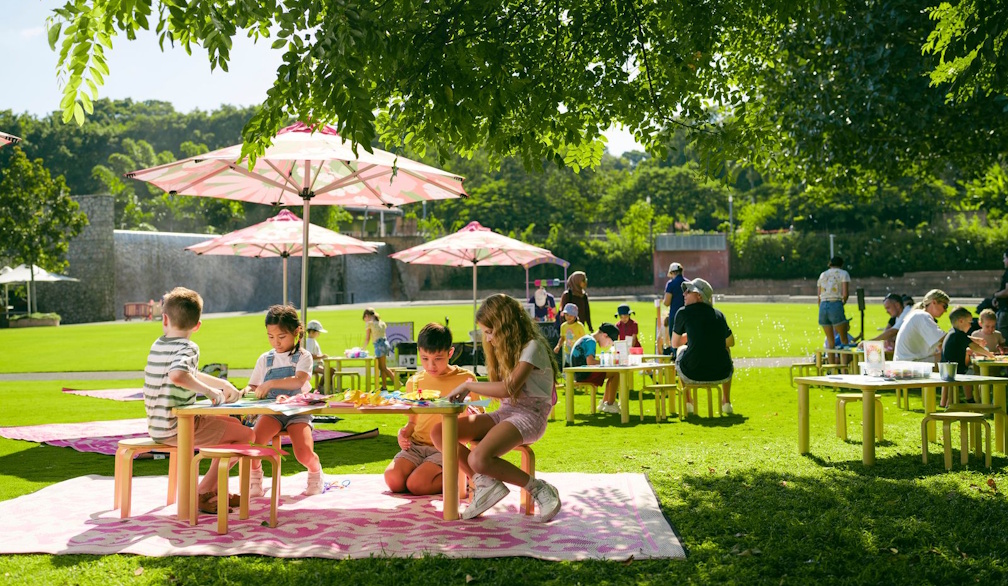
One of Brisbane’s gardening jewels will mark its 25th anniversary on April 6, commemorating the $72 million transformation of the former inner-city railway goods yard into a world-class, 16-hectare urban green space.
More than 50 million visitors have enjoyed Roma Street Parkland since its official opening in 2001, cementing its place as a vital cultural, horticultural and civic asset in the heart of the Brisbane CBD.
The Parkland has become a benchmark for urban green space development in Australia and is one of only seven parks in the country to hold the prestigious international Green Flag Award, which it has maintained continuously since 2014.
The Parkland’s origins stretch past its 2001 opening and has been recognised as a gathering place for Brisbane’s traditional owners, the Turrbal and Jagera/
In Queensland’s colonial era, it was the bustling commercial life of the Roma Street Markets until 1964 and spent more than a century as the state’s most important rail freight hub.
Queensland Minister for Housing and Public Works and Minister for Youth Sam O’Connor said Roma Street Parkland is one of Queensland's most treasured public spaces, a world-class urban green space that has been enjoyed by millions of people over the past 25 years.
“Milestones like this are a chance to celebrate the places Queenslanders love, especially as we get ready to share our state with the world in 2032,” Minister O’Connor said.
Brisbane Lord Mayor Adrian Schrinner said the transformation of the former rail freight precinct into Roma Street Parkland was an important milestone in Brisbane’s evolution.
“Transforming this former rail yard into Roma Street Parkland has helped shape the Brisbane we know today,” Cr Schrinner said.
“More than 1,200 trees, 100,000 shrubs and hundreds of palms have been planted to create this world-class destination in the heart of our city.
“Few places bring together history, gardens, art and community as seamlessly as Roma Street Parkland.
“Today, it welcomes two million visitors each year and showcases why Brisbane is the world’s most family-friendly city and Australia’s lifestyle capital."
The former Roma Street rail freight precinct and adjacent heritage Albert Park was turned into the award-winning precinct and is managed by City Parklands, a wholly-owned
The Parkland’s innovative water management system, which stores 11 million litres in its centrepiece lake and a further 400,000 litres in an underground tank beneath Celebration Lawn, means it can meet up to 98 per cent of its irrigation requirements from on-site harvested water.
The Spectacle Garden alone supports more than 10,000 seasonal plantings each year.
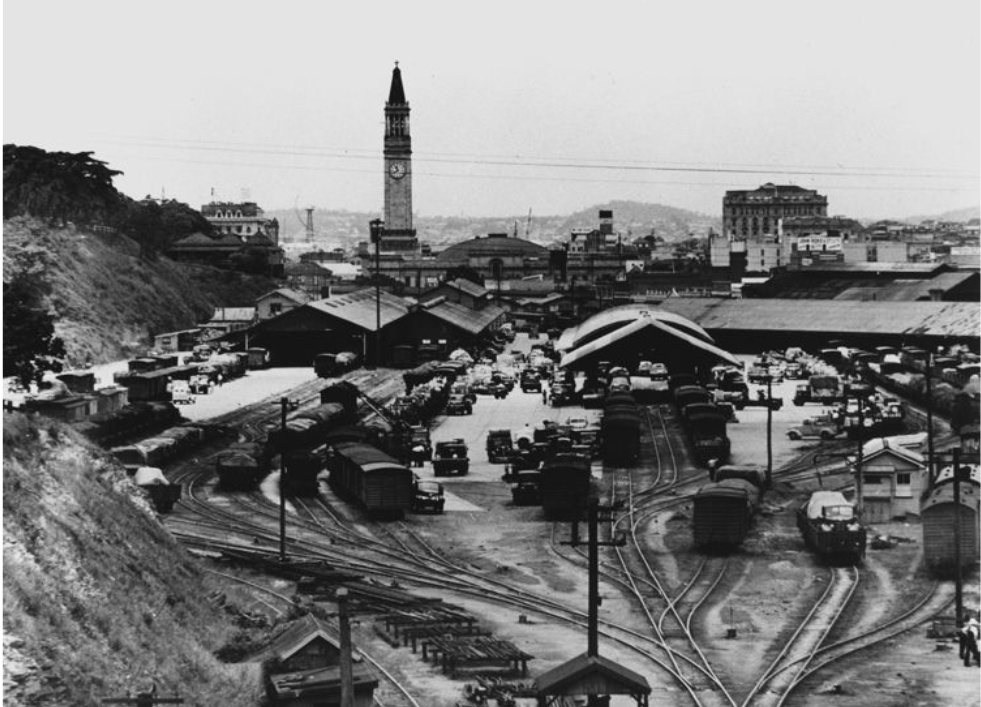
Roma Street railway station, Brisbane, Queensland ca. 1953
The Site
-
16 hectares in total size (including public green spaces and operations compound)
-
Located on the site of the former Roma Street railway goods yards, plus the heritage Albert Park (gazetted 1877)
-
$72 million development cost, funded by the Queensland Government
-
Delivered on time and on budget in 15 months (January 2000 – April 2001)
-
Officially opened 6 April 2001
Visitation & Community
-
2 million+ visitors per year
-
54 volunteers at Roma Street Parkland who garden, assist with visitor information and lead guided tours
-
Home to the Queensland Wall of Greats
Construction & Landscaping
-
554,300 cubic metres of rock and earth excavated during the railway yards expansion (1911–1920) — equivalent to 110 football fields one metre high — creating the dramatic escarpment still visible today between the Lake Precinct and Upper Parkland
-
300,000+ cubic metres of fill brought in for site contouring during parkland construction (2000–2001)
-
1,200 mature trees planted
-
100,000 shrubs planted
-
350 palms planted
-
15 kilometres of irrigation lines installed
Water
-
Lake surface area: 6,000m²+
-
Lake maximum depth: 2.5 metres
-
Lake capacity: 11 million litres — equivalent to 6 Olympic-size swimming pools
-
Underground water tank beneath Celebration Lawn: 400,000 litres (installed 2008)
-
Irrigation system: 4,500+ sprinklers, 950+ solenoid control valves, 18 kilometres of control wiring, 35+ kilometres of irrigation pipes
-
The large waterwall pumps nearly 300 litres of water per second
-
Up to 98% of irrigation needs can be met by on-site harvested water
Horticulture
-
10,000+ annuals planted in Spectacle Garden every year
-
Fig trees aged 150+ years
Public Art
-
16 Brisbane artists commissioned at the time of construction
-
Total value of artworks at installation (2001): $1.2 million
The Railway Era (Context & Colour)
-
Roma Street Station established: 1875
-
Railway goods yards in operation for over 115 years before relocation
-
Rail freight relocated to Acacia Ridge: 1991
-
At peak, Roma Street was the largest goods depot in Queensland, linked to all trunk and branch lines statewide by 1924
Awards
-
Urban Design Award, Royal Architecture Institute of Australia (Queensland Chapter), 2006
-
Green Flag Award — held continuously since 2014 (one of only seven parks in Australia to hold this international accreditation as at 2026)
-
Landscape Architecture Award (Play Spaces), Australian Institute of Landscape Architects Queensland, 2017










