Were the US actions in Venezuela legal under international law? An expert explains
- Written by: Sarah Heathcote, Honorary Associate Professor in International Law, Australian National University
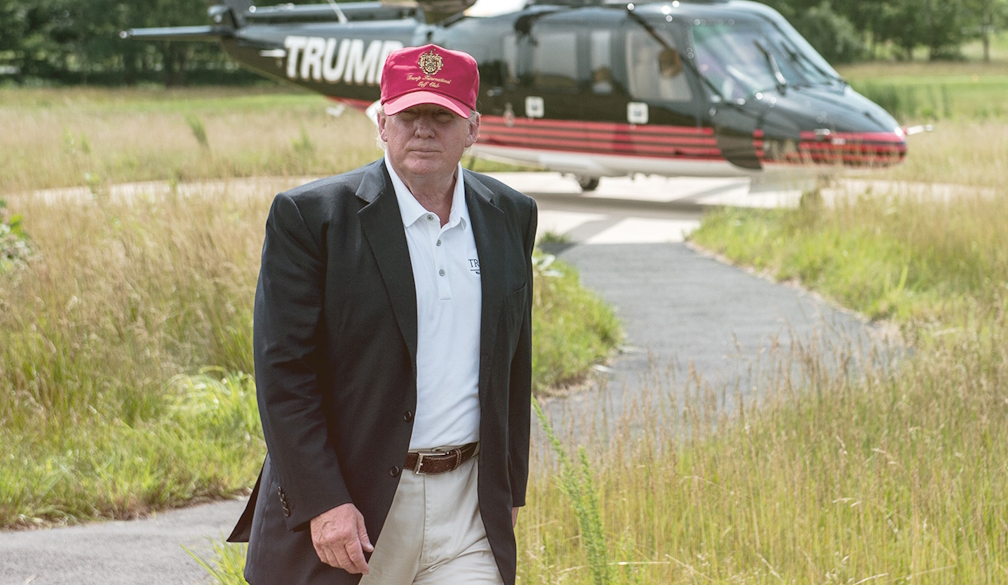
United States President Donald Trump has said[1] the US will “run” Venezuela until a new government is installed, following the US military intervention in the country’s capital, Caracas.
American forces have seized Venezuela’s president, Nicolás Maduro, and his wife, and brought the pair to the US to face what Trump has described[2] as a “narco-terrorism” trial.
This follows months of build-up of US military forces in the region.
The Russian Foreign Ministry has said[3] the US attacks are:
an act of armed aggression against Venezuela. This is deeply concerning and condemnable. The pretexts used to justify such actions are unfounded.
So, what does international law say?
Was this an act of ‘force’ under the UN charter?
Article 2(4) of the United Nations Charter[4] says:
All members shall refrain in their international relations from the threat or use of force against the territorial integrity or political independence of any state, or in any other manner inconsistent with the purposes of the United Nations.
Russia’s framing of the US’ Venezuela intervention as a condemnable “act of armed agression” is at least an affirmation of its own belief in the existence of international law.
Similarly, Russia appeals to international law when it claims, spuriously, that its own actions in Ukraine are justified under exceptions to the prohibition on armed aggression – or that they are mere “operations” within its own territory, and so for different legal reasons, lawful under international law.
Commentators have been quick to describe[5] the US strikes in Venezuela as a breach of article 2(4) of the UN charter.
The US’ actions are only lawful if supported by a resolution from the UN Security Council; if the US was acting in self-defence; or – and this is often overlooked – if there was consent by the lawful government of Venezuela to the intervention.
There was no UN Security Council authorisation for the US to intervene in Venezuela, nor has the US been the victim of an ongoing or imminent act of aggression by Venezuela.
A claim of consent by the lawful Venezuelan government might have more ostensible credit because evidence suggests[6] the 2024 presidential election was stolen from Maduro’s opponent, Edmundo González.
However, because the identity of the lawful government is contested (some countries have recognised[7] Maduro’s win in the 2024 election) and the opposition controls no Venezuelan territory, the US can only intervene on the legal ground of consent with a Security Council resolution.
So, if you define the US’ actions in Venezuela as an act of “force” within the meaning of article 2(4) UN Charter[8], then yes, the US has engaged in a prohibited act, since none of the justifications apply.
What if it was just a ‘law enforcement operation’?
For its part, the Trump administration appears to be arguing[9] the strikes on Venezuela were not a “use of force” in the first place, but rather a law enforcement operation.
In a press conference following the strikes, US Secretary of State Marco Rubio described[10] the Venezuelan president as “a fugitive of American justice”. (Given the US Congress was not notified before the Venezuela strikes, this framing comes across as an attempt to obfuscate the need for Congressional authority to use force under US domestic law).
What, then, if the intervention was not a “use of force” as defined by the UN charter, but merely a law enforcement operation?
In making this assessment, one has to take into account the operation’s scale, target, location and the broader context.
Media reports[11] have described 15,000 US troops[12] amassing in the region by December, and the recent deployment of a US aircraft carrier[13] near Venezuela.
Read more: Tracking the US build-up in the Caribbean[14]
The intervention in Venezuela came from the highest US authority (the president), targeted Venezuela’s acting head of state, and was executed against a background of unfriendly relations between the two states.
In this context, it is hard to see how this can be anything other than a “use of force” within the meaning of article 2(4) of the UN Charter.
It does not, in my view, constitute a law enforcement operation.
International law isn’t dead
Few will mourn the removal of Maduro, widely considered an autocrat. Democracy might even be restored to Venezuela.
Nonetheless, the US intervention in Venezuela was as brazen and unlawful[15] as its military strike on Iran in June last year. As such, it challenges international law.
But international law is not “dead” just because the most powerful no longer respect it.
Breaches of the law are normal in any legal system. Indeed, they are expected or there would not be a need for the rule.
International law is created by all states, not just the powerful few. This makes international community reactions to breaches particularly important.
So, to preserve the rules-based international order, all states need to call out breaches of the law when they occur, including in the current instance.
References
- ^ said (www.abc.net.au)
- ^ described (www.abc.net.au)
- ^ said (www.abc.net.au)
- ^ United Nations Charter (www.un.org)
- ^ describe (www.theguardian.com)
- ^ evidence suggests (www.theguardian.com)
- ^ recognised (www.newsweek.com)
- ^ article 2(4) UN Charter (www.un.org)
- ^ arguing (www.youtube.com)
- ^ described (www.youtube.com)
- ^ Media reports (theconversation.com)
- ^ 15,000 US troops (www.nytimes.com)
- ^ US aircraft carrier (www.bbc.com)
- ^ Tracking the US build-up in the Caribbean (theconversation.com)
- ^ brazen and unlawful (www.anu.edu.au)