Trump’s campaign against Maduro: the preparation, the capture — and what comes next
- Written by: The Times
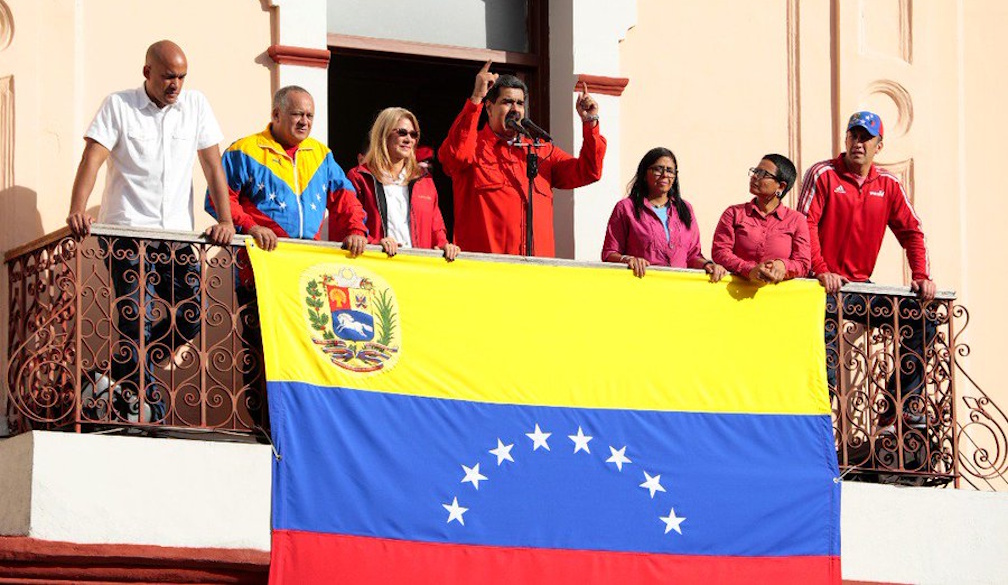
By the time the explosions lit up parts of Caracas in the early hours of January 3, 2026 (US time), the Trump administration’s confrontation with Venezuela’s Nicolás Maduro had already shifted from familiar pressure tactics—sanctions, seizures, diplomatic isolation—into something far more blunt: a months-long military and intelligence build-up designed to end with a single, televised outcome.
That outcome arrived with extraordinary speed. US forces struck targets in and around the Venezuelan capital and, within hours, President Donald Trump announced that Maduro and his wife, Cilia Flores, had been captured and removed from the country, with Maduro taken toward the United States to face prosecution.
If the reports hold, it is among the most dramatic US interventions in Latin America in decades—an event likely to reshape regional diplomacy, global oil politics, and the rules-and-precedents debate in Washington and beyond.
What follows is what we know so far about the preparation, the capture, and the hard questions now gathering speed.
Part I — The preparation: from “maximum pressure” to operational momentum
For years, Maduro’s government has been treated by Washington as an illegitimate, criminally implicated regime. That framing intensified in 2025 when the US State Department publicly increased its reward for information leading to Maduro’s arrest and/or conviction—signalling, at minimum, that Maduro was being pursued as a target, not merely opposed as a politician.
By late 2025, according to multiple reports, the Trump administration’s posture had moved from legal and economic pressure to a more kinetic approach:
-
Covert planning and regional positioning. The Associated Press reported “months of covert planning” and a “military build-up near Venezuela” preceding the operation.
-
Escalatory enforcement at sea. US actions against alleged drug-smuggling routes and vessels were reported as part of rising tensions leading into the strike—presented by the administration as counter-narcotics enforcement, but interpreted by critics as shaping conditions for a broader intervention.
-
Narrative groundwork: legitimacy, security, and crime. The administration’s argument—repeated across sympathetic US media coverage and official-style messaging—centred on transnational crime, narcotics trafficking, and Maduro’s criminal exposure, positioning a future operation as a security imperative rather than a discretionary war.
In short: the groundwork appears to have been laid along three tracks—legal targeting (rewards/charges), operational pressure (enforcement and positioning), and political narrative (security framing). It’s a pattern designed to make an extraordinary step feel like the “inevitable next step.”
Part II — The capture: what has been reported, and what is still contested
A “large-scale strike” in Caracas
On January 3, Trump announced the US had carried out a “large scale strike” and captured Maduro and Flores. Live reporting from major outlets described loud explosions, power disruptions, and rapidly evolving claims and counterclaims.
Removal from a military base — and transfer toward the US
The Associated Press reported that Maduro and his wife were captured and removed from a Caracas military base, then taken aboard a US warship and transported toward the United States for prosecution—describing Maduro as being taken “en route to New York.”
Immediate international reaction: “political solution” vs. shock at the method
Germany’s foreign ministry, for example, urged a political settlement and emphasised the importance of avoiding escalation and respecting international law—an early indicator of what may become the standard European line: Maduro lacks legitimacy, but the manner of removal matters.
The information fog: disinformation surges instantly
Within hours, social media platforms were flooded with recycled footage and AI-generated or manipulated content purporting to show the raid and public celebrations. Wired reported fake visuals spreading across TikTok, Instagram, and X, complicating verification and inflaming partisan narratives.
That last point is crucial: in the first 24–48 hours of an event like this, the story of the story becomes part of the operation. The Trump team benefits politically from images of precision and inevitability; Maduro loyalists benefit from images of chaos, civilian harm, and resistance. The truth can be slower than the algorithms.
Part III — What comes next: three fights at once
With Maduro reportedly in US custody, the crisis now splits into three simultaneous contests: Venezuela’s internal power struggle, the international-law and legitimacy battle, and the economic/energy endgame.
1) Who governs Venezuela tomorrow morning?
The most immediate question is brutally practical: who controls the institutions—the armed forces, intelligence services, ports, airports, state oil infrastructure, and the broadcast narrative inside the country.
Early reporting suggested protests and deep uncertainty on the ground, with conflicting accounts of casualties and disruptions.
If Maduro’s inner circle fragments, the path may open to a transitional arrangement. If it consolidates, Venezuela could slide into a resistance dynamic—political, paramilitary, or both.
2) Was it legal — and does that matter right now?
In Washington, the legality question is already roaring: did the President act with congressional authorisation, and under what domestic or international-law theory?
The Associated Press reported immediate pushback and questioning in the US about the operation’s legality and the lack of congressional authorisation.
Internationally, Germany’s response is a preview of a wider debate: you can oppose Maduro and still warn that regime-change by force corrodes the rules-based order.
Even if Trump rides out the domestic legal storm politically, the precedent travels. Other powers will cite it—either as justification (“the US did it”) or as grievance (“the US broke the rules first”).
3) Oil, reconstruction, and the “we’re going to run the country” claim
Trump’s most explosive line may not be about Maduro at all, but about what Washington intends to do with Venezuela next. The AP reported Trump saying the US would temporarily run Venezuela and begin selling its oil to other countries, framing it as rebuilding broken infrastructure.
That moves the story from a capture operation into a long, punishing second act: governance. Running a country—even “temporarily”—means:
-
* securing oil fields and pipelines,
-
* stabilising electricity and logistics,
-
* managing civil order,
-
* confronting armed factions,
-
* creating a credible transition that isn’t seen as occupation.
It also means global markets will react to any realistic prospect of Venezuelan supply returning in volume—or being disrupted further by conflict and sabotage. For Australia, even though we’re not dependent on Venezuelan crude, global oil pricing flows into local petrol prices and freight costs, which then hit inflation and household budgets.
The Australian angle: why it matters here
Australia’s direct leverage in Venezuela is limited, but Australia has real interests in the second-order impacts:
-
Energy and inflation: any sustained oil shock—up or down—feeds into local prices.
-
Migration and humanitarian pressure: instability in Venezuela drives displacement through the region, increasing demands on neighbouring states and international assistance.
-
Rules-based order: Canberra routinely argues for consistent adherence to international law; allies expect support, but consistency becomes harder when methods are contested.
The bottom line
If the reports are confirmed and Maduro is indeed in US custody, Trump has achieved a stunning tactical objective: the removal of a long-standing antagonist in the hemisphere.
But strategy is the next test. Removing a leader is the opening move; creating a stable, legitimate, Venezuelan-owned political future—without triggering prolonged conflict, regional escalation, or international fracture—is the far harder mission.
And as the disinformation wave has already shown, the battle isn’t only on the ground in Caracas, or in the corridors of Washington. It’s also on the screens in everyone’s pockets.
Maduro's own social media page https://x.com/maduro_en?lang=en