


The global economic outlook for 2026 and beyond: slower growth, bigger cross-currents
- Written by: The Times
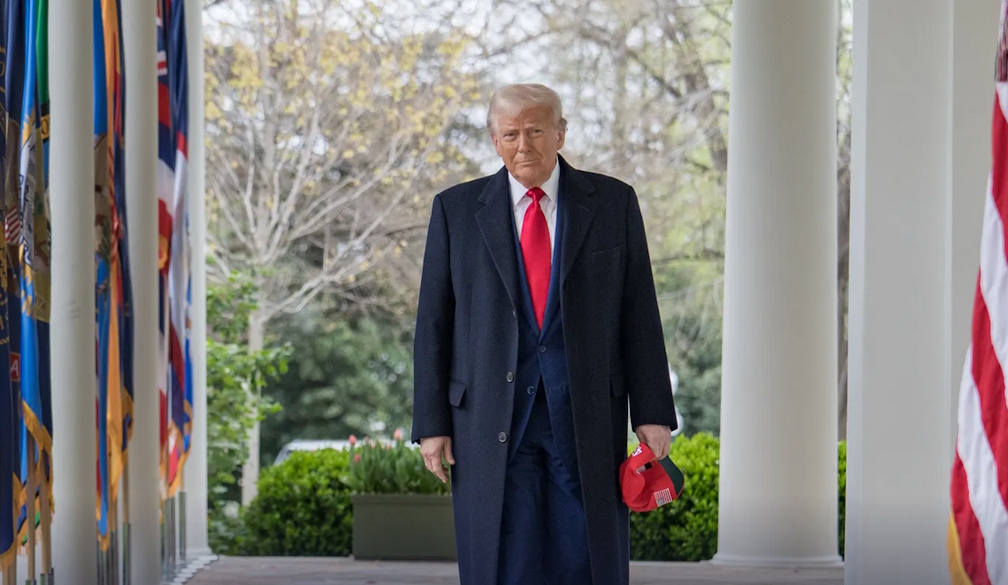
The world heads into 2026 with President Trump commanding the largest economy on the planet and with a slightly odd mix of progress and fragility: inflation has generally cooled from the post-pandemic spike, central banks are edging toward easier policy in many places, and yet the “engine room” of long-term growth looks weaker than it did a decade ago.
The big theme is not a single looming crash or a single boom, but a more shock-prone global economy—one where politics, supply chains, debt and climate events can move the dial as much as productivity and trade.
Forecasting agencies broadly agree on the direction, even if they differ on the exact number. The IMF’s October 2025 World Economic Outlook projects global growth slowing to 3.1% in 2026 (from 3.2% in 2025), with advanced economies around ~1.5% and emerging/developing economies just above 4%.
The OECD’s December 2025 Economic Outlook is a touch more downbeat for 2026, projecting world growth slowing to 2.9% in 2026 before lifting to 3.1% in 2027, while also expecting further policy rate reductions and easing labour markets. is more pessimistic again, putting world growth at 2.6% in 2025 and 2026, and emphasising weaker momentum in major economies and a challenging policy environment for trade.
Those numbers are not “recession” numbers. They are “muddle-through” numbers—and that’s exactly what makes the next few years so consequential. In a world growing at ~2.5–3.1%, the winners tend to be the countries that can still generate productivity growth and investment booms, while the laggards can quickly slip into debt and political stress.
1) The baseline: disinflation continues, rate cuts follow—but slowly
The central macro storyline into 2026 is that inflation keeps declining, though unevenly. The IMF expects global inflation to keep falling, with notable variation—still elevated risks in the United States, more subdued elsewhere. The OECD similarly expects G20 consumer inflation to moderate to 2.8% in 2026 and 2.5% in 2027, with inflation returning to target in “almost all major economies” by mid-2027.
That matters because it sets up the next act: monetary easing, but not a return to ultra-cheap money. Policymakers are trying to thread a needle:
-
Cut enough to keep growth afloat and avoid unnecessary unemployment.
-
Not cut so fast that inflation re-accelerates (especially if supply shocks hit again).
-
Not cut so much that asset bubbles and financial vulnerabilities rebuild.
The “beyond 2026” implication is important: if the world settles into a regime of moderate growth + moderate (but not tiny) interest rates, then balance sheets and business models that were built for the 2010s (near-zero rates) face ongoing pressure.
2) The new global drag: debt, deficits, and political limits
One reason growth looks “resilient but fragile” is that fiscal space is thinner. After pandemic support, energy-price shocks, and higher interest rates, governments are carrying larger debt burdens and facing higher servicing costs. The OECD notes “rising budgetary pressures” and assumes only limited tightening in many countries in the near term, before more consolidation appears in some economies later.
This is where economics merges with politics. When budgets are tight, governments tend to choose from four unpopular options:
-
raise taxes,
-
cut spending,
-
tolerate higher inflation (quiet default), or
-
grow faster through productivity (the hard, slow option).
Most will use a mix. But the more the world relies on (3), the more inflation risk stays alive beyond 2026.
3) Trade and industrial policy: the world pays an “uncertainty tax”
For the 1990s–2010s, globalisation was a tailwind: more trade, more cross-border investment, more efficiency. Into 2026 and beyond, the tailwind is weaker and sometimes flips into a headwind.
The IMF explicitly flags risks from “more protectionism” and prolonged uncertainty. The OECD is even more direct: it warns that further changes in trade barriers (tariffs and export controls on critical products like rare earths) would weaken growth and disrupt supply chains. It also expects global trade growth to moderate sharply in 2026 as tariff effects flow through highlights a tariff-front-loading burst that temporarily lifted trade, but argues underlying trade growth looks softer without those one-off factors.
What does that mean in practice?
-
More “friend-shoring” and redundancy: companies diversify suppliers and hold more inventory. That’s safer, but less efficient.
-
More state direction: subsidies for chips, energy, defence, and critical minerals.
-
More regulatory fragmentation: different rules for data, AI, carbon, security screening.
Economically, this acts like an “uncertainty tax”: businesses invest, but they demand higher returns to compensate for policy volatility.
4) The China transition: slower growth, different spillovers
China is still central to the global outlook, but the nature of its influence continues to change. The OECD expects Chinese growth to slow from 5.0% (2025) to 4.4% (2026) and 4.3% (2027), citing export front-loading unwinding, higher tariffs on exports to the US, ongoing real-estate adjustment and fading fiscal support. UNCTAD likewise projects China slowing into 2026.
This shift matters because the “old China” (construction-heavy, commodity-intensive, credit-fuelled) drove a supercycle in iron ore, coal, LNG and base metals. The “new China” (more services, advanced manufacturing, green tech) still uses commodities—but with different intensity and often different winners (critical minerals, energy transition metals, specialised inputs).
For Australia, the mix matters more than the headline number: a 4–5% China growing via construction is different from a 4–5% China growing via high-tech exports and domestic services.
5) The US and Europe: not collapsing, but constrained
The OECD’s baseline has the United States slowing in 2026 and then stabilising, while still pointing to AI-related investment as an offsetting strength. Europe’s baseline is modest growth with internal differences—defence and infrastructure spending in some places, consolidation pressures in others.
The deeper story into “beyond 2026” is that many advanced economies are wrestling with the same trio:
-
ageing populations,
-
higher debt and interest costs,
-
political polarisation that makes reform harder.
That doesn’t guarantee recession. But it does suggest more frequent growth disappointments—and a premium on reforms that raise labour supply and productivity.
6) The wild cards that can reshape 2026–2030
A) AI and productivity: the upside scenario
The optimistic case is that AI becomes a genuine productivity accelerant—speeding up software creation, customer service, design, drug discovery, logistics and back-office work. The OECD already treats AI-related investment as meaningful in its outlook for major economies.
The catch is timing. Productivity booms usually show up later than the hype, and they require complementary investment: skills, data systems, process redesign, cyber security, and organisational change. If that adoption wave broadens in 2026–2028, “beyond 2026” could look brighter than most official forecasts suggest.
B) Climate and insurance: the hidden macro risk
Climate shocks are no longer rare “tail risks”; they are recurrent, costly events that hit food prices, infrastructure, migration, and public budgets. Even if long-run climate policy is moving, the near-term economic reality is that floods, fires and storms can raise inflation and force spending—just as governments are trying to stabilise debt.
C) Geopolitics and energy: disruption risk remains
Energy markets have become more political, and supply chains for critical minerals and advanced manufacturing inputs are increasingly strategic. That doesn’t automatically mean spikes—but it does mean price volatility and policy intervention are more likely than in the 2010s.
7) Three plausible global scenarios for 2026–2028
Scenario 1: “Soft landing” (the baseline)
-
Growth around IMF/OECD-style rates (high-2s/low-3s).
-
Inflation drifts back to target, rate cuts are gradual.
-
Trade grows, but slower and more regionally fragmented.
This is the most likely path if there’s no major geopolitical shock and inflation behaves.
Scenario 2: “Stagflation flare-up”
-
A supply shock (energy, shipping lanes, food) pushes inflation back up.
-
Central banks pause or reverse easing.
-
Growth weakens while prices rise.
It’s not the base case, but the global economy is structurally more vulnerable to shocks than it was pre-2020.
Scenario 3: “Productivity surprise”
-
AI adoption spreads beyond tech and finance into mainstream services and industry.
-
Investment rises, unit costs fall, wages can rise without inflation.
-
Growth outperforms “dim prospects” forecasts.
This is the upside that could redefine the late-2020s—if execution matches hype.
8) What this means for Australia (and readers of TheTimes.com.au)
Australia is not a passive observer here. We sit at the intersection of several global forces:
-
Commodity demand and China’s mix shift (not just China’s growth rate).
-
Trade fragmentation, which can be a risk to global growth but also an opportunity if Australia is a trusted supplier of energy, food, and critical minerals.
-
Interest rates moving down globally, but likely not back to the ultra-low era—affecting property, business investment and government budgets.
-
Climate volatility, which can hit agriculture, insurance costs, and public infrastructure spending.
For Australian households and businesses, “global outlook” translates into a few practical watch-points:
-
Does global disinflation hold? If yes, rate relief becomes more likely; if no, cost-of-living stays stickier.
-
Does global trade keep slowing? If trade is constrained by policy and geopolitics, smaller open economies feel it quickly.
-
Is the next investment boom about energy transition and AI? If yes, Australia’s “picks and shovels” positioning can help—if projects can actually be built on time and on budget.
9) A reader’s checklist: the five numbers to watch in 2026
If you want a simple dashboard for whether the world is tracking the “muddle through” path or heading somewhere else, watch:
-
Global growth: does it stay around ~3% or slip toward mid-2s?
-
G20 inflation: does it keep easing toward target by 2027?
-
Trade growth: does it rebound after tariff front-loading, or stay suppressed?
-
China’s composition of growth: property/infra vs consumption/tech.
-
Risk indicators: sudden moves in bond yields, credit spreads, and oil/shipping costs (often early warning signs).
The bottom line
The global economy in 2026 is likely to grow—not boom—while navigating an unusually dense fog of policy uncertainty, debt constraints, and geopolitical and climate risks. The encouraging news is that inflation appears to be moving back toward target in many economies, opening the door to easier monetary policy. The less comforting news is that the world’s medium-term growth potential looks lower and more fragile than it did pre-2020, with trade fragmentation and political volatility acting as ongoing drags.
“Beyond 2026” is therefore less about a single forecast number and more about which of the competing forces wins: AI-led productivity and investment on the upside, or fragmentation, debt and shocks on the downside. The countries—and businesses—that do best will be the ones that can keep investing through uncertainty, raise productivity, and remain credible trading partners in a more contested world.










