Israel is deepening its war in Gaza
- Written by: Ian Parmeter, Research Scholar, Middle East Studies, Australian National University
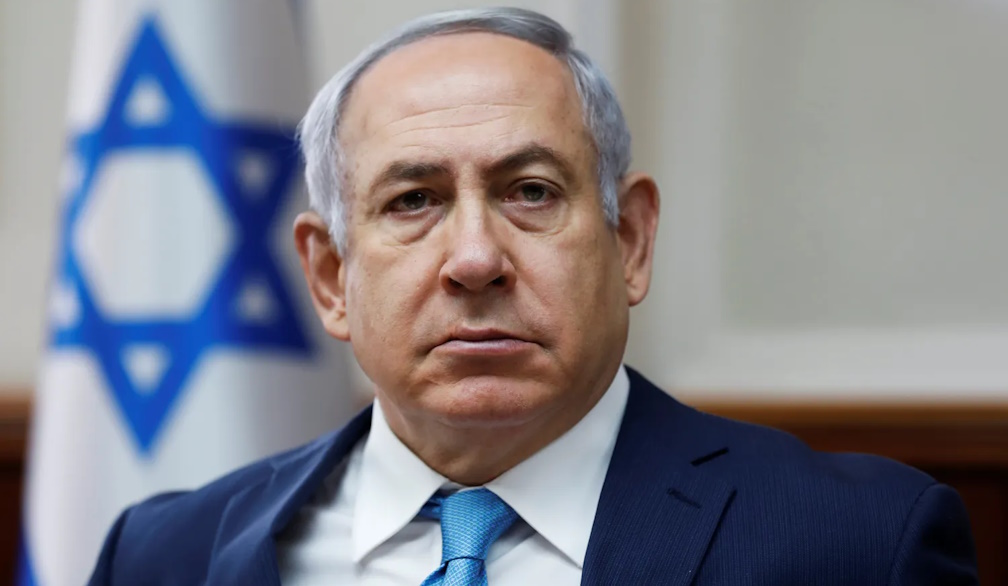
Israeli Prime Minister Benjamin Netanyahu is moving forward with his plan to take full control of Gaza, expanding his war efforts amid a deepening starvation crisis in the strip and intensifying international condemnation[1].
In the plan, Netanyahu’s government also announced it would only end the war once five “principles” were met[2]. These included the demilitarisation of the strip, the release of the remaining hostages held by Hamas, and the disarmament of the group.
This new phase of the war follows a familiar pattern of poorly devised strategy-making on Netanyahu’s part, without sufficient reasoning or apparent forward planning. Given his new stated goal of taking full control of Gaza City, an end to the war does not feel likely, or imminent.
Here are five questions about whether the plan makes sense.
1. Is it necessary, or wise, militarily?
Significantly, the chief of staff of the Israeli Defence Forces (IDF), Lt. Gen. Eyal Zamir, has opposed the decision to expand operations in Gaza. He has warned[3] that any plan to occupy the Gaza Strip would “drag Israel into a black hole”.
For one, Zamir believes expanding the military campaign is not necessary – he says[4] the IDF has “met and even exceeded the operation’s objectives” in Gaza.
Hamas has been substantially degraded as a military force and its senior leadership has been killed. It is no longer an organised force in Gaza – it is now embracing guerrilla-style tactics[5].
This makes an expanded campaign in an urban environment such as Gaza City risky. Hamas will be able to use its vast tunnel network to mount surprise attacks on Israeli soldiers and place booby-traps in buildings.
As such, Netanyahu’s plan will inevitably lead to more IDF casualties. Nearly 900 IDF personnel have been killed so far in the war[6].
Moreover, taking full control of the strip would take months to complete and lead to countless more Palestinian civilian deaths.
Zamir has also warned it could endanger[7] the lives of the remaining living Israeli hostages, which are believed to number around 20.
The freeing of Israeli hostages has only occurred during ceasefires – not as the result of military action. Hamas murdered six hostages[8] in late 2024 when Israeli forces seemed to be getting close. Why wouldn’t it do so again if it was cornered?
2. Does Israel have enough military personnel for such an operation?
Israel has a relatively small army[9] totalling about 169,000. It relies on more than 400,000 reservists[10], who have completed their military service, to augment the IDF during emergencies.
But taking reservists from their normal jobs for lengthy periods has adverse effects on the economy and harms Israel in the long term.
Netanyahu’s goal of degrading Hamas’ control of Gaza follows a basic strategy of “clear, hold and build”. First, the IDF clears an area of Hamas fighters, then it holds the area with sufficient military personnel to prevent their return, and finally it builds an environment in which Hamas cannot function, for example, by destroying their tunnels and encouraging the return of civilian governance.
Israel does not have sufficient IDF personnel and reservists to deploy this strategy for the entire strip. It also needs soldiers in the West Bank, where clashes between Jewish settlers and Palestinian residents have become increasingly violent in recent years.
Netanyahu says he doesn’t want to permanently occupy Gaza, yet the far-right members of his cabinet do. They have made clear they want Israeli settlements re-established in Gaza and also to annex most, if not all, of the West Bank.
The mixed messages out of Netanyahu’s government make it very difficult to know what his actual long-term plan is for Gaza, if he even has one.
3. What kind of ‘Arab force’ would eventually come in?
In an interview this week, Netanyahu said he envisions[11] the future security control of the strip would eventually pass to “Arab forces”. But which Arab states would contribute military personnel to such a force[12]?
Arab states have long held the position that they will not solve Israel’s Palestinian problem for it, nor will they agree to any outcome in Gaza or the West Bank that Palestinians oppose. In short, while they oppose Hamas, they refuse to do Israel’s dirty work on its behalf.
A Hamas official, Osama Hamdan, also warned this week that his group would treat any force formed to govern Gaza as an “occupying[13]” force linked to Israel. Any personnel policing Gaza on Israel’s behalf would have targets on their back.
4. What is the plan for Gaza’s civilian population?
In July, Defence Minister Israel Katz announced a plan[14] to force Gaza’s entire population of two million people into a “humanitarian city” in the southern part of the strip. Former Prime Minister Ehud Olmert likened it to a “concentration camp”.
Little has been said about the plan in recent weeks, but implementing it would no doubt exacerbate the humanitarian crisis in the strip even further and draw even more international condemnation of Israel.
Earlier this year, Israel’s security cabinet also approved[15] a plan to facilitate the “voluntary transfer” of Gazans from the strip to third countries. This plan, too, was decried as an attempt to ethnically cleanse the enclave.
Certainly, no states in the Arab League would have any willingness to receive more than two million Palestinian refugees.
5. Is Netanyahu willing to deepen Israel’s isolation?
In a piece for The Conversation on Friday[16], Middle East expert Amin Saikal pointed out just how much of a hit Israel’s international credibility has taken since the start of the war – even among Americans.
Israelis are becoming aware that travel outside their country could involve risks. Two Israelis were recently detained and questioned[17] in Belgium after attending a music festival and allegedly waving the flag of their army brigade. A human rights group accused the pair of being complicit in war crimes in Gaza.
In addition, the international community has immediately responded to Netanyahu’s decision to expand the war. Germany, in a major step, announced[18] it would halt all arms exports to Israel. The country is the second-largest supplier of arms to the Jewish state.
Netanyahu has responded to international criticism and moves by Israel’s allies to recognise a Palestinian state by accusing them[19] of stoking antisemitism and rewarding Hamas.
However, the Israeli leader seems to be varying his strategy to deal with developments as they occur. He and others in his government probably feel they can continue weathering the international storm over their actions in Gaza until after the war and then work on rehabilitating relationships.
The final and biggest question, however, is: when will be the war be over?
References
- ^ international condemnation (theconversation.com)
- ^ five “principles” were met (www.bbc.com)
- ^ warned (www.timesofisrael.com)
- ^ says (www.timesofisrael.com)
- ^ guerrilla-style tactics (edition.cnn.com)
- ^ have been killed so far in the war (www.theguardian.com)
- ^ endanger (www.timesofisrael.com)
- ^ six hostages (www.theguardian.com)
- ^ small army (theconversation.com)
- ^ 400,000 reservists (www.timesofisrael.com)
- ^ envisions (www.foxnews.com)
- ^ such a force (www.politico.com)
- ^ occupying (www.theguardian.com)
- ^ announced a plan (www.theguardian.com)
- ^ approved (edition.cnn.com)
- ^ The Conversation on Friday (theconversation.com)
- ^ recently detained and questioned (www.bbc.com)
- ^ announced (www.abc.net.au)
- ^ accusing them (www.theguardian.com)