As Netanyahu moves toward full takeover of Gaza, Israel faces a crisis of international credibility
- Written by: Amin Saikal, Emeritus Professor of Middle Eastern Studies, Australian National University; Vice Chancellor's Strategic Fellow, Victoria University; Adjunct Professor of Social Sciences, The University of Western Australia
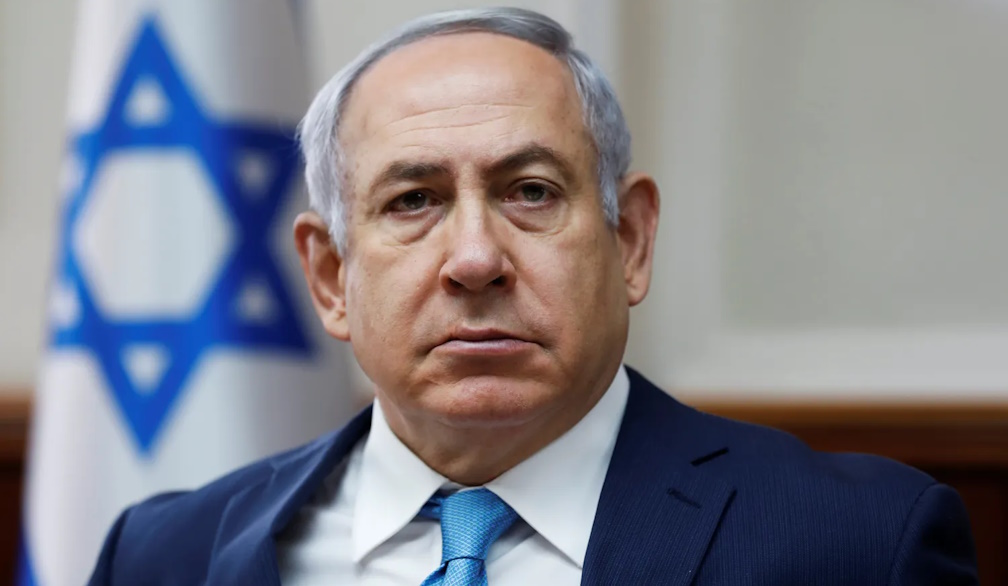
For all its claims of being a democracy that adheres to international law and the rules of war, Israel’s global reputation is in tatters.
Prime Minister Benjamin Netanyahu’s latest plan for a full military takeover of Gaza[1], along with the expanding starvation crisis[2] in the strip and Israel’s repressive measures in the West Bank, underline the country’s predicament.
Notwithstanding US support, the Jewish state faces a crisis of international credibility, from which it may not be able to recover for a long time.
According to a recent Pew poll, the international view of Israel is now more negative than positive[3]. The majority of those polled in early 2025 in countries such as the Netherlands (78%), Japan (79%), Spain (75%), Australia (74%), Turkey (93%) and Sweden (75%) said they have an unfavourable view of Israel.
The International Criminal Court has issued arrest warrants[4] for Netanyahu and Israel’s former defence minister, Yoav Gallant, on charges of war crimes and crimes against humanity. Many international law experts[5], genocide scholars[6] and human rights groups[7] have also accused Israel of committing genocide in Gaza.
Israel’s traditional supporters have also harshly criticised the Netanyahu government’s actions, from both inside and outside the country. These include former prime ministers Ehud Olmert[8] and Ehud Barak[9], the Israeli literary giant David Grossman[10], and Masorti Judaism Rabbi Jonathan Wittenberg[11] and Rabbi Delphine Horvilleur[12].
In addition, hundreds of retired Israeli security officials have appealed[13] to US President Donald Trump to push Netanyahu to end the war.
Israel’s global partners distancing themselves
With images of starving children in Gaza dominating the news in recent weeks, many of Israel’s friends in the Western alliance have similarly reached the point at which they can no longer tolerate its policy actions.
In a major shift in global opinion, France announced it would recognise Palestinian statehood in September. The United Kingdom and Canada vowed to follow suit. Even Germany has now begun the process[14] for recognition. And Australian Prime Minister Anthony Albanese has indicated his country’s recognition of Palestine was only a matter of time.
Spain and Sweden have called for the suspension[15] of the European Union’s trade agreement with Israel, while the Netherlands has officially labelled Israel a “security threat[16]”, citing attempts to influence Dutch public opinion.
Israel and the US have rejected all these accusations and moves. The momentum against Israel in the international community, however, has left it with the US as its only major global supporter.
Israel’s sovereignty, security and prosperity now ride on the back of America’s continued support. Without US assistance, in particular its billions of dollars worth of arms exports[17], Israel would have struggled to maintain its devastating Gaza campaign or repressive occupation of the West Bank and East Jerusalem since the 1967 Arab-Israeli war.
Yet, despite Trump’s deep commitment to Israel, many in the US electorate are seriously questioning the depth of Netanyahu’s influence in Washington and the value of US aid to Israel.
According to a Gallup poll in March, fewer than half[18] of Americans are sympathetic toward Israel.
This discontent has also been voiced by some of Trump’s MAGA ideologues and devotees, such as political strategist Steve Bannon[19] and congressional hardliner Marjorie Taylor Greene[20]. Even Trump publicly questioned[21] Netanyahu on his claim there was no starvation in Gaza.
Israelis have dim view of two-state solution
Many Israelis would like to see the back of Netanyahu and his extremist right-wing ruling cohort, especially given his failure to secure the release of all the hostages from Hamas.
Many want the war to end, too. Recent polling by Israel’s Channel 12 found that 74% of Israelis[22] back a deal to end the war in exchange for the release of the remaining hostages held by Hamas.
However, a majority of Israelis maintain a dim view of a future Palestinian state.
One poll commissioned by a US academic showed 82% of Jewish Israeli respondents[23] backed the expulsion of Palestinians from Gaza. And a Pew poll in early 2025 showed that just 16% of Jewish Israelis[24] believe peaceful coexistence with a Palestinian state is possible, the lowest percentage since the pollsters began asking the question in 2013.
This indicates that not only the Israeli state, but also its electorate, has moved to the extreme of the political spectrum in relation to acknowledging the right of the Palestinians to an independent state of their own.
Read more: In Israel, calls for genocide have migrated from the margins to the mainstream[25]
Under international pressure, Netanyahu has expediently allowed a little more humanitarian aid to flow into Gaza. However, his new plan for a full military takeover of Gaza indicates he is not prepared to change course in the war, as long as US support remains steady.
His government is bent on eliminating Hamas[26] and potentially depopulating[27] and annexing[28] Gaza, followed possibly by the West Bank[29]. Such a move would render the idea of a two-state solution totally defunct.
To stop this happening, Washington needs to align with the rest of the global community. Otherwise, an unrestrained and isolated Israel will only widen the rift between the US and its traditional allies in a highly polarised world.
References
- ^ military takeover of Gaza (www.nytimes.com)
- ^ starvation crisis (www.theguardian.com)
- ^ more negative than positive (www.pewresearch.org)
- ^ arrest warrants (www.abc.net.au)
- ^ international law experts (theconversation.com)
- ^ genocide scholars (www.nytimes.com)
- ^ human rights groups (www.nytimes.com)
- ^ Ehud Olmert (foreignpolicy.com)
- ^ Ehud Barak (www.timesofisrael.com)
- ^ David Grossman (www.timesofisrael.com)
- ^ Rabbi Jonathan Wittenberg (www.thejc.com)
- ^ Rabbi Delphine Horvilleur (www.haaretz.com)
- ^ appealed (www.bbc.com)
- ^ now begun the process (www.yahoo.com)
- ^ suspension (www.business-humanrights.org)
- ^ security threat (www.ynetnews.com)
- ^ arms exports (www.cfr.org)
- ^ fewer than half (news.gallup.com)
- ^ Steve Bannon (www.theguardian.com)
- ^ Marjorie Taylor Greene (www.nytimes.com)
- ^ questioned (www.abc.net.au)
- ^ 74% of Israelis (www.timesofisrael.com)
- ^ 82% of Jewish Israeli respondents (theconversation.com)
- ^ 16% of Jewish Israelis (www.pewresearch.org)
- ^ In Israel, calls for genocide have migrated from the margins to the mainstream (theconversation.com)
- ^ eliminating Hamas (www.timesofisrael.com)
- ^ depopulating (www.haaretz.com)
- ^ annexing (www.haaretz.com)
- ^ West Bank (www.timesofisrael.com)