A heatwave in Antarctica totally blew the minds of scientists. They set out to decipher it – and here are the results
- Written by: Dana M Bergstrom, Honorary Senior Fellow, University of Wollongong
Climate scientists don’t like surprises. It means our deep understanding of how the climate works isn’t quite as complete as we need. But unfortunately, as climate change worsens, surprises and unprecedented events keep happening.
In March 2022, Antarctica experienced an extraordinary heatwave. Large swathes of East Antarctica experienced temperatures up to 40°C (104°F) above normal, shattering temperature records. It was the most intense[1] heatwave ever recorded anywhere in the world.
So shocking and rare was the event, it blew the minds of the Antarctic climate science community. A major global research project was launched to unravel the reasons behind it and the damage it caused. A team of 54 researchers, including me, delved into the intricacies of the phenomenon. The team was led by Swiss climatologist Jonathan Wille, and involved experts from 14 countries. The collaboration resulted in two ground-breaking[2] papers published today.
The results are alarming. But they provide scientists a deeper understanding of the links between the tropics and Antarctica – and give the global community a chance to prepare for what a warmer world may bring.
Head-hurting complexity
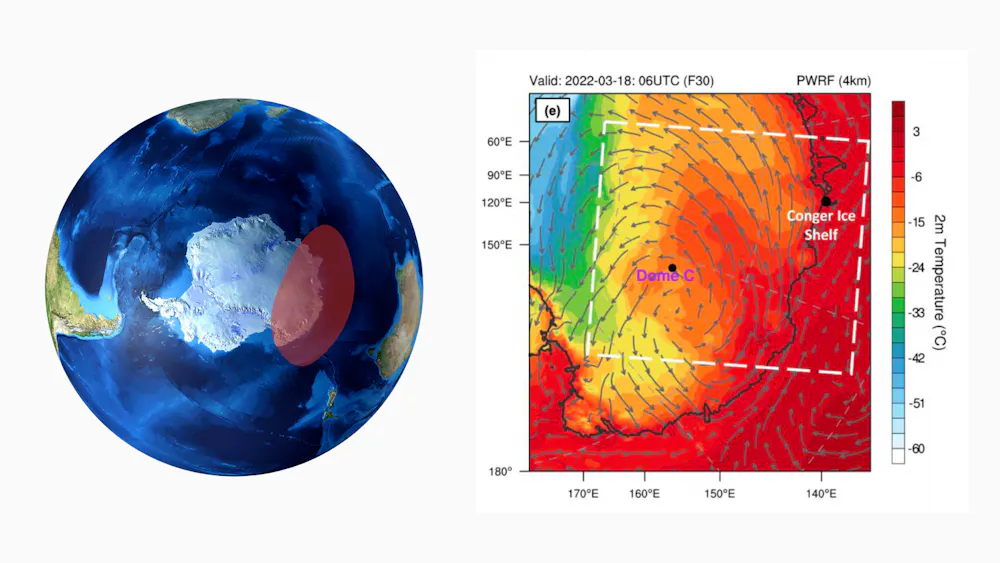
The papers tell a complex story that began half a world away from Antarctica. Under La Niña conditions[3], tropical heat near Indonesia poured into the skies above the Indian Ocean. At the same time, repeated weather troughs pulsing eastwards were generating from southern Africa. These factors combined into a late, Indian Ocean tropical cyclone season.
Between late February and late March 2022, 12 tropical storms had brewed. Five storms revved up to become tropical cyclones, and heat and moisture from some of these cyclones mashed together. A meandering jet stream picked up this air and swiftly transported it vast distances across the planet to Antarctica.
Below Australia, this jet stream also contributed to blocking the eastward passage of a high pressure system. When the tropical air collided with this so-called “blocking high”, it caused the most intense atmospheric river ever observed over East Antarctica. This propelled the tropical heat and moisture southward into the heart of the Antarctic continent.
Read more: Like rivers in the sky: the weather system bringing floods to Queensland will become more likely under climate change[4]
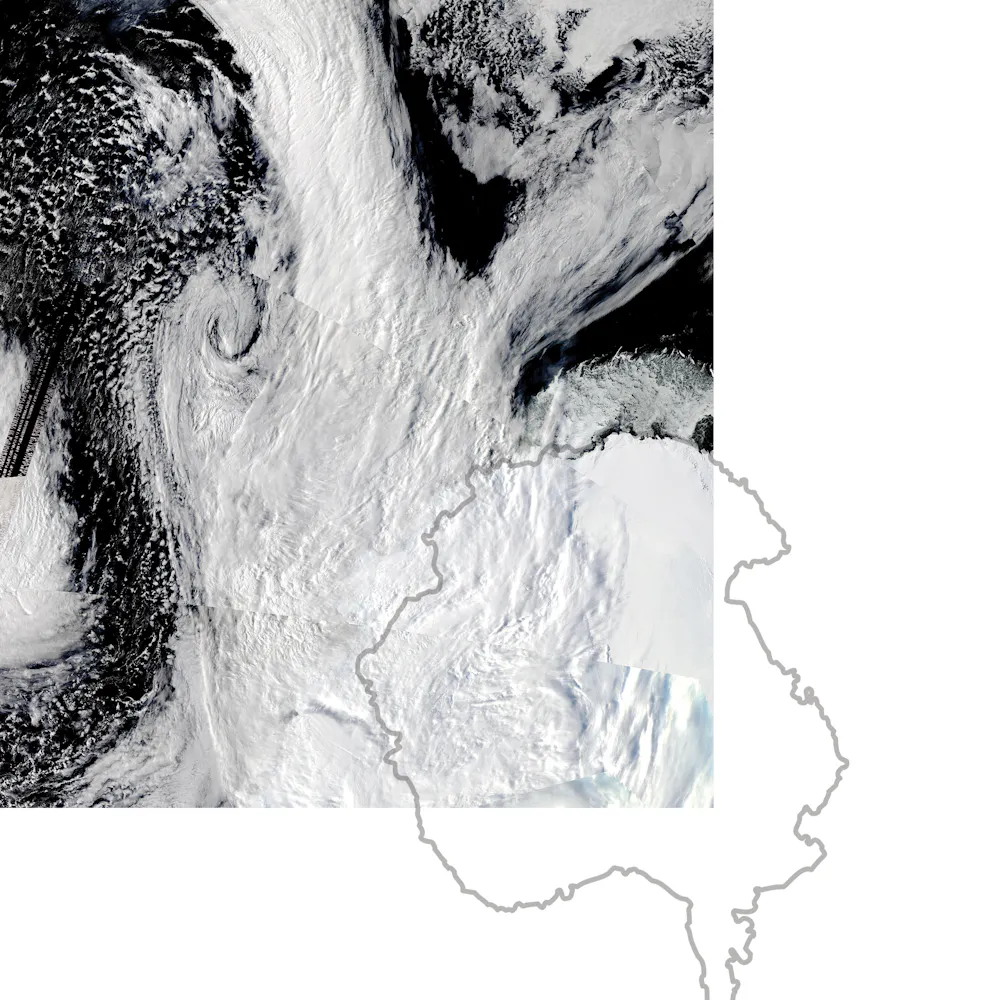 Satellite image of the atmospheric river and extensive cloud cover transferring tropical heat and moisture deep into Antarctica, March 18 2022.
Jonathan Wille
Satellite image of the atmospheric river and extensive cloud cover transferring tropical heat and moisture deep into Antarctica, March 18 2022.
Jonathan Wille
Luck was on Antarctica’s side
The event caused the vulnerable Conger Ice Shelf to finally collapse[5]. But the impacts were otherwise not as bad as they could have been. That’s because the heatwave struck in March, the month when Antarctica transitions to its dark, extremely cold winter. If a future heatwave arrives in summer – which is more likely under climate change – the results could be catastrophic.
Despite the heatwave, most inland temperatures stayed below zero. The spike included a new all-time temperature high of -9.4°C (15.1°F) on March 18 near Antarctica’s Concordia Research Station. To understand the immensity of this, consider that the previous March maximum temperature at this location was -27.6°C (-17.68°F). At the heatwave’s peak, 3.3 million square kilometres in East Antarctica – an area about the size of India – was affected by the heatwave.
The impacts included widespread rain and surface melt along coastal areas. But inland, the tropical moisture fell as snow – lots and lots of snow. Interestingly, the weight of the snow offset ice loss in Antarctica for the year. This delivered a temporary reprieve from Antarctica’s contribution to global sea-level rise.
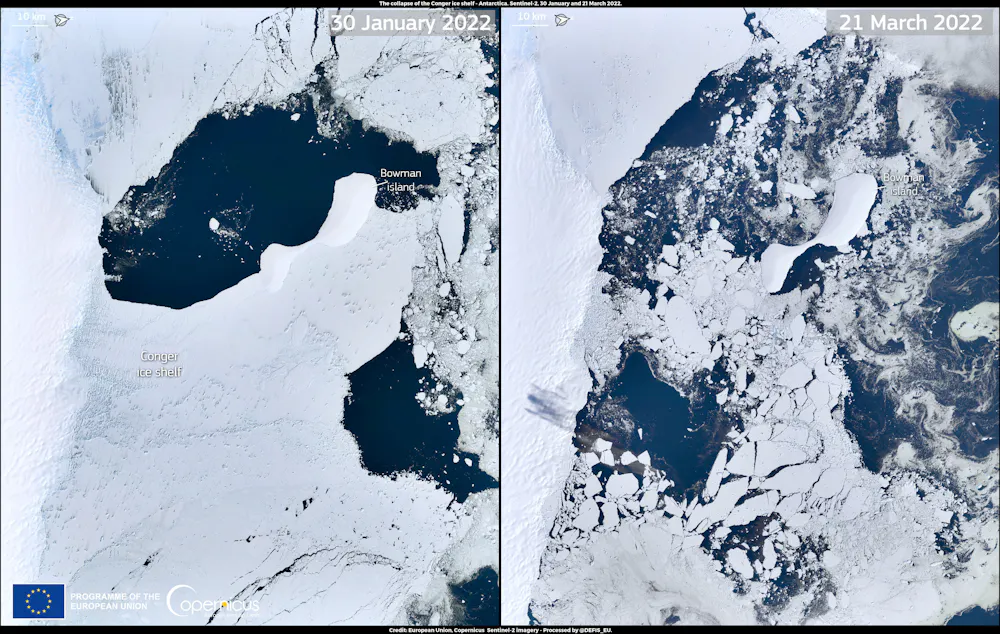 These images, acquired by the Copernicus Sentinel-2 satellites on January 30 2022 (left) and March 21 2022 (right), show the Conger ice shelf before and after the collapse, which was triggered by a shocking heatwave.
European Union, Copernicus Sentinel-2 satellite imagery, CC BY[6][7]
These images, acquired by the Copernicus Sentinel-2 satellites on January 30 2022 (left) and March 21 2022 (right), show the Conger ice shelf before and after the collapse, which was triggered by a shocking heatwave.
European Union, Copernicus Sentinel-2 satellite imagery, CC BY[6][7]
Learning from the results
So what are the lessons here? Let’s begin with the nice bit. The study was made possible by international collaboration across Antarctica’s scientific community, including the open sharing of datasets. This collaboration is a touchstone of the Antarctic Treaty. It serves as a testament to the significance of peaceful international cooperation and should be celebrated.
Less heartwarmingly, the extraordinary heatwave shows how compounding weather events in the tropics can affect the vast Antarctic ice sheet. The heatwave further reduced the extent of sea ice, which was already at record lows. This loss of sea ice was exacerbated this year[8] resulting in the lowest summer and winter sea ice ever recorded. It shows how disturbances in one year can compound in later years.
The event also demonstrated how tropical heat can trigger the collapse of unstable ice shelves. Floating ice shelves don’t contribute to global sea-level rise, but they acts as dams to the ice sheets behind them[9], which do contribute.
This research calculated that such temperature anomalies occur in Antarctica about once a century, but concluded that under climate change, they will occur more frequently.
The findings enable the global community to improve its planning for various scenarios. For example, if a heatwave of similar magnitude hit in summer, how much ice melt would there be? If an atmospheric river hit the Doomsday glacier[10] in the West Antarctic, what rate of sea level rise would that trigger? And how can governments across the world prepare coastal communities[11] for sea level rise greater than currently calculated?
This research contributes another piece to the complex jigsaw puzzle of climate change. And reminds us all, that delays to action on climate change will raise the price we pay.
Read more: Record-smashing heatwaves are hitting Antarctica and the Arctic simultaneously. Here’s what’s driving them, and how they’ll impact wildlife[12]
References
- ^ most intense (agupubs.onlinelibrary.wiley.com)
- ^ ground-breaking (journals.ametsoc.org)
- ^ La Niña conditions (www.bom.gov.au)
- ^ Like rivers in the sky: the weather system bringing floods to Queensland will become more likely under climate change (theconversation.com)
- ^ finally collapse (theconversation.com)
- ^ European Union, Copernicus Sentinel-2 satellite imagery (www.copernicus.eu)
- ^ CC BY (creativecommons.org)
- ^ year (theconversation.com)
- ^ ice sheets behind them (theconversation.com)
- ^ Doomsday glacier (theconversation.com)
- ^ prepare coastal communities (theconversation.com)
- ^ Record-smashing heatwaves are hitting Antarctica and the Arctic simultaneously. Here’s what’s driving them, and how they’ll impact wildlife (theconversation.com)