China's Auto Disruption
- Written by: The Times
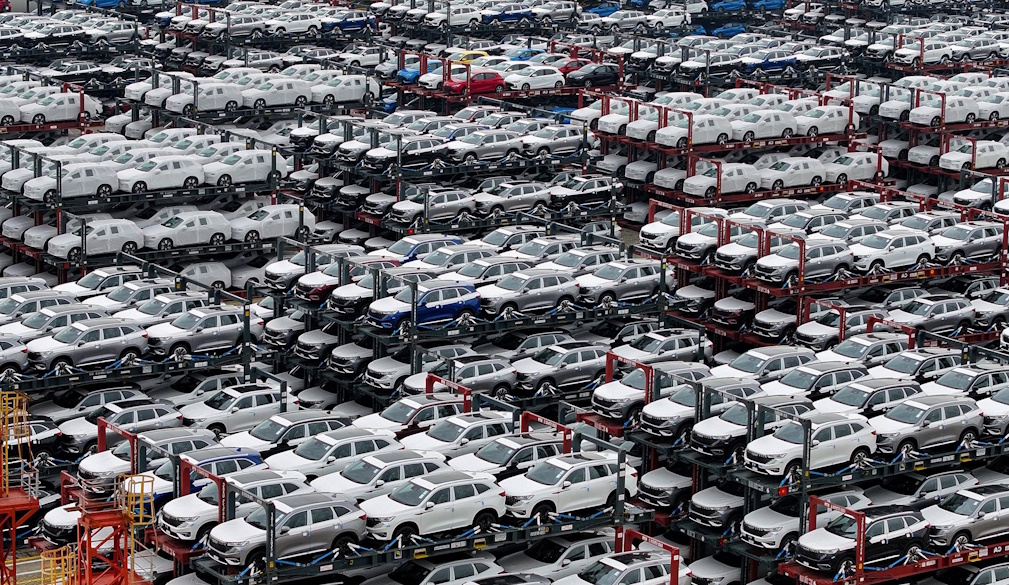
There was a time when buying a car was almost a reflex. You chose between familiar badges—Ford, Toyota, Nissan—and perhaps a handful of European alternatives if your budget stretched far enough. These companies defined reliability, engineering, and aspiration for decades. Today, that certainty has fractured. A new cohort of Chinese manufacturers—BYD, Geely, SAIC Motor and others—has not just entered the market, but disrupted it at speed and scale few predicted.
The shift did not happen overnight, and it was not accidental. It was engineered.
The first advantage China leveraged was timing. While traditional automakers were deeply invested in internal combustion engines, China made an early and aggressive pivot toward electrification. Government policy, subsidies, and industrial strategy aligned with a long-term vision: dominate the electric vehicle supply chain. This meant not just assembling cars, but controlling batteries, rare earth minerals, and manufacturing ecosystems. Companies like BYD didn’t simply build vehicles—they built the batteries that power them, vertically integrating in a way Western manufacturers largely avoided for decades.
Contrast this with legacy brands, which carried the weight of existing factories, dealer networks, and internal combustion expertise. Transitioning from petrol to electric is not just a product shift—it is a complete re-engineering of the business. Chinese firms, unburdened by legacy systems, effectively started with a clean slate.
The second factor is cost discipline. Chinese manufacturers have mastered scale manufacturing across multiple industries, and automotive production has benefited from that expertise. Labour efficiencies, domestic supply chains, and government-backed infrastructure allow them to produce vehicles at significantly lower cost. The result is compelling: electric cars with modern technology, competitive range, and aggressive pricing that undercuts traditional rivals.
In markets like Australia, this is becoming increasingly visible. Where once consumers compared Toyota against Ford, they now weigh those options against a BYD or an MG (owned by SAIC). The value proposition is difficult to ignore. For many buyers, especially in a cost-of-living environment, brand loyalty is giving way to pragmatism.
Technology is the third pillar. Chinese vehicles are not entering the market as stripped-down budget alternatives. Quite the opposite. Many are packed with advanced infotainment systems, driver assistance features, and over-the-air software updates. In some cases, they feel closer in philosophy to Tesla than to traditional automakers. This matters because the car is no longer just a mechanical product—it is a software-driven experience.
Traditional manufacturers underestimated this shift. Their competitive advantage historically lay in engine performance, mechanical reliability, and incremental innovation. But the battleground has moved. Software, battery efficiency, and user interface now play a central role in purchasing decisions. In this new environment, newer entrants are not disadvantaged—they are often ahead.
Distribution strategy has also evolved. Chinese brands have been willing to experiment with direct-to-consumer sales models, streamlined dealership networks, and aggressive market entry tactics. They are not tied to decades-old retail frameworks. This flexibility allows faster rollout and adaptation to local markets.
So have Chinese manufacturers “cut off” the traditional brands? Not entirely—but they have unquestionably eroded their dominance.
Legacy automakers still possess formidable strengths. Brand recognition, global distribution, engineering depth, and trust built over generations are not easily displaced. Toyota, for instance, remains synonymous with reliability. Ford continues to dominate segments like utes in markets such as Australia. Nissan retains global reach and manufacturing capability. These are not weak competitors.
However, relevance is no longer guaranteed by history.
The real challenge for traditional brands is speed. Can they transition quickly enough to electric platforms while maintaining profitability? Can they compete on price without eroding margins? Can they build software ecosystems that rival newer entrants? These are not incremental adjustments—they are existential questions.
Some are responding. Partnerships, battery investments, and dedicated EV platforms are now common across legacy manufacturers. Yet the gap remains visible in many segments, particularly at the affordable end of the market where Chinese brands are strongest.
There is also a geopolitical dimension. Trade tensions, tariffs, and national security concerns could influence how freely Chinese vehicles expand into certain markets. Governments may intervene to protect domestic industries or regulate supply chains. This could slow—but likely not stop—the momentum.
For consumers, the shift is largely positive. More competition means better pricing, more features, and faster innovation. The downside, if there is one, lies in uncertainty—resale values, long-term servicing, and brand longevity are still being tested for newer entrants.
For the industry, the message is stark. The era of unquestioned dominance by a handful of Western and Japanese manufacturers is over. The market is now multipolar, dynamic, and far more competitive.
Traditional brands will not disappear. But they are being forced to evolve in ways that would have seemed unimaginable a decade ago. Those that adapt—embracing electrification, software integration, and cost efficiency—will remain relevant. Those that do not risk becoming legacy in the truest sense of the word.
China did not just enter the automotive market. It rewrote the rules.