Black police officers aren't colorblind – they're infected by the same anti-Black bias as American society and police in general
- Written by: Rashad Shabazz, Associate Professor at the School of Social Transformation, Arizona State University
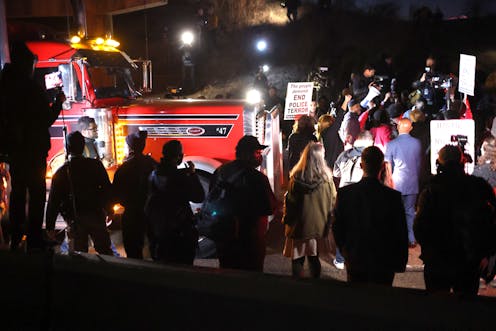
Once again, Americans are left reeling from the horror of video footage showing police brutalizing an unarmed Black man who later died.
Some details in the latest case of extreme police violence were gut-wrenchingly familiar: a police traffic stop of a Black male motorist turned violent. But, for many of us, other details were unfamiliar: The five police officers accused of using everything from pepper spray to a Taser, a police baton and intermittent kicks and punches against the motorist were also Black.
After pulling over 29-year-old Tyre Nichols for what they said was reckless driving, Black officers in the Memphis Police Department’s now disbanded SCORPION unit[1] beat Nichols, ultimately to death.
The Conversation asked Rashad Shabazz, a geographer and scholar of African American studies[2] at Arizona State University, to explore the societal conditions in which Black police officers could brutalize another Black man.
What could influence Black police officers to savagely beat a Black motorist?
Policing in the U.S. has, from its inception, treated Black people as domestic enemies. From the the slave patrols[3], which some historians consider to be among the nation’s earliest forms of policing[4], to the murder of George Floyd[5], and now the death of Nichols, law enforcement officers often have viewed Black people as what sociologist and civil rights activist W.E.B. Du Bois, in “The Souls of Black Folk[6],” called a “problem.”
American society assumes that Black people are prone to criminality[7] and therefore should be subject to state power in the form of policing or, in some cases, vigilantism – as in the killing of Ahmaud Arbury[8]. This is a link deeply woven into American consciousness. And Black people are not immune[9]. In this way, the long-held targeting of Black men by police[10] and widely held negative beliefs about them are a powerful cocktail that can compel even Black officers to stop, detain and brutally beat a man who looks just like them.
Could their actions have been motivated by anti-Black bias?
It’s hard to investigate the minds of the officers who beat Nichols so savagely and say for sure what motivated them. But there is ample research[11] that suggests anti-Blackness[12] is a factor in American policing. And Black officers, agents of an institutionally racist system[13], are affected by this. Anti-Blackness affects Black people, too[14]. And this might explain why Black police officers exhibit more anti-Black[15] bias than the Black population as a whole.
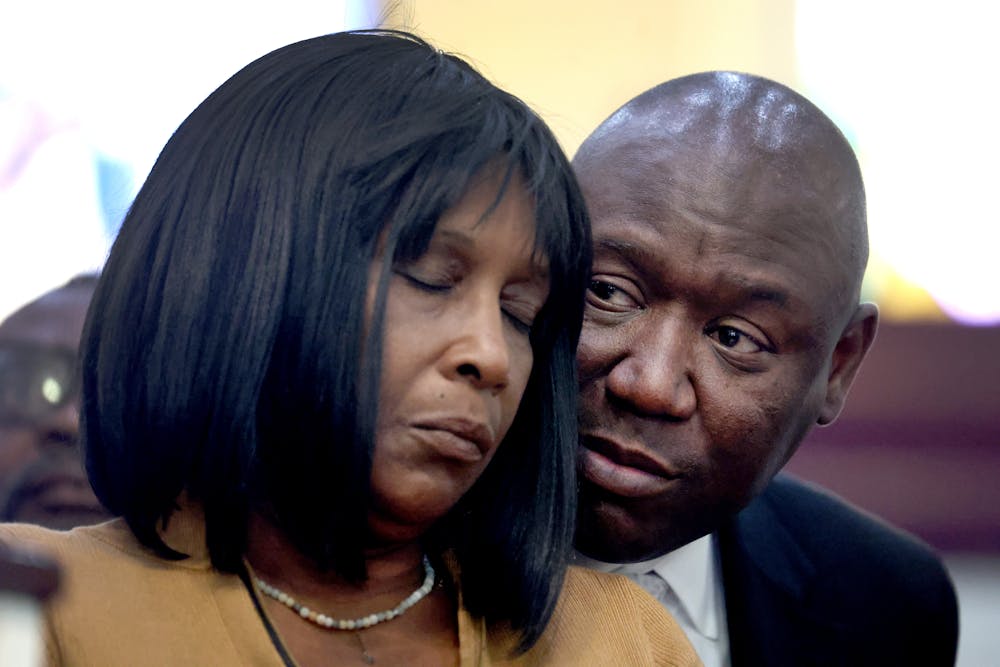
To comprehend this, we have to take a step back and think about race. Stuart Hall, a cultural theorist, described race as a sign. When we look at skin color or people as racialized subjects, they signify[17] something to us. Black people, in this society – and in other parts of the world[18] – for many signify danger, threat and criminality[19]. And as a result, institutions like the criminal justice system respond to their perceived threat with profiling, harassment and violence[20].
Our surprise that five Black police officers could brutalize another Black man indicates we have an impoverished understanding of race and racism in this country.
What does Tyre Nichols’ death mean for calls to diversify policing?
For years, elected officials, activists and citizens have been making calls to reform policing. Many have said bringing more people from ethnically diverse backgrounds onto police forces would go a long way toward correcting institutional racism in the criminal justice system.
The final report of “The President’s Task Force on 21st Century Policing[21],” commissioned through an executive order by President Barack Obama, called for law enforcement agencies to “strive to create a workforce that encompasses a broad range of diversity, including race, gender, language, life experience, and cultural background to improve understanding and effectiveness.”
One recent study concluded that Black and Hispanic police officers make fewer traffic stops[22] and use force less often than their white counterparts. But, at the same time, Black and brown police officers live in the same culture that sees Black people as criminals and threats. So simply having more officers of color doesn’t do enough to fix the problem[23].
How does seeing video of another Black man brutalized by police, this time Black officers, affect Black people?
Over the past decade, videos of Black people killed at the hands of police officers have filled social media and news sites. I, for one, cannot watch them because they terrify me and amplify fears[24] for my safety and that of my family and friends. I watched about 30 seconds of the Black police officers pummeling Nichols and couldn’t take any more. I know I’m not alone. Studies tell us that police killings of unarmed Black people are psychologically traumatizing events[25] for Black people. This kind of horror should be traumatizing to the nation. But if Black is the sign of danger and criminality, who will have empathy for the Tyre Nicholses of the world?
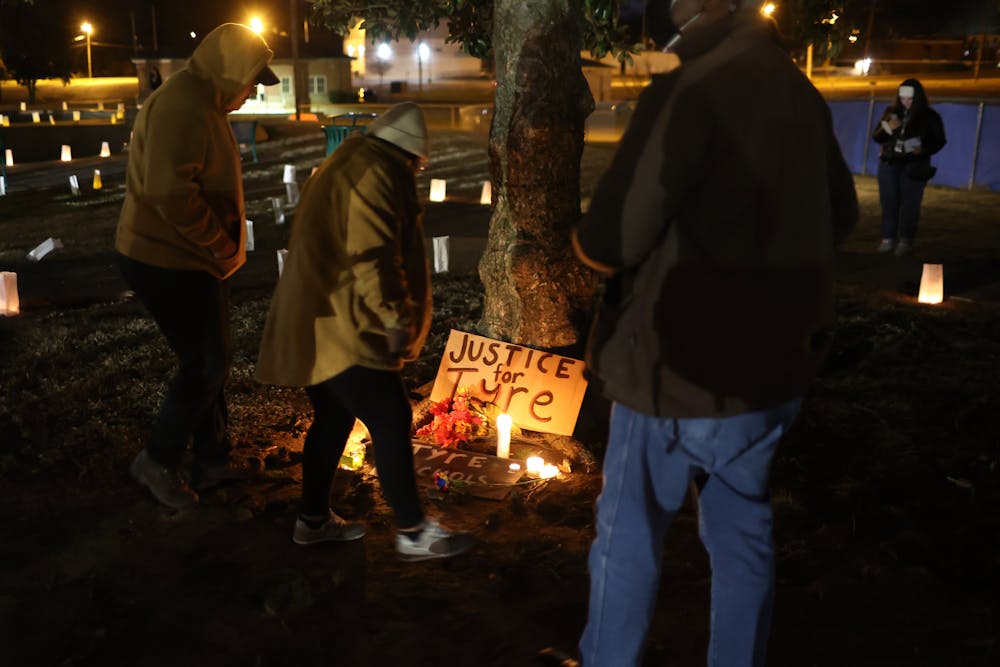 People honor the memory of Tyre Nichols during a candlelight vigil held in his honor.
Scott Olson/Getty Images News via Getty Images[26]
People honor the memory of Tyre Nichols during a candlelight vigil held in his honor.
Scott Olson/Getty Images News via Getty Images[26]
This article was updated to cut out repetition in the introduction.
References
- ^ now disbanded SCORPION unit (www.cnn.com)
- ^ a geographer and scholar of African American studies (newsroom.asu.edu)
- ^ the slave patrols (www.npr.org)
- ^ earliest forms of policing (time.com)
- ^ murder of George Floyd (www.nytimes.com)
- ^ The Souls of Black Folk (worldcat.org)
- ^ assumes that Black people are prone to criminality (doi.org)
- ^ killing of Ahmaud Arbury (www.cnn.com)
- ^ Black people are not immune (spsp.org)
- ^ targeting of Black men by police (news.wttw.com)
- ^ there is ample research (www.npr.org)
- ^ anti-Blackness (www.bu.edu)
- ^ institutionally racist system (theconversation.com)
- ^ Anti-Blackness affects Black people, too (www.theatlantic.com)
- ^ Black police officers exhibit more anti-Black (www.openaccessgovernment.org)
- ^ Scott Olson /Getty Images News via Getty Images (www.gettyimages.com)
- ^ people as racialized subjects, they signify (www.alanalentin.net)
- ^ in other parts of the world (www.opendemocracy.net)
- ^ for many signify danger, threat and criminality (www.vox.com)
- ^ profiling, harassment and violence (abcnews.go.com)
- ^ The President’s Task Force on 21st Century Policing (www.ojp.gov)
- ^ Black and Hispanic police officers make fewer traffic stops (doi.org)
- ^ doesn’t do enough to fix the problem (www.usnews.com)
- ^ they terrify me and amplify fears (theconversation.com)
- ^ are psychologically traumatizing events (www.bu.edu)
- ^ Scott Olson/Getty Images News via Getty Images (www.gettyimages.com)