AI Is Already Here. The Question Is Whether Your Business Is Built for It
- Written by: The Times

We sat down with Nirlep Adhikari — CTO at LoanOptions.ai and Founder of Mount Mindforce — to cut through the noise and talk about what AI actually means for businesses right now.
Let's be honest: most of us are fatigued by the AI conversation. It has dominated boardrooms, LinkedIn feeds, and conference agendas for the better part of three years. And yet, the data keeps arriving with a certain bluntness. A report published just this month by the British Chambers of Commerce found that more than half of UK SMEs are now actively using AI — up from just 25% in 2024. Closer to home, research from the AI Brandscape 2026 report found that 39% of Australians are already using AI to make buying decisions. Whether businesses are ready or not, the shift is happening.
So we asked Nirlep Adhikari — a practising CTO, fintech builder, and founder of AI strategy consultancy Mount Mindforce — to tell us what business leaders actually need to understand right now.

The conversation around AI agents is getting louder. Is the hype justified?
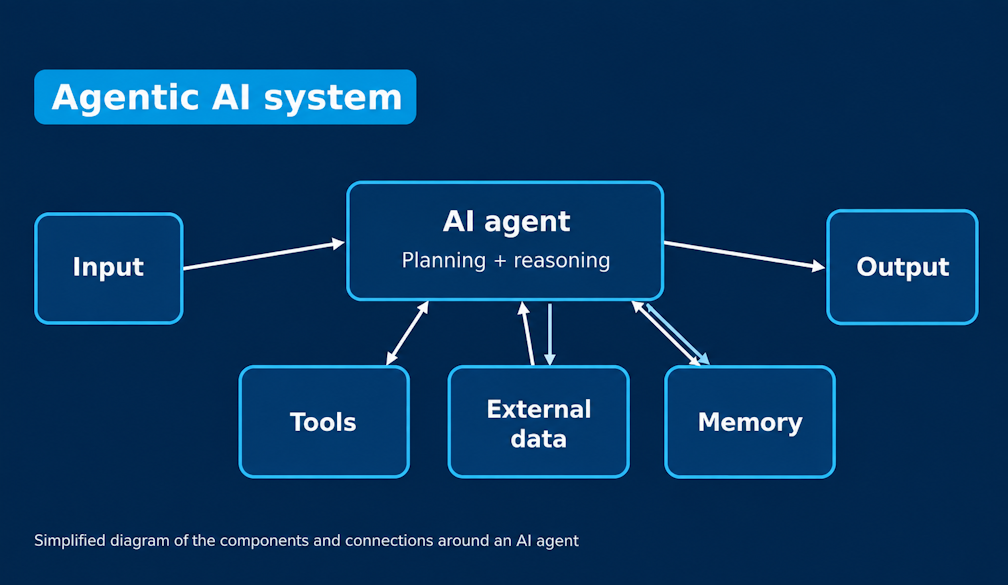
"It's powerful, genuinely — but I think people are getting ahead of themselves," Adhikari says. "An AI agent is only as good as the systems it can access. And here's the hard truth that most software vendors won't tell you: if your tech stack isn't API-first, AI cannot take action inside it. It's essentially locked out."
This is the distinction Adhikari returns to repeatedly in his work at LoanOptions.ai, a multi-award-winning AI-native fintech that has spent nearly six years rebuilding the lending experience from the ground up. The company's platform — including its AI-powered loan matching engine and its Synapses API ecosystem — was architected specifically to allow AI agents to operate within it. That's not accidental. It's a deliberate strategic choice that most legacy businesses haven't made.
"If your software can't be plugged into," he says, "you cannot automate your operations, you cannot build intelligent workflows, and you cannot compete with companies that can. The businesses that will dominate the next five years aren't necessarily the ones with the best people. They're the ones with open, robust APIs."
What about smaller businesses experimenting with AI tools to build things quickly?
This is where Adhikari becomes particularly direct. The rise of so-called 'vibe-coding' tools — platforms like v0, Lovable, and Cursor that allow founders to build software at speed with AI assistance — has democratised product development in a meaningful way. But it has also introduced what he describes as a silent, growing risk.
"These tools are genuinely useful for rapid prototyping and building front-end interfaces quickly," he says. "I use them myself. But there's a massive, underappreciated danger when founders let AI auto-generate their core database, or worse, host their proprietary customer data on the platform's default storage layers."
The concern is threefold: who actually owns the intellectual property of the code generated, whether the platform is training future models on your proprietary logic, and where the data is physically stored. For businesses that are raising capital or planning an exit in the next few years, these questions will surface in due diligence — and the answers could be damaging.
"AI is a co-pilot, not a CTO," he says plainly. "Build your UI with AI to move fast — that's a smart use of the technology. But your core database, your user authentication, your IP: that must live in a private, hard-coded environment that you 100% own. Don't trade long-term value for short-term speed."
This is the philosophy that underpins the advisory work Adhikari does through Mount Mindforce, where he works with business leaders to build AI strategies grounded in practical implementation and genuine ROI — not trend-chasing.
So what's the first thing a business should actually do?
"Stop asking 'how do I use AI?' and start asking 'where is my biggest operational drag?'" Adhikari says. "That's where the opportunity lives. AI should be solving a real problem — removing repetitive, low-value work so your team can focus on the things that actually require human judgment."
It is, perhaps, a deliberately unglamorous answer. But after years of working at the frontier of AI in financial services — building systems that process millions of data points, match borrowers to lenders in real time, and resist hallucination by design — Adhikari has earned a certain scepticism of spectacle.
"AI can be genuinely useful," he says. "But only if it's done right."
Nirlep Adhikari is CTO at LoanOptions.ai and Founder and Tech Advisor at Mount Mindforce. You can follow his thinking on LinkedIn.