AirActive, the first smartphone app and digital marketplace
- Written by: Cameron Carter
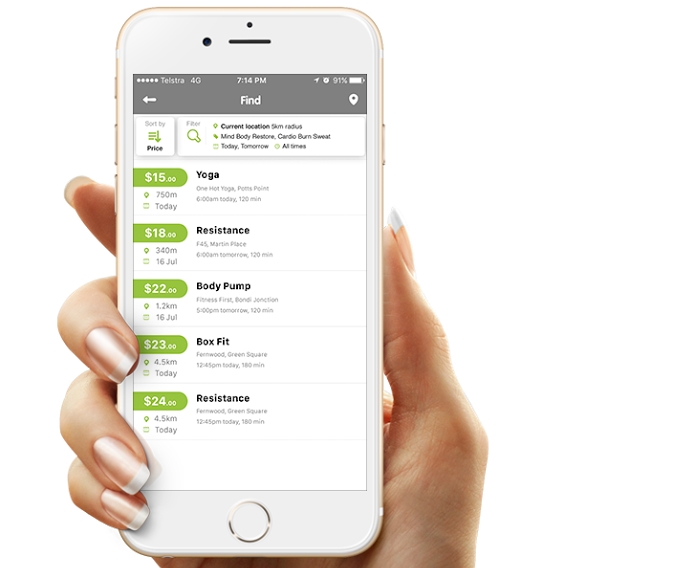
Sydney, October 11th, 2016 — AirActive, the first smartphone app and digital marketplace to enable a consumption model for lifestyle activities, and the Melbourne Business School have entered into a unique innovation partnership to develop a real-time online yield management system for the fitness, sports, wellbeing and recreation industries, designed to help activity providers fill capacity during off-peak times and offer consumers a variable pricing structure.
“We’re excited to collaborate with a world-class business school, which is at the forefront of innovation, bringing advanced analytic and algorithmic systems to the Australian fitness landscape for the first time.” says AirActive founder and C.E.O, Emmanuel Goutallier.
The digital marketplace, officially launched in April, boasts over 14,000 activities in 300 venues across Australia each week, becoming the country’s largest retailer of health and wellbeing providers and offering unprecedented choice as the premier pay-as-you-go consumer model.
“This new partnership with AirActive is an example of how we are drawing on our world class expertise in business analytics to drive a digital start-up and create a unique piece of intellectual property,” says the projects lead, Professor Ujwal Kayande.
AirActive and the Melbourne Business School will develop the first yield management software for sporting venues. While providers of the AirActive marketplace can, today, use variable pricing to incentivise users during off-peak times, the yield management algorithm, available from 2017, will dynamically modulate pricing based on a real-time assessment of unsold stock of physical activities. The end goal is to continuously align the demand with the product offer, widening the scope of choice for Australians to be active and allow provides to better optimise their revenue.
Headed by Professor Ujwal Kayande, the Centre for Business Analytics at the Melbourne Business School pioneers researching business analytics, and aims to provide AirActive with one of the more advanced technology-based solutions for dynamic pricing models in the world.
“Variable pricing models are widely used by many industries, most commonly in the travel sector, but we were particularly excited to apply and extend those principles to an entirely new sector, the health and fitness industry.” says Professor Kayande.
Students from the Master of Business analytics program at the Melbourne Business School worked on an early version of the dynamic pricing problem in November 2015, with one team wining the AirActive prize for its outstanding solution.
The volume of actives housed within the AirActive marketplace will enable the Melbourne Business School to analyse a wide cross-section of the overall market and filter the results as required. By conducting real-time analytics of each activity type, examining variables such as time, location, reputation, capacity and socio-economic factors of the community, the yield management system will propose optimum pricing at various times throughput the day.
“Research shows us most activity providers experience high-volume usage of their facilities and services at the beginning of the week, before work and after work hours, enabling the hours outside of those peak times to be marketed to new consumer groups, such as students who enjoy the flexibility in their schedule, but are constrained by budget.” affirms Goutallier.
AirActive will offer the functionality to select activity providers from October, 2016, before making it widely available to all providers in early 2017.