The Week That Was in Federal Parliament Politics: Will We Have an Effective Opposition Soon?
- Written by: The Times
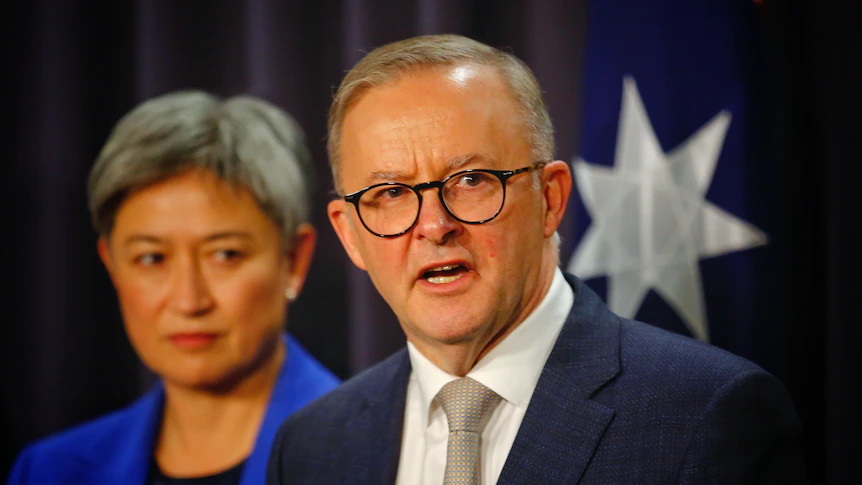
Federal Parliament returned this week to a familiar rhythm: government ministers defending the policy status quo, a Prime Minister projecting steadiness, and an opposition still searching for clarity, momentum and a compelling national narrative. For voters watching from the outside, the question grows louder with each sitting week — not whether the government faces scrutiny, but whether Australia will soon have an opposition capable of applying it effectively.
A Government in Control — but Under Pressure
From the government benches, Anthony Albanese and the Australian Labor Party projected calm authority. The Prime Minister leaned heavily on themes of economic stability, institutional responsibility and incremental reform. Ministers reiterated familiar talking points: inflation is moderating, wages are improving, energy transition is underway, and Australia remains diplomatically steady in an unsettled world.
Yet beneath the surface, Labor is feeling pressure. Cost-of-living relief remains politically fragile. Households are still grappling with high interest rates, rents and insurance premiums, and while Treasury charts point in the right direction, lived experience often tells a different story. The government’s problem is not the absence of policy — it is the gap between macroeconomic reassurance and kitchen-table reality.
This is precisely the terrain on which an opposition should thrive. And yet, this week again exposed how little traction the opposition is gaining.
An Opposition Still Searching for Shape
The Liberal Party of Australia entered the week promising sharper attacks and clearer positioning. What unfolded instead was a mix of procedural objections, selective outrage and tactical skirmishing — but no overarching vision.
Opposition questions focused on energy costs, migration numbers, and government competence. These are legitimate lines of attack. However, they were delivered without a unifying framework that explains not just what the government is doing wrong, but what the opposition would do differently — and why Australians should trust them to govern again.
This absence of narrative is not merely a communications problem. It reflects unresolved internal tensions within the opposition itself: between moderates and conservatives, between metropolitan seats and the regions, and between short-term political tactics and long-term electoral recovery.
The result is an opposition that often sounds reactive rather than authoritative.
The Nationals: Clear Voice, Narrow Reach
By contrast, the National Party of Australia sounded confident and ideologically consistent this week. Nationals MPs focused squarely on regional Australia — agriculture, water security, energy reliability and infrastructure investment.
For their base, the message was coherent and reassuring. For the broader electorate, however, it underscored a structural challenge for the Coalition: the Nationals know exactly who they represent, while the Liberals remain uncertain whom they are trying to win back.
Without a strong Liberal counterpart capable of translating regional concerns into a national governing alternative, the Nationals’ clarity risks becoming insular rather than influential.
The Teals and the Crossbench: Filling the Vacuum
The ongoing weakness of the major opposition has allowed the Teal independents and broader crossbench to continue occupying political space that would traditionally belong to a shadow cabinet.
This week, crossbench MPs prosecuted detailed arguments on integrity, housing supply, climate accountability and parliamentary standards — often with greater precision than the official opposition. While independents lack the machinery to form government, they are increasingly shaping debate and public expectations.
For many voters, particularly in urban electorates, this raises an uncomfortable question for the Coalition: if independents are doing the job of scrutiny more convincingly, what purpose is the opposition serving?
Leadership, Loyalty and the Long Shadow of the Past
One of the unspoken themes hovering over Parliament this week was leadership — not in the sense of an imminent spill, but in the deeper sense of credibility and authority.
Australian political history is unforgiving to oppositions that confuse loyalty with leadership. Parties that elevate figures based on tenure, factional balance or internal peacekeeping rarely reconnect with the electorate. Voters tend to reward clarity, conviction and competence — even when they disagree with the substance.
At present, the opposition lacks a leader who can dominate the parliamentary contest, frame national debates and project prime-ministerial weight. Without that, no amount of tactical attack will cut through.
Will an Effective Opposition Emerge Soon?
The honest answer, based on this week in Parliament, is: not yet.
That does not mean it cannot happen. Political fortunes can turn quickly, especially if economic conditions deteriorate or policy missteps accumulate. But for an effective opposition to emerge, several shifts must occur:
-
* A clear economic narrative that speaks directly to household pressure
-
* A disciplined policy platform that voters can recognise and remember
-
* A leader who commands attention inside and outside the chamber
-
* A willingness to confront internal divisions rather than manage them quietly
Until then, Labor will continue to govern from a position of relative comfort — not because it is universally loved, but because the alternative remains undefined.
The Bigger Risk for Democracy
The deeper concern is not partisan advantage, but democratic health. A strong government requires a strong opposition. Without it, accountability weakens, debate narrows, and public cynicism grows.
This week in Federal Parliament showed a government being tested — but not truly threatened. For Australians struggling with cost-of-living pressures, housing stress and economic uncertainty, the hope is not merely for political theatre, but for a credible alternative that sharpens choices at the ballot box.
That remains a work in progress.
The question is no longer whether Australians want an effective opposition. It is how long they are willing to wait for one to arrive.