The successful test flight at Shengle International Airport highlights Hohhot’s emergence as a key hub on the "Air Silk Road"
HOHHOT,CHINA - Media OutReach Newswire - 12 December 2025 - On November 25, the calibration aircraft landed smoothly, marking the successful completion of the on-site verification test flight at Hohhot Shengle International Airport.
This important milestone indicates that Inner Mongolia's first 4F-class airport has moved from the construction phase to the final stages of preparation for its official opening.
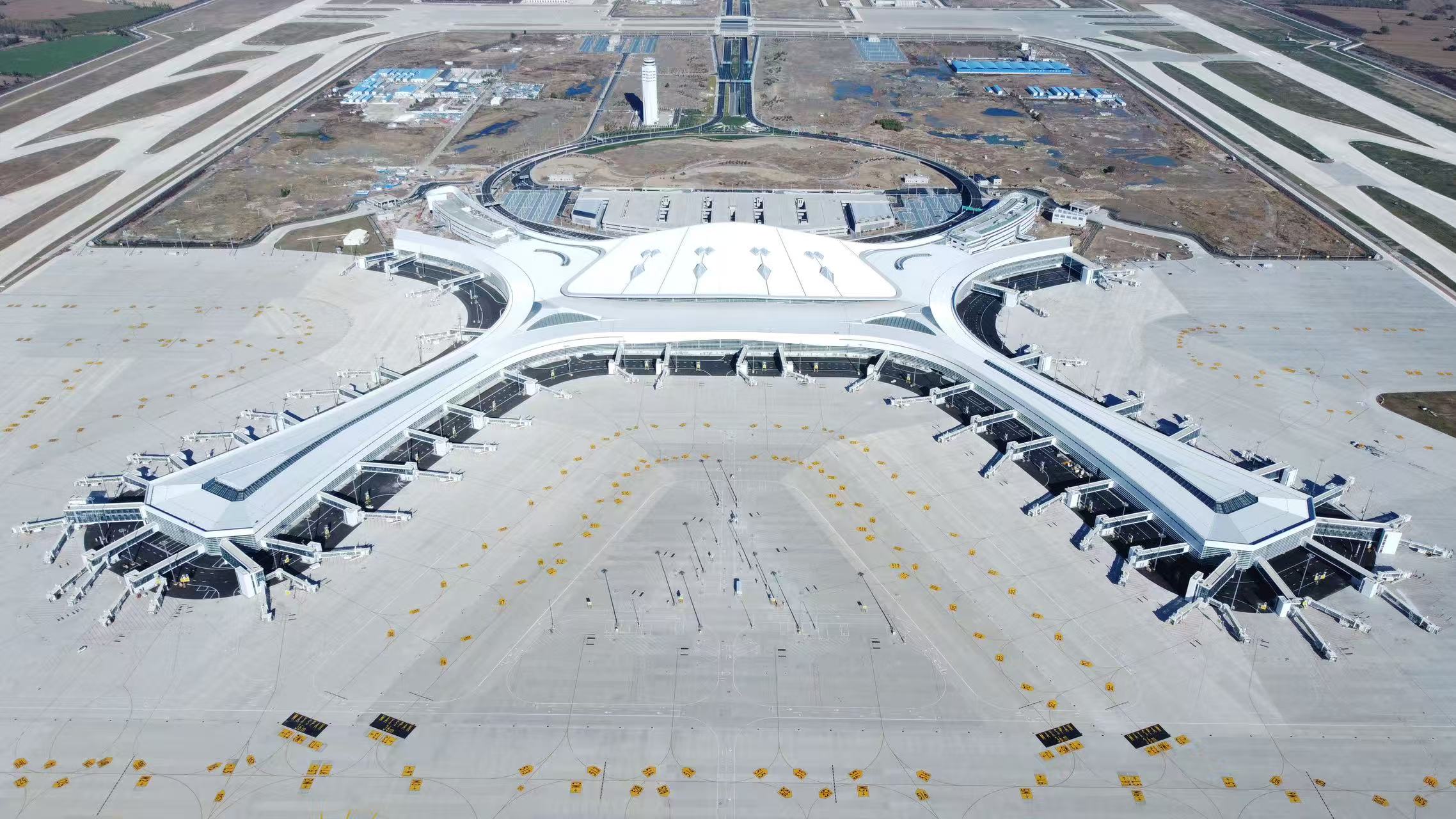
As Inner Mongolia's first 4F-class airport—the highest standard in civil aviation airfields—this airport is fully equipped to accommodate the world's most advanced commercial aircraft.
Moreover, it functions as a regional aviation hub, a primary alternate landing site within the Beijing-Tianjin-Hebei airport cluster, a Class I international aviation port, and a key transportation node in China's national "Belt and Road Initiative". Its essential role is to connect domestic and international destinations while linking eastern and western regions.
"Where heaven and earth meet, all things communicate." Thanks to its unique geographic location, Hohhot has long served as a vital transportation center. During the Northern Wei Dynasty, Shengle, the capital city, controlled the critical passage between the Central Plains, the grasslands, and the desert, fostering thriving commerce and travel. In the Tang Dynasty, Shengle also served as a major commercial route extending north from Baidouchuan to present-day Erenhot, Manzhouli, and further into Russia and Mongolia. During the Qing Dynasty, Guisui City was a key node on the Grassland Silk Road. From the late 17th to early 20th century, the 13,000-kilometer Tea Road began at Wuyi Mountain in Fujian Province in the south, passed through Hohhot in Inner Mongolia, continued north to Mongolia, and ultimately reached Russia. In modern times, Hohhot has emerged as a crucial transportation hub under the "Belt and Road Initiative," linking the mainland of China with Russia, Mongolia, and the heart of Europe. For centuries, merchants from home and abroad have gathered here, fostering vibrant trade and rich cultural exchanges.
The echoes of history continue to resonate. This ancient route, once bustling with camel caravans and travelers, is now being revitalized with new significance for the modern era. Shengle International Airport is dedicated to becoming a key hub on the new "Air Silk Road," serving as a vital gateway across North China and connecting Eurasia. It aims to make a unique and meaningful contribution to this important legacy.
From above, the airport's terminal is designed to resemble a finely crafted saddle, reflecting the dynamic heritage of the horse-riding cultures in the region. The main facade of the terminal features a 600-meter-long eave inspired by the flowing khata scarf, offering a warm and inviting welcome to visitors from around the globe. The terminal's skylights are thoughtfully crafted using spindle columns, cables, and inflatable membranes, creating an atmosphere reminiscent of a traditional Mongolian yurt. Looking upward, travelers can enjoy views of the expansive grassland sky and clouds, celebrating Inner Mongolia's rich cultural heritage and sharing the distinctive beauty of grassland culture with the world.
Shengle Airport's appeal extends beyond its striking design to its thoughtfully planned interior layout. More than just a transportation hub, it serves as a vital platform connecting the world. As a key node on the "Belt and Road" land corridor and the northern gateway of the China-Mongolia-Russia economic corridor, Hohhot is utilizing this state-of-the-art airport to accelerate its integration into the global network.
In the near term, Shengle International Airport aims to achieve an annual passenger capacity of 28 million, handle 320,000 tons of cargo and mail, and manage 244,000 aircraft movements by 2030. Looking further ahead to 2050, these figures are expected to grow to 65 million passengers, 800,000 tons of cargo and mail, and 511,000 aircraft movements.
To enhance the travel experience for international passengers, Shengle International Airport has proactively upgraded its communication infrastructure. Previously, the construction of civil communication facilities at Hohhot Shengle International Airport was successfully completed. To meet the demands of international travelers and business passengers, the regional communication system has implemented a "seamless access" plan in advance. All three major telecom operators share a jointly built network, ensuring passengers enjoy "uninterrupted" connectivity from arrival through boarding and departure.
Looking forward, Shengle Airport will continue to expand its international routes with exceptional performance. By 2025, Hohhot Airport will establish strong partnerships with Xi'an and Qingdao airports. Leveraging Qingdao Airport's connections to Japan and South Korea, and Xi'an Airport's access to Northwest China, Central Asia, and Southeast Asia, new transfer services will be launched connecting Hohhot via Xi'an or Qingdao to other domestic and international destinations.
Additionally, capitalizing on Hohhot's strategic location facing Russia and Mongolia and linking Northeast and Northwest China, transfer services will be introduced from Xi'an or Qingdao through Hohhot to various regional cities as well as Russia and Mongolia. These initiatives will create aerial bridges fostering economic exchange and cultural communication across regions.
As the morning sun brightens the northern frontier, Shengle International Airport stands out like a shining gem above the grasslands. This young and dynamic airport is not only Hohhot's new gateway but also a crucial hub connecting China to the world. From here, Inner Mongolia's high-quality development will gain fresh momentum, and China's northern frontier will embrace broader opportunities for global engagement.
The issuer is solely responsible for the content of this announcement.