Gen Z leads in financial and retirement confidence, but doubts remain widespread
- Written by: Times Media

A new generation of financial ‘super planners’ arrives as cost-of-living pressures widen national retirement confidence gap
- Having enough to retire comfortably is Australians’ equal top life goal alongside financial independence (54%) and ranks equal third for Gen Z alongside homeownership (45%).
- Gen Z Australians have edged out Gen Y as the most financially confident generation (45% vs 42%) and are most likely to believe they can meet future retirement needs (37%).
- Despite relatively higher financial confidence, less than half of Gen Zs believe they are on track to retire comfortably (44%) only slightly higher than the national figure of 41%.
- Across all Australians, only 31% believe they will be able to retire when they want to, with cost-of-living the biggest barrier to peoples’ financial aspirations (64%).
- A group of around 1 in 3 Gen Z ‘super planners’ are running post-retirement calculations in their 20s, as they seek to take more long-term control.
According to MLC’s new Real Retirement Report, Gen Z have overtaken Gen Y as the most financially confident generation, as economic and income pressures prompt many younger Australians to take more control of their financial futures. Now, 45% of Gen Zs are extremely or very confident in their financial knowledge, up from 30% in 2024, while 42% of Gen Ys are confident compared to 35% two years earlier.
The research of more than 2,500 Australians, conducted by McCrindle on behalf of MLC, found that Gen Z are more likely than any other generation to believe they can meet their financial needs in retirement (37%) and expect to retire earliest, at 63.
Retirement is also seen as an important life goal for Gen Zs who now rank having enough to retire comfortably (45%) equal third with home ownership, behind work life balance (52%) and financial independence (46%). This aligns with the national focus on having enough in retirement, now Australians’ equal top goal (54%) alongside financial independence.
However, even among the nation’s most confident generation, only a minority of Gen Zs (44%) say they are on track to achieve a comfortable retirement. This reflects national aggregate figures, where even fewer believe they are on track (41%) and just 31% expect to be able to retire when they want to.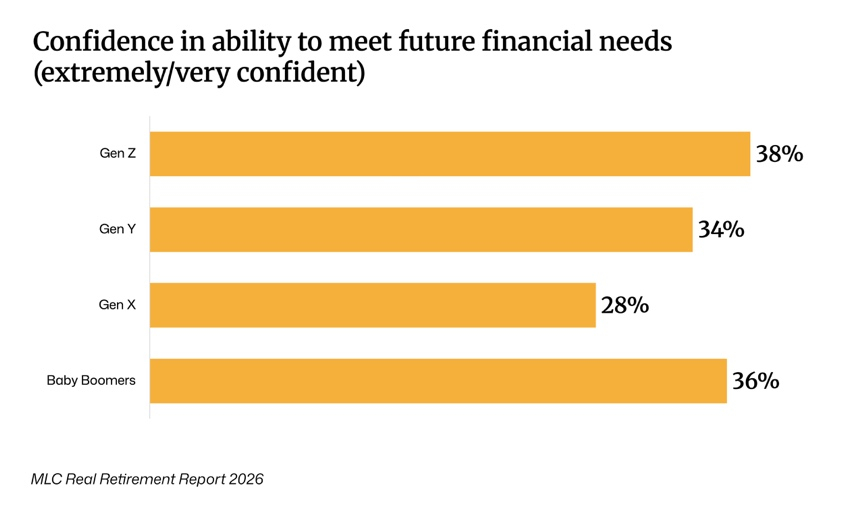
At a national level, these figures fall further among women, with only 25% expecting to be able to retire when they want, compared to 37% for men. Similarly, 50% of men believe they are on track to retire comfortably compared to 32% of women.
The research shows that across the population, cost-of-living pressures are by far the most commonly cited barrier to achieving financial goals (64%), followed by current income (37%) and debt (20%). Gen Z also report the highest levels of frustration about their financial situation (37%), just ahead of Gen Y (36%), and followed by Gen X (32%) and Baby Boomers (19%).
Renee Howie, MLC’s Chief Customer Officer, said the MLC Real Retirement Report highlighted the challenge many Australians face in balancing today's financial commitments with tomorrow's goals.
“Having enough money to retire comfortably is now one of Australians’ most important life goals, yet most people don’t feel on track to achieve it. With cost-of-living pressures, interest rate rises and even uncertainty around what recent Federal Budget changes may mean for them, it’s understandable many Australians feel less in control of when and how they retire.
“What’s encouraging is that younger Australians appear to be responding with action and engaging earlier with their finances. They’re talking openly and honestly about money, setting goals, superannuation and thinking about retirement well before previous generations did.”
A new generation of ‘super planners’ emerges
As Gen Z responds to ongoing financial pressures, the research reveals a group of younger Australians stepping up their retirement planning far earlier than others.
This group of ‘super planners’ includes the roughly one in three Gen Zs who have begun retirement planning understand how long their savings must last (32%), know what their major expenses will be (38%) and even how much super they will draw down each year once in retirement (30%).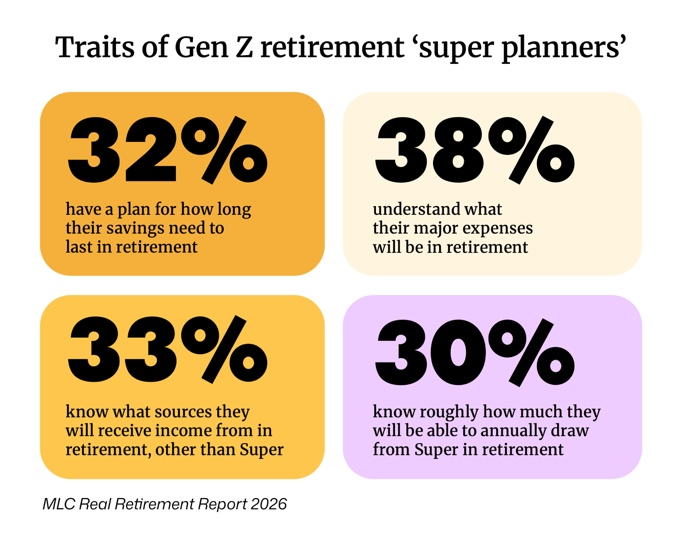
“Many younger Australians are running post-retirement calculations far earlier in life so they have a clear goal they can work towards. This is a digitally savvy generation who knows how to find information, but it’s more than just budgeting and planning, they’re taking meaningful actions with this information too.”
Gen Zs are the most likely of any generation to switch super funds (9%), salary sacrifice (10%) and seek advice (14%).
Ms Howie said that no matter where you are in your journey to retirement, taking small steps can make a big difference to outcomes and help close the confidence gap. This includes:
- A 5-minute super check – a quick check to see if you have multiple super accounts you don’t know about, how much you’re paying in fees and costs, and if you’re in the right investment option can save you tens of thousands of dollars over a lifetime. For example, simply switching from a default investment option to a high growth one between 18-49 years of age could add up to $120,000 to your super at retirement*.
- Understand available incentives – programs like the government co-contribution scheme or low-income support tax offset can help lower-to-middle income earners boost their super.
- Take advantage of compound interest – even if you don’t have much to spare, contributing $5 or $10 a week or month in your 20s and 30s could have a big impact on your super balance at retirement. For example, salary sacrificing an extra $5 per week to your super from 20 years of age could add more than $26,000 to your super at retirement**.
“At MLC, we believe that a national dialogue around retirement readiness and confidence is sorely needed so people aren’t going it alone. But for individuals, if you’re unsure how you’re tracking, are worried about retirement or need support, speak to a financial adviser. If you don’t have one, call your super fund as most will be able to put you in touch with someone that can help,” Ms Howie added.
*Scenario is based on an 18 year-old with a starting superannuation
**Scenario is modelled on an extra $5 per week and a 2.5% p.a. salary sacrifice increase from age 20, to age 67. Assuming an investment return of 6% from age 20 – 55 and then reducing over time to 5.5% p.a. at retirement age of 67.