Before vaccines, diphtheria used to kill hundreds each year. Now it’s back in Australia
- Written by: Archana Koirala, Paediatrician and Infectious Diseases Specialist; Clinical Researcher, University of Sydney
The Northern Territory[1] and Western Australia[2] are experiencing outbreaks of an almost-eradicated infection, diphtheria.
The NT has recorded[3] 17 cases of respiratory diphtheria in the past month and 60 cases of the less serious cutaneous diphtheria, affecting the skin, in the past year.
In the Kimberley region of WA, 27 cases[4] have been reported in the past month alone, with one-quarter of those respiratory infections.
Cases have also been found[5] in Queensland (two) and South Australia (one) this year.
Historically, diphtheria was a leading cause of childhood death globally. More than 4,000 Australians died from diphtheria between 1926 and 1935[6].
Vaccination started in Australia in the 1930s and the disease has rarely been seen[7] since the 1950s.
But vaccine coverage has waned since the COVID pandemic, leading to a rising number of cases.
How do you contract it? And how does it progress?
Diphtheria is an infection caused by[8] a toxin from the bacteria Corynebacterium diphtheriae or Corynebacterium ulcerans.
Infection occurs in the nose, throat and airway (respiratory diphtheria) or the skin (cutaneous diphtheria).
It spreads through respiratory droplets (coughs and sneezes) or direct contact with the fluid from infected skin sores.
Respiratory diphtheria presents with early symptoms of fever, sore throat, a general sense of feeling unwell (malaise) or loss of appetite.
Over the next few days, a greyish-white membrane may form over the throat and tonsils, making it difficult to swallow and breathe. It can progress to block the airway, causing death from asphyxia.
Cutaneous diphtheria presents as chronic skin ulcers that won’t heal. It generally isn’t fatal, but these sores are a source of bacteria. They can spread to un-immunised or partially immunised children and adults, causing respiratory disease.
The toxin in respiratory infections can also cause myocarditis[9] (inflammation of the heart) and polyneuropathy[10] (nerve paralysis) in the days or weeks that follow. This occurs only rarely in cutaneous infections.
How is it treated?
Both respiratory and cutaneous diphtheria require prompt treatment with antibiotics[11] to clear the organism and limit transmission.
Respiratory diphtheria treatment may also require diphtheria antitoxin[12], which must be administered early to neutralise circulating toxin. Once the toxin has entered host cells, its effects are no longer reversible.
But the diphtheria antitoxin isn’t readily available. A global decline in cases and decreased production means[13] there are few stockpiles and minimal manufacturing capacity.
Even with treatment, up to one in ten people with respiratory diphtheria will die[14].
What can be done to prevent it?
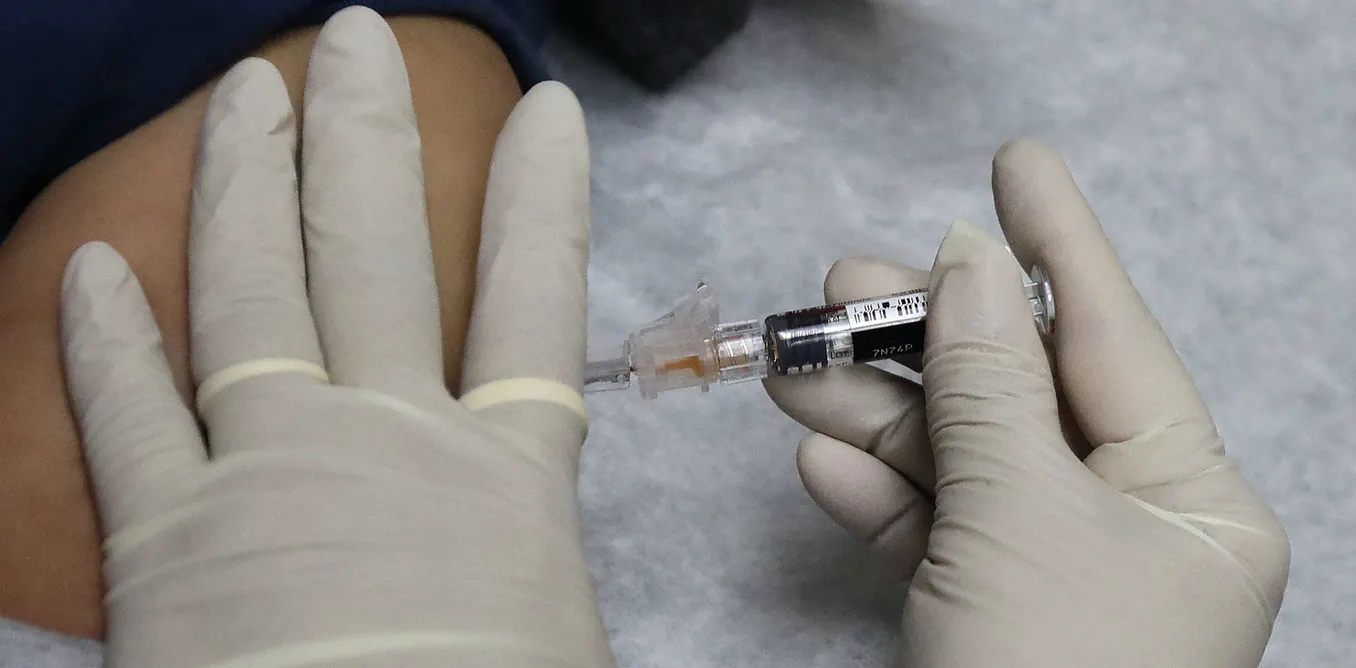
Diphtheria can be prevented by vaccination. Diphtheria vaccines are given as part of a combined vaccine that also protects against whooping cough and tetanus (DTP). It stimulates the production of antibodies which protect against diphtheria toxin.
These are routinely given to children in Australia at two months, four months, six months and 18 months, then at four years and again in early adolescence. It’s also given during each pregnancy and a booster is recommended for adults around age 50.
In outbreaks, vaccines can also be used in targeted campaigns to reduce transmission and disease.
One month after completing the three-dose course in infancy, more than 99% of babies[15] achieve protective antibody levels that last through childhood.
By middle age, however at least half of people will have low antibody levels[16] which may not protect against disease. A booster dose restores this immunity.
The vaccine is safe and generally well-tolerated[17]. Mild pain at the injection site and mild fevers are the most common side effects.
How a near-eradicated disease came back
Diphtheria has traditionally resurged in settings with fractured access to vaccination, such as in areas of conflict[18].
But even modest declines in vaccine coverage create pockets of susceptibility[19], leaving children and vulnerable adults at risk.
In 2025, routine childhood immunisation coverage fell to its lowest level in five years[20]. Among 12 month olds, vaccination coverage dropped from 94.8% in 2020 to 90.5% in 2025. For two year olds, it fell from 92.1% to 88.4%.
In 2022, an unvaccinated toddler from the Far North Coast of New South Wales was diagnosed[21] in respiratory diphtheria, requiring intensive care treatment. This was the first respiratory diphtheria case in Australia since 1992.
Outbreaks have since been reported in North Queensland[22], the Kimberley region[23] and the NT.
Only 91.9% of five year olds in the NT have received all the recommended doses of diphtheria vaccine, the lowest of all states and territories[24].
However Aboriginal and Torres Strait Islander children in the NT have higher vaccine coverage[25], with 95.35% of five year olds vaccinated against diphtheria.
In WA, 92.2% of five year olds olds – and 92.8% of First Nations five year olds – are vaccinated against diphtheria.
Why is coverage declining?
The drop in immunisation coverage is due to a mix of barriers[26]:
-
practical challenges such as being able to attend a vaccine appointment due to time or travel issues
-
concerns, beliefs and social influences affecting vaccine acceptance.
Concerns and hesitations about vaccines increased in the last year[27] and were often driven by a lack of trust in information from health care providers.
How can we reverse the decline?
Ensuring easy appointments and having supportive conversations about vaccines with GPs, pharmacists or nurses can help parents feel more confidence about vaccines.
But parents report limited opportunities[28] for these conversations. Consultations are often short and out-of-pocket costs can be high.
Reversing this will require investment in primary care – including funding models that remunerate providers for longer, dedicated vaccine discussions – and support for training in effective, empathetic communication.
What to do now
To check if your diphtheria vaccination is up to date, ask your health provider to access your Australian Immunisation Records or you can do it via the myGov app[29].
See your GP, pharmacist or nurse at your community health clinic or Aboriginal medical centre for catch-up vaccinations[30]. These are free for children and adolescents under 20.
If you’re concerned about potential diphtheria exposure and have upper respiratory or chronic skin sores, contact your health provider immediately, as early treatment is essential.
References
- ^ Northern Territory (health.nt.gov.au)
- ^ Western Australia (www.abc.net.au)
- ^ NT has recorded (health.nt.gov.au)
- ^ 27 cases (health.nt.gov.au)
- ^ been found (www.cdc.gov.au)
- ^ between 1926 and 1935 (www1.health.gov.au)
- ^ rarely been seen (www.aihw.gov.au)
- ^ caused by (www.cdc.gov.au)
- ^ myocarditis (doi.org)
- ^ polyneuropathy (doi.org)
- ^ treatment with antibiotics (www.cdc.gov.au)
- ^ antitoxin (immunisationhandbook.health.gov.au)
- ^ means (terrance.who.int)
- ^ will die (www.cdc.gov.au)
- ^ more than 99% of babies (immunisationhandbook.health.gov.au)
- ^ low antibody levels (immunisationhandbook.health.gov.au)
- ^ safe and generally well-tolerated (www.ausvaxsafety.org.au)
- ^ in areas of conflict (doi.org)
- ^ create pockets of susceptibility (theconversation.com)
- ^ fell to its lowest level in five years (ncirs.org.au)
- ^ diagnosed (www1.health.gov.au)
- ^ North Queensland (www.populationmedicine.eu)
- ^ Kimberley region (news.wapha.org.au)
- ^ lowest of all states and territories (www.health.gov.au)
- ^ higher vaccine coverage (www.health.gov.au)
- ^ barriers (ncirs.org.au)
- ^ increased in the last year (ncirs.org.au)
- ^ report limited opportunities (ncirs.org.au)
- ^ via the myGov app (my.gov.au)
- ^ catch-up vaccinations (www.health.gov.au)