


Can I get a free flu shot? And will it cover ‘super K’? Your influenza vaccine questions answered
- Written by: Allen Cheng, Professor of Infectious Diseases, Monash University
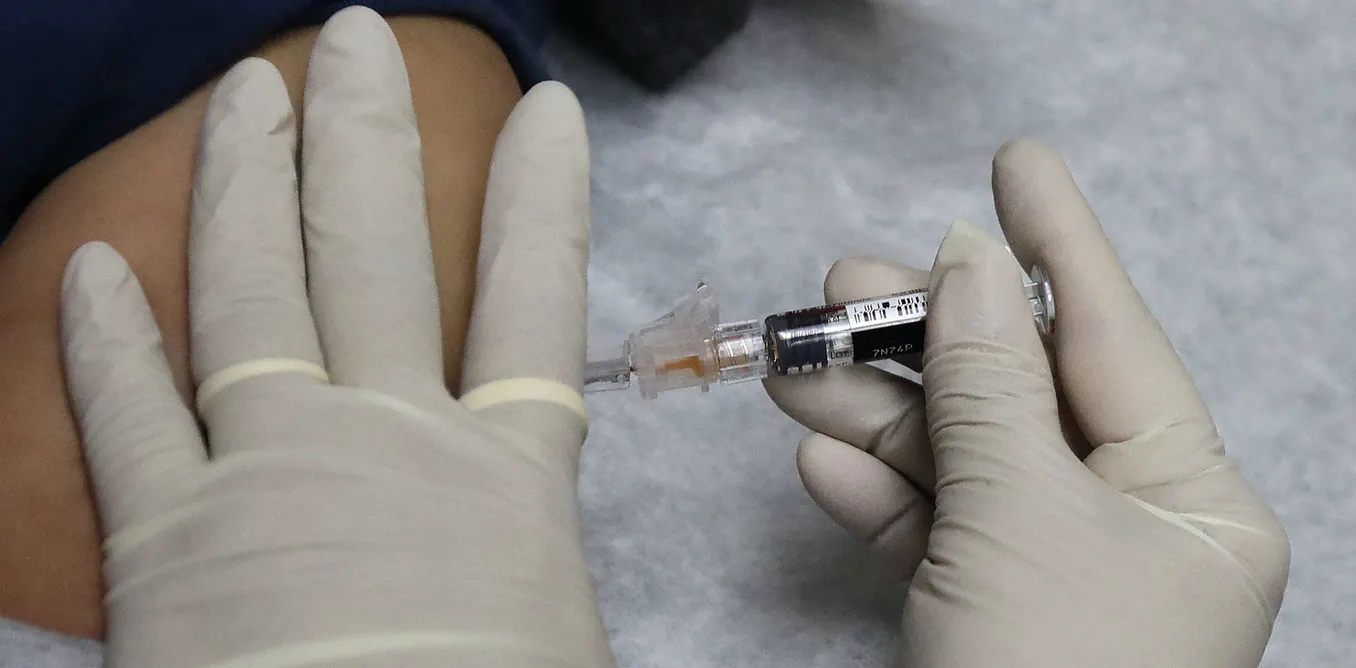
For many of us, flu can mean a nasty few weeks of illness. But for the very young and old, and those with health complications, it can be extremely serious, leading to around 3,500 deaths in Australia each year[1].
You likely know vaccination is the best protection against the flu (influenza), and may have even read our recent article about the best time[2] to get vaccinated.
So, what are your options? And are you eligible for a free flu shot?
Here are the answers to some common questions I’ve been getting: about which strains this year’s vaccine protects against, whether the brand matters, if there are egg-free options, and what to do if you’re scared of needles.
Will the vaccine protect against the ‘super K’ strain?
Each year, influenza strains accumulate small mutations that are different enough from each other that the immune system doesn’t recognise them well. This is why vaccine components need to change each year, to anticipate what will circulate the following season.
One strain of influenza, called subclade K[3] – also known as “Super K” – was responsible for many influenza infections in late 2025, both in the southern hemisphere, and during the usual northern hemisphere winter season.
In 2026, the southern hemisphere vaccine contains[4] two new components, with one closely related to subclade K. This should lead to better protection against subclade K infections.
Does the brand make a difference? And will I have a choice?
Vaccines can vary in the way they are manufactured – either in eggs (Vaxigrip, Fluzone, Influvac) or cells (Flucelvax). Studies suggest[5] cell-based vaccines provide at least as much protection, and possibly slightly more, than egg-based vaccines.
But the most important point is that any influenza vaccine provides protection, and the difference between vaccine types is relatively small.
Certain formulations are designed to elicit a stronger immune response. These are designed for older people, whose immune systems tend to produce a weaker response. These “enhanced” vaccines include those with an adjuvant, a substance that stimulates the immune system to respond (Fluad), and those with higher doses of influenza vaccine strains (Fluzone High-Dose).
There is also a new nasal vaccine[6] for children (Flumist).
If you want a specific type of vaccine, call ahead to your vaccine provider to discuss the options available.
Where can I get the flu vaccine?
The easiest way to find a vaccine provider is by searching on the government’s HealthDirect website[7] under “Influenza (flu) vaccine” and your location.
In general, influenza vaccines are available[8] at GP clinics, pharmacies, community health services and Aboriginal Health Services. Your school, university or workplace may also have a program.
There are special arrangements for aged care facilities and other group accommodation settings. Immunisation services are also available for staff and patients in public hospitals.
Who is it free for? Does it depend where you live?
Unfortunately this is somewhat complicated, as there are both national and state/territory programs.
Under the National Immunisation Program, influenza vaccines[9] are free for high risk groups:
- anyone over 65 years of age
- all children aged between six months and four years (inclusive)
- people with certain chronic illnesses
- those who are pregnant
- all Aboriginal and Torres Strait Islander people (over six months of age).
Free state and territory programs may cover additional groups or different vaccines:
- Queensland[10] and Western Australia[11] provide influenza vaccines for anyone over the age of six months who is not covered by the national program
- some states provide[12] the nasal vaccine (FluMist) for children as an alternative to the injectable vaccine: 2–4 years in New South Wales and South Australia; 2–5 years in Queensland; and 2–11 years in WA
- SA has a program[13] for people experiencing homelessness.
Most health-care services and aged care services also provide free influenza vaccines for their workers. Some other employers choose to arrange similar workplace programs.
For those not covered by free state or national government programs, influenza vaccines are widely available at clinics and pharmacies. Costs range from around A$20 (for standard egg-based vaccines) up to $50–70 (for nasal vaccines[14] in children).
Some private health insurance policies also include free flu shots, so check with your provider.
Is there an egg-free option? And why are eggs involved?
Since the 1940s[15], influenza vaccines have been manufactured using chicken eggs. Flu strains grow efficiently in them, and are then inactivated, purified and processed.
The amount of residual egg protein in vaccines after processing is now very small (less than one microgram). Even people with an egg allergy[16] can generally receive egg-based vaccines safely. But if you have an allergy, discuss this with your vaccine provider.
For people who want an egg-free option, a cell-based vaccine, Flucelvax, is manufactured[17] in animal cells (MDCK cells, derived from canine kidneys), before purification and processing.
Other[18] vaccines use insect cells[19] but are not yet available in Australia. There aren’t any products that don’t involve eggs or animal cells, although mRNA vaccines[20] (similar to COVID-19 vaccines) are being developed.
What if I’m scared of needles?
In Australia, the nasal vaccine FluMist is only registered for use in children. But this may eventually change, as in some other countries it’s also available for adults under 50.
If you’re extremely scared of needles, there are evidence-based options[21] to help make immunisation less distressing. These include psychological techniques (such as breathing exercises[22]), distraction devices[23] (that cool and vibrate the skin), or local anaesthetic or sedation[24],
So if you’re concerned, speak to your GP or pharmacist to make sure you don’t miss out on the opportunity to protect yourself against influenza.
References
- ^ each year (www.cdc.gov.au)
- ^ the best time (theconversation.com)
- ^ subclade K (doi.org)
- ^ contains (www.who.int)
- ^ suggest (ncirs.org.au)
- ^ nasal vaccine (theconversation.com)
- ^ website (www.healthdirect.gov.au)
- ^ available (www.health.gov.au)
- ^ influenza vaccines (www.health.gov.au)
- ^ Queensland (www.health.qld.gov.au)
- ^ Western Australia (www.health.wa.gov.au)
- ^ provide (ncirs.org.au)
- ^ program (www.sahealth.sa.gov.au)
- ^ nasal vaccines (theconversation.com)
- ^ 1940s (pmc.ncbi.nlm.nih.gov)
- ^ egg allergy (www.allergy.org.au)
- ^ manufactured (doi.org)
- ^ Other (pmc.ncbi.nlm.nih.gov)
- ^ insect cells (doi.org)
- ^ mRNA vaccines (doi.org)
- ^ options (doi.org)
- ^ breathing exercises (doi.org)
- ^ distraction devices (doi.org)
- ^ sedation (doi.org)









