


Worried about feeding your baby solid foods? Here’s what you should know
- Written by: Lillian Krikheli, Lecturer in Speech Pathology, La Trobe University
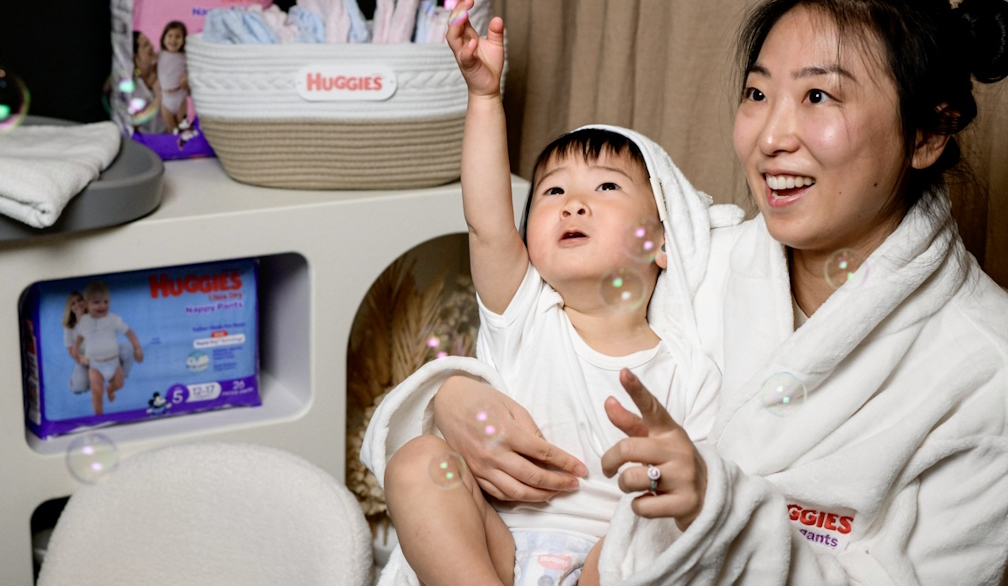
When you have a baby, mealtimes can be messy and stressful.
If you’re a new parent you may be unsure what, when, and how to feed your little one. And you may also worry about choking, particularly when it’s time to start feeding your baby solid foods.
For babies starting solids at the recommended age of six months[1], it’s important to offer foods in a variety of different ways. Purees can be a helpful starting point, but they shouldn’t be the only texture a baby experiences.
Research suggests not waiting too long to introduce lumpy or textured foods. Infants who start eating lumps at 10 months[2] or later were more likely to develop feeding difficulties and become selective eaters.
So if you’re a parent, where do you start? And what other foods are good to try?
Why texture matters
Mealtimes are crucial for a child’s development[3] because they’re an opportunity to explore different textures and develop oral motor skills.
Imagine you’re eating a piece of toast. This involves performing a range of movements including holding, biting, chewing and swallowing. All of these actions require different muscles to work together, and only improve through practice. But that practice is only effective if it involves real food[4], as opposed to non-edible teething toys and isolated oral exercises like jaw opening and closing or cheek puffing.
When starting solid foods, many parents rely on purees and pouches as convenient ways[5] to feed their babies. There’s nothing wrong with puree in itself. Many of our favourite foods resemble purees. Think of buttery mashed potato, yogurt, ricotta and applesauce.
The problem arises when purees and pouches become the only texture parents offer their babies, particularly early on. Babies who only eat pureed foods have less opportunity to develop the skills needed[6] for eating and drinking. And research suggests children who frequently eat pouched foods are more likely to become fussy eaters[7].
So there’s nothing inherently bad about pureed foods. But feeding your baby varied foods gives them more opportunity[8] to develop crucial oral motor skills.
Does it matter how I feed my baby?
There are various ways to start giving your baby solid foods.
One common approach is “baby-led weaning”. That’s where parents encourage their baby to feed themselves, rather than fully spoon-feeding them. This can encourage your baby to be more independent and explore food on their own. But it may also make mealtimes messier and more time-consuming for parents. And it can also feel daunting for parents who are concerned about choking.
However, one 2016 study[9] found babies who feed themselves are no more likely to choke than babies who are spoon-fed. Foods which are suitable for baby-led weaning include strips of omelette, ripe avocado wedges or well-cooked corn on the cob. However, the researchers emphasised the importance of preparing foods appropriately and using risk minimisation strategies. These include avoiding high-risk foods such as popcorn, cutting round foods such as grapes and cherry tomatoes, and supervising babies whenever they eat.
An ‘in-between’ option for feeding is to offer your baby purees, while giving them a degree of independence. For example, you may pre-load a spoon for your baby to bring to their own mouth. You can also pair purees with larger foods, say a broccoli floret dipped in hummus. These combinations will help your baby develop eating skills while you become more confident with feeding your baby.
No matter what feeding approach you take, infant first aid[10] training is a must for parents and carers. And if your child was born premature, has a developmental delay or has specific nutrition requirements, it’s best to speak to a paediatrician before giving them solid foods.
When you have a picky eater
Even if your baby transitions well to solid foods, toddlerhood can bring a new set of challenges.
Toddlers tend to be selective about what foods they do or don’t eat. They may also become more cautious[11] around unfamiliar foods. These are both normal parts[12] of a child’s development.
But problems can arise when parents pressure toddlers to eat food they don’t want to eat or when they aren’t hungry. Even small gestures, such as using a “spoon as aeroplane” or asking them to take “one more bite” in front of the TV or tablet, can put pressure on children. As a result your child may eat that next mouthful but, over time, they may develop a negative relationship[13] with food and mealtimes.
As parents and carers, our role is to offer food at predictable times and in positive mealtime environments[14]. Some ways to do that include:
- trusting they’ll eat as much as they need
- eating shared meals when possible
- modelling enjoyment of different foods during shared meals
- offering new foods alongside familiar favourites
- giving children multiple opportunities to see and try new foods, even if they don’t eat them the first time.
Unfortunately, babies and toddlers won’t love every meal you make them. But in time they’ll come to learn about, and even enjoy, a world of different textures and tastes.
References
- ^ six months (www.who.int)
- ^ 10 months (doi.org)
- ^ a child’s development (doi.org)
- ^ involves real food (doi.org)
- ^ convenient ways (doi.org)
- ^ skills needed (doi.org)
- ^ fussy eaters (doi.org)
- ^ more opportunity (doi.org)
- ^ 2016 study (doi.org)
- ^ infant first aid (www.rch.org.au)
- ^ more cautious (doi.org)
- ^ normal parts (doi.org)
- ^ negative relationship (doi.org)
- ^ positive mealtime environments (doi.org)









