In 2024, the climate crisis worsened in all ways. But we can still limit warming with bold action
- Written by: Thomas Newsome, Associate Professor in Global Ecology, University of Sydney
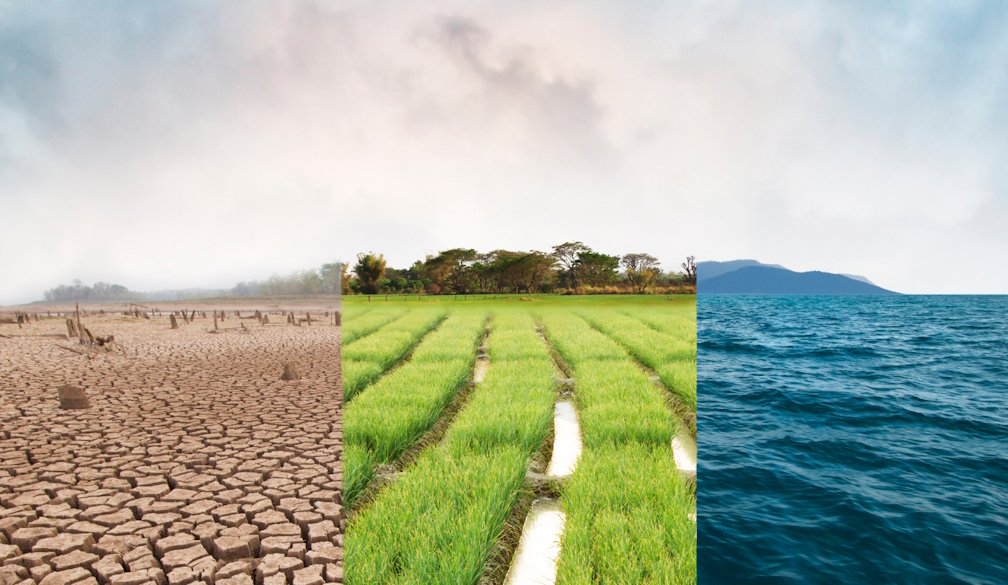
Climate change has been on the world’s radar for decades[1]. Predictions made by scientists at oil giant Exxon in the early 1980s are proving accurate[2]. The damage done by a hotter, more chaotic world is worsening[3] and getting more expensive.
Even so, many countries around the world are failing to meet their emissions targets[4], with major gaps found even this week between the commitments and actions[5] needed to hold global warming to 1.5°C.
This has put Earth on a dangerous path, as our new report on the state of the climate[6] reveals.
Earth’s vital signs ailing
Last year was the hottest on record[7]. It was also likely the hottest in at least 125,000 years[8].
Every year, we track 34 of the planet’s vital signs. In 2024, 22 of these indicators were at record levels. Carbon dioxide levels in the atmosphere and ocean heat both hit new highs, as did losses of trees to fire. Meat consumption kept rising and fossil fuels consumption reached new heights.

The consequences of climate inaction are ever more clear. In 2024, the world’s coral reefs suffered the most widespread bleaching[9] ever recorded, affecting roughly 84% of the world’s coral reef area between January 2023 and May 2025.
Greenland and Antarctic ice mass fell to record lows. Deadly and costly disasters surged, including the flooding in Texas which killed at least 135[10] people while the Los Angeles wildfires have cost more than A$380 billion. Since 2000, global climate-linked disasters have now caused more than $27 trillion in damages.

Stories and statistics like this are sadly not new. Many other reports and warnings have been published before we started this annual snapshot in 2020[13]. Therefore, our report this year focuses on three high-impact types of climate action, across energy, nature and food.
Energy
Combined solar and wind consumption set a new record in 2024 but is still 31 times lower than fossil fuel (oil, coal, gas) energy consumption. This is despite the fact renewables are now the cheapest choice for new energy almost everywhere. One reason for this are the ongoing subsidies[14] for fossil fuels.
By 2050, solar and wind energy could supply nearly 70% of global electricity[15]. But this transition requires restricting the influence of the fossil fuel industry[16] and a full phase out of fossil fuel production and use, not the expansion we continue to see globally.
As a result of surging fossil fuel consumption, energy-related emissions rose 1.3% in 2024 and reached an all-time high of 40.8 gigatons (Gt) of carbon dioxide equivalent. In 2024, the greatest fossil fuel greenhouse gas emitters were China (30.7% of total), the United States (12.5%), India (8.0%), the European Union (6.1%), and Russia (5.5%). Together, they accounted for 62.8% of global emissions.
Sadly, much of the rise in fossil fuel electricity generation may be due to hotter temperatures and heat waves[17].
Although there are concerns over the environmental impacts of renewables, the greater threat to our biodiversity[18] is climate change and biodiversity conservation and mitigation measures can be part of[19] project planning.
Nature
Protecting and restoring ecosystems on land and in the ocean remains one of the most powerful ways to support climate change[20], and support biodiversity and human well-being.
Protecting and restoring ecosystems such as forests, wetlands, mangroves and peatlands could remove or avoid around 10 Gt of carbon dioxide emissions[21] per year by 2050, which is equivalent to roughly 25% of current annual emissions.
But we must also stop destroying what we have. Global tree cover loss was almost 30 million hectares in 2024, the second highest area on record and a 4.7% increase[22] over 2023. Tropical primary forest losses were particularly large in 2024, with fire-related losses reaching a record high of 3.2 million hectares, up from just 690 thousand hectares in 2023, a 370% increase[23].
Food
Approximately 30% of food is lost or wasted globally. Reducing food waste could greatly reduce greenhouse gas emissions since it accounts for roughly 8–10% of global emissions[24]. Policies supporting plant-rich diets could also help slow climate change, while offering many benefits related to human health, food security, and biodiversity.
The technical mitigation potential associated with switching away from eating meat may be in the order of 0.7–8.0 gigatonnes of carbon dioxide equivalent[25] per year by 2050. This is in part because methane emissions from cows, sheep and other ruminant livestock account for roughly half of all agricultural greenhouse gas emissions. Per capita meat consumption hit all-time highs in 2024, and we currently add 500,000 more ruminants[26] per week.
 Discarded vegetable waste in Luxembourg. Foerster/wikimedia, CC BY-NC[27][28]
Creating global change
In our report, we note that social tipping points can trigger climate action. These refer to moments when a small, committed minority triggers a rapid and large-scale shift in social norms, beliefs, or behaviours. Research shows sustained, nonviolent movements and protests involving just a small proportion of a population (about 3.5%) can help trigger transformative change[29].
 Many people underestimate how much support there is globally for climate action. Wikimedia, CC BY-NC[30][31]
Many people underestimate just how much support there is globally for climate action, with most people believing[32] they are in a minority. This arguably fosters disengagement and isolation. But it also suggests that as awareness grows and people see their values reflected in others, the conditions for social tipping points may be strengthened.
Reaching this positive tipping point will require more than facts and policy. It will take connection, courage, and collective resolve. Climate mitigation strategies are available, cost effective and urgently needed, and we can still limit warming if we act boldly and quickly, but the window is closing.
References
- ^ decades (www.un.org)
- ^ accurate (grist.org)
- ^ is worsening (www.theguardian.com)
- ^ emissions targets (www.nature.com)
- ^ commitments and actions (www.theguardian.com)
- ^ state of the climate (academic.oup.com)
- ^ hottest on record (wmo.int)
- ^ least 125,000 years (www.ipcc.ch)
- ^ widespread bleaching (www.coralreefwatch.noaa.gov)
- ^ killed at least 135 (theconversation.com)
- ^ OregonStateUniversity/flickr (www.flickr.com)
- ^ CC BY-NC (creativecommons.org)
- ^ in 2020 (academic.oup.com)
- ^ ongoing subsidies (www.imf.org)
- ^ 70% of global electricity (www.iea.org)
- ^ fossil fuel industry (academic.oup.com)
- ^ temperatures and heat waves (ember-energy.org)
- ^ to our biodiversity (cleanenergycouncil.org.au)
- ^ can be part of (theconversation.com)
- ^ support climate change (www.unep.org)
- ^ carbon dioxide emissions (www.unep.org)
- ^ 4.7% increase (academic.oup.com)
- ^ 370% increase (academic.oup.com)
- ^ global emissions (www.cambridge.org)
- ^ carbon dioxide equivalent (www.cambridge.org)
- ^ ruminants (academic.oup.com)
- ^ Foerster/wikimedia (commons.wikimedia.org)
- ^ CC BY-NC (creativecommons.org)
- ^ transformative change (global.oup.com)
- ^ Wikimedia (commons.wikimedia.org)
- ^ CC BY-NC (creativecommons.org)
- ^ most people believing (www.nature.com)