After its landslide win, Labor should have courage and confidence on security – and our alliance with the US
- Written by: Joanne Wallis, Professor of International Security, University of Adelaide
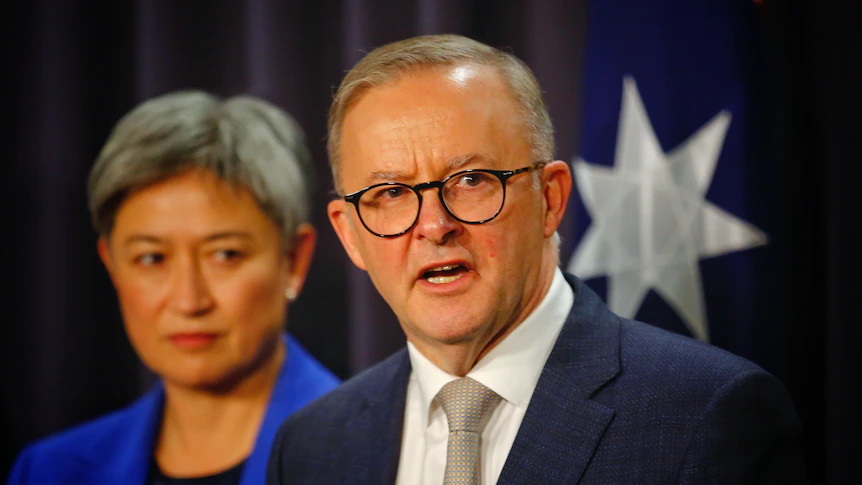
The re-election of the Albanese Labor government by such a wide margin should not mean “business as usual” for Australia’s security policy.
The global uncertainty instigated by US President Donald Trump means Australia’s security landscape is very different today from when Labor was first elected in 2022, or even when its Defence Strategic Review[1] was released in 2023.
As we argue in our recent book[2], the Albanese government faces increasingly difficult questions.
How can we maintain our crucial security alliance with the US while deepening partnerships with other countries that have reservations about US policy?
And, given Trump’s recent actions, how much can we continue to rely on the United States and what are the potential costs of the alliance?
With a massive parliamentary majority, the new government has an opportunity for bold thinking on national security. This is not the time for Australia to keep its head down – we need to face the rapidly changing world with our heads held high.
Read more: Blaming Donald Trump for conservative losses in both Canada and Australia is being too kind to Peter Dutton[3]
Trump 2.0 is not the same as 1.0
We do not advocate Australia step away from the US alliance. We are also realistic that decades of defence procurement mean Australia is heavily reliant on US defence materiel[4] (and its subsequent sustainment) for our security.
The deep interoperability between the Australian Defence Force and the US military is something alliance sceptics too readily gloss over: much Australian military capability cannot function without ongoing American support.
At the same time, many alliance advocates underestimate the impact of the new challenges we face. Some assumed a continuity[5] between the first and second Trump administrations. However, we are not convinced the lessons learned from Trump 1.0 are still valid.
A key difference between Trump 1.0 and 2.0 is the effect of his move away from respecting international law.
For example, the US has voted with Russia against UN Security Council resolutions [6] condemning the Ukraine war, withdrawn from the Paris Climate Agreement[7] and World Health Organization[8], and damaged relations with NATO allies[9], among many other actions.
As a middle power[10], Australia has long relied on the “rules-based order[11]” to advance its foreign and strategic policy interests.
Even if “normal transmission” resumes under a new US president in 2029, we are concerned the Trump administration’s structural changes to the international order will not easily be wound back. American soft power has been decimated by cuts to the US State Department, USAID and international broadcasting services. This will also not be rebuilt quickly.
A second difference is there are few “adults left in the room[12]” in the Trump administration.
The advisers who kept Trump in check during his first administration have been replaced by loyalists less likely to push back against his ideas and impulses. This includes his long-held grievance[13] that allies have been exploiting the US.
The Albanese government needs to think more deeply about how to hedge against dependence on the US. This means investing in relations with other partners, especially in Asia and the Pacific, and working with them to promote the laws, rules and norms that maintain stability and predictability in global affairs.
An idealistic vision for the future
We are also concerned that many in the national security community base their policy recommendations on the assumption that war between the US and China is inevitable, and such a conflict could draw in Australia as America’s ally.
Rather, the Trump administration’s preference for “deals” opens the possibility the US and China might come to an arrangement[14] that will affect US presence and leadership[15] in our region.
Australia may not be prepared for this. The new government must engage in more open discussion about how we would maintain our security if the US does pull back from the region or makes decisions[16] Australians don’t support.
As a start, we need to consider how Australia can better pursue self-reliance[17] within the alliance structure. We need a range of strategic options in the future that don’t rely on an outdated image of the US as a reliable partner.
This debate should be guided by what we call “pragmatic idealism[18]”.
Rather than accepting the way things are, the government and members of the national security community need to re-imagine how things can be.
We argue the Albanese government should draw confidence[19] from its thumping electoral win to articulate a politics of hope, opportunity and possibility for our future security. This needs to drown out the cynicism, passive acceptance and learned helplessness that often characterises Australian national security debates.
We are conscious that being “idealistic” is often dismissed as impractical, naïve “wishful thinking”. But the new government needs to demonstrate to Australians it has the courage to face the diverse, interlinked and complex security challenges we face – potentially on our own. These extend to issues such as cyber attacks, transnational crime and climate change.
Practical steps
As a first step, the Albanese government urgently needs to commission an integrated National Security Strategy[20] that considers all the tools of statecraft[21] Australia can use to respond to these challenges.
This means engaging more with partners in Southeast Asia and the Pacific. In particular, Australia should consider investing more heavily in information programs and public diplomacy as the US withdraws from this arena[22].
The government must also engage better with the public and be more transparent about its security options and decisions.
On AUKUS, for instance, the government must build its “social licence[23]” from the public to sustain such a massive deal across generations. Australians need to be better informed about – and consulted on – the decisions they will ultimately pay for.
This also includes being upfront with Australians about the need for greater defence spending[24] in a tumultuous world.
It is understandably tempting for the new Albanese government to continue a “small target[25]” approach when it comes to the US. This has meant minimising domestic debate about the alliance that could undermine support for AUKUS and avoid risking the ire of a thin-skinned Trump.
But the government needs the courage to ask difficult questions and imagine different futures.
References
- ^ Defence Strategic Review (www.defence.gov.au)
- ^ our recent book (www.blackincbooks.com.au)
- ^ Blaming Donald Trump for conservative losses in both Canada and Australia is being too kind to Peter Dutton (theconversation.com)
- ^ Australia is heavily reliant on US defence materiel (www.theguardian.com)
- ^ continuity (www.aspistrategist.org.au)
- ^ voted with Russia against UN Security Council resolutions (www.bbc.com)
- ^ Paris Climate Agreement (www.npr.org)
- ^ World Health Organization (www.whitehouse.gov)
- ^ NATO allies (edition.cnn.com)
- ^ middle power (www.nbr.org)
- ^ rules-based order (www.dfat.gov.au)
- ^ adults left in the room (www.theguardian.com)
- ^ long-held grievance (www.csis.org)
- ^ arrangement (www.foreignaffairs.com)
- ^ US presence and leadership (www.lowyinstitute.org)
- ^ makes decisions (www.theguardian.com)
- ^ self-reliance (theconversation.com)
- ^ pragmatic idealism (www.nbr.org)
- ^ draw confidence (www.youtube.com)
- ^ integrated National Security Strategy (www.lowyinstitute.org)
- ^ tools of statecraft (asiapacific4d.com)
- ^ US withdraws from this arena (www.npr.org)
- ^ social licence (www.ussc.edu.au)
- ^ defence spending (theconversation.com)
- ^ small target (www.theguardian.com)