We’ve heard the promises. Now it’s up to Labor to deliver its housing, wages and other economic policies
- Written by: Michelle Cull, Associate Professor of Accounting and Financial Planning, Western Sydney University
With a convincing win for a second term of government, the pressure is now on the new Labor government to deliver the economic policies central to its win.
Prime Minister Anthony Albanese is wary of breaking promises[1] and now has the opportunity to back this up. So, what are the key economic policies affecting everyday Australians that Labor is now set to deliver?
In his victory speech[2], Albanese said Labor would govern for every Australian “who deserves the security of a roof over their head or dreams of owning their own home”.
First home buyers
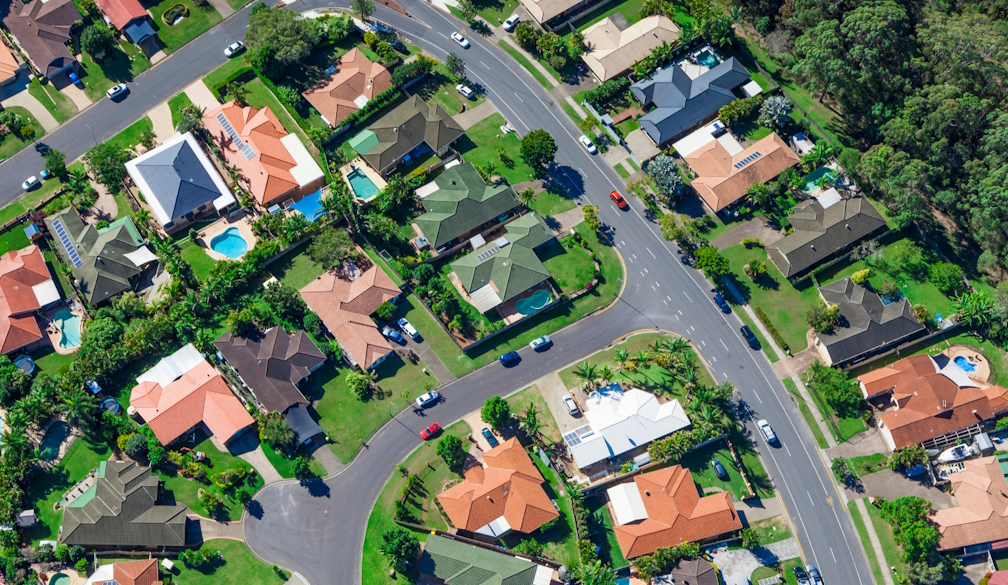
Labor has budgeted A$10 billion to help more Australians buy their first home. This involves providing an extra 100,000 new homes. The government plans to work with the states from July to identify where they should be located.
Building these homes is expected to take eight years – so the scheme will not be completed during the government’s second term. It will need to work quickly to ensure many of these homes are built while Labor is still in office.
Helping this is Labor’s policy to increase subsidies to housing apprentices and free TAFE education.
Also assisting first home buyers is the expansion of the 5% deposit Home Guarantee Scheme[3]. This will allow more first home buyers to buy a home with only a 5% deposit without paying Lenders Mortgage Insurance.
The expansion will remove income thresholds and increase eligible property price caps to better reflect the market. Further, more people will be able to apply for the scheme.

In addition, the government is expanding its Help to Buy Scheme[5] by increasing income and property price caps. This enables those on lower incomes to buy a home with a deposit as small as 2%. The government will pay for up to 40% of the cost on their behalf which will ultimately be paid back over time or when the house is sold.
Both the Help to Buy Scheme and Home Guarantee Scheme are extensions of Labor’s existing policies, so the government should be able to deliver this relatively quickly[6].
Increasing supply for all
Labor’s housing policies are not limited to first home buyers. To further increase housing supply, Labor plans to invest $54 million to speed up the construction of prefabricated and modular homes[7] covered by a new national certification system.
In addition, a $1.5 billion infrastructure program to speed up the building of roads, sewage and water connections should also help increase supply.
Labor is on track to build 55,000 social and affordable homes[8] through the Housing Australia Future Fund and the Social Housing Accelerator. Labor is also offering Build to Rent tax incentives[9] to increase affordable housing rental supply by up to 80,000 new rental properties.
The government has also promised to work with states and territories to strengthen renters’ rights.
Crisis housing
Labor has also made promises for those needing crisis housing.
For women and children fleeing family and domestic violence and for people experiencing homelessness, there is a $1 billion program to provide more crisis and transitional accommodation[10]. There is also $6.2 million of grants for homelessness support.
Workers’ pay rise
Labor has advocated to the Fair Work Commission for a wage increase above inflation for workers in low-paid jobs, such as cleaners, retail workers and early childhood educators[11].
With inflation currently at 2.4%, we can expect the minimum wage to rise to at least $24.68 an hour. The Fair Work Commission’s next Annual Wage Review should take place before the end of the financial year, with any changes likely to be effective from July.

These wage increases are in addition to the substantial pay increase for aged care nurses[13] as part of the Fair Work Commission’s Aged Care Work Value Case decision.
Tax cuts
The much-discussed tax cuts, costing $17 billion, will reduce the 16% tax rate to 15% (for income between $18,201 and $45,000) in the 2026–27 financial year, and to 14% in 2027–28 – just in time for the next election.
This will save taxpayers $268 and $536, respectively. These tax cuts will be welcomed by many and are likely to increase the labour participation rate. However, more tax reform may be needed to address bracket creep[14] and improve equity in the tax system[15].
In addition, Labor has promised an automatic instant tax deduction[16] for work-related expenses for labour income taxpayers.
This will take effect from the 2026–27 financial year to reduce the burden of record-keeping on taxpayers. It was also promoted as a way of “helping Australians keep more of what they earn”.
Medicare levy
While low wages are expected to increase and taxes to decrease, Labor also has plans to increase the low-income thresholds for the Medicare levy[17] by 4.7% for singles, families, and seniors and pensioners from July 1 2024[18].
This should bring immediate relief to those on lower incomes who will be exempt from paying the Medicare levy or pay a reduced levy when lodging their returns for the 2024–25 financial year.
So, what’s next?
Many of these policy announcements are a step in the right direction – the question lies around their ability to be implemented.
Albanese admitted in his victory speech that he is an optimist and his aim is to ensure nobody is left behind.
Once the election hype settles, Labor will need to prove it is delivering on its promises. And, of course, these policies will ultimately have to be paid for. How Labor approaches this in the longer term will become a talking point for the next election.
References
- ^ wary of breaking promises (theconversation.com)
- ^ victory speech (www.youtube.com)
- ^ Home Guarantee Scheme (www.housingaustralia.gov.au)
- ^ Fizkes/Shutterstock (www.shutterstock.com)
- ^ Help to Buy Scheme (www.housingaustralia.gov.au)
- ^ deliver this relatively quickly (theconversation.com)
- ^ prefabricated and modular homes (theconversation.com)
- ^ 55,000 social and affordable homes (budget.gov.au)
- ^ Build to Rent tax incentives (www.ato.gov.au)
- ^ crisis and transitional accommodation (alp.org.au)
- ^ early childhood educators (theconversation.com)
- ^ Dejan Dunjerski/Shutterstock (www.shutterstock.com)
- ^ pay increase for aged care nurses (www.health.gov.au)
- ^ bracket creep (www.pbo.gov.au)
- ^ improve equity in the tax system (www.accountantsdaily.com.au)
- ^ automatic instant tax deduction (alp.org.au)
- ^ low-income thresholds for the Medicare levy (www.ato.gov.au)
- ^ by 4.7% for singles, families, and seniors and pensioners from July 1 2024 (budget.gov.au)