Tesla’s self-driving mode is coming to Australia amid controversy – but it won’t create true driverless cars
- Written by: Hussein Dia, Professor of Transport Technology and Sustainability, Swinburne University of Technology
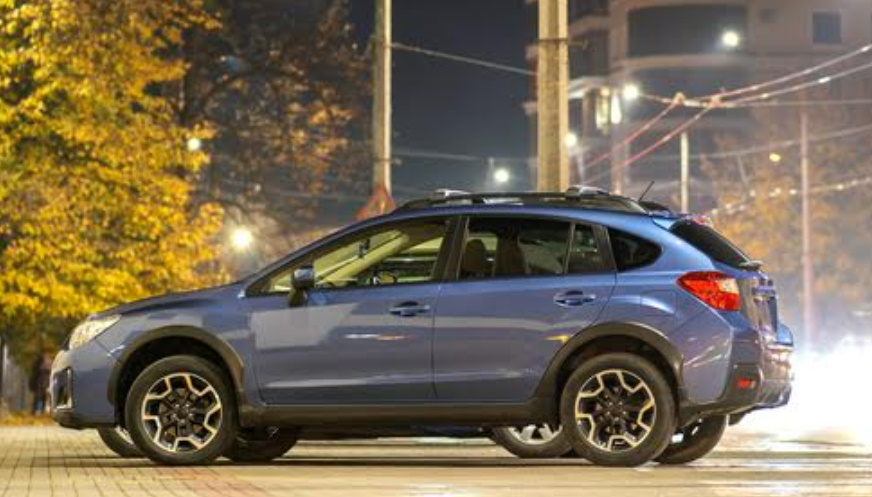
Tesla is expected to soon turn on its “Full Self-Driving (Supervised)[1]” (FSD) mode in Australia and New Zealand[2].
Is a future of driverless cars upon us? Not exactly – it’s essentially more advanced driver assistance. Legally, Tesla drivers using this mode must be ready to take control and pay attention at all times. Calling it “full self-driving” is questionable.
The move comes amid scrutiny. This week, a video showed a Tesla navigating roads in Melbourne’s CBD without the driver’s hands on the wheel. Authorities warned these trials had not been approved[3].
It’s a reminder of how contested “self-driving” remains. While the technology[4] is advancing rapidly, there are still real concerns over regulations[5], technological readiness[6], safety[7] and public trust[8].
Is it legal?
Tesla’s FSD mode is not truly driverless. Technically, it’s classified as an advanced driver assistance system[9]. On the recognised five-level list[10] of increasingly automated cars, where 5 is fully automated, FSD is a Level 2[11].
At this level, the driver has to remain attentive and ready to take proper control[12]. Legally, this means Tesla’s FSD would be treated the same way as other vehicles[13] with advanced driver-assist systems. Tesla cars with FSD running would be compliant[14] with Australian regulations and legal to use with human oversight[15].
At higher levels of automation (Levels 3-5), the car takes on the whole driving task without constant supervision, which would be considered “automated driving”. Level 3 cars exist in limited markets overseas[16]. Level 4 cars are being used in fleet-based robotaxi trials[17] but not sold to consumers. Level 5 cars offering true autonomy, anywhere, anytime don’t yet exist.
At present, cars with Level 3 automation and above are not compliant[18] with Australian regulations and can’t operate without special permits[19] for trials and testing. They have strict conditions on safety, insurance, data sharing and geographic restrictions.
This is why the Tesla video in Melbourne video triggered pushback – it gave the impression of a higher level of automation than legally permitted without a trial permit.
What can FSD actually do?
Tesla is taking a phased approach[20] to enable FSD for eligible vehicles in Australia.
In this mode, the car can change lanes, navigate interchanges, recognise stop signs and automatically bring the car to a stop. It can even handle Melbourne’s famous hook turns[21].
But the system has hard limits[22]. The driver must be ready to step in at any moment. The system can make errors in complex or unpredictable[23] settings.
Overseas, Tesla is promoting a new supervised feature – autosteer on city streets – which would go beyond automated highway driving into more complex residential and city roads with roundabouts, traffic lights and pedestrians. But this feature remains “upcoming[24]” in Australia.
Tesla’s approach to self-driving remains controversial[25]. To sense their surroundings, the vehicles rely mainly on cameras and artificial intelligence. Critics argue[26] this leaves the system more vulnerable[27] to errors. Other self-driving car developers such as Waymo have added LiDAR and radar sensors[28] to boost safety in case other sensors fail.
Tesla’s branding of FSD as a step towards full autonomy is misleading[29]. In reality, it’s closer to a diligent learner driver[30] than a professional chauffeur. It can read the road, but still needs close supervision.
The long road to autonomy
Tesla’s push into autonomy is partly about capturing market share[31] in the fast-emerging robotaxi industry[32].
Tesla CEO Elon Musk has promised Tesla cars will one day be able to be monetised in a shared robotaxi fleet[33].
In June, the first Tesla Robotaxi went live[34] in limited areas[35] of Austin, Texas. But these vehicles are not truly driverless – a human safety monitor[36] must be on board.
Globally, Tesla is one of many companies vying for a share of the robotaxi market. Trials are expanding quickly[37]. Waymo is leading the race[38] with paid driverless rides in several cities in the United States. Its Jaguar cars are Level 4 autonomous, able to drive unsupervised but only in a set area.
Meanwhile, Baidu[39], WeRide[40] and Pony.ai[41] are scaling up in China[42], their domestic market, as well as the Gulf region[43], including Dubai[44], Abu Dhabi[45] and Riyadh[46].

True self-driving cars are a way off
What if a self-driving consumer car causes a crash? For a Level 2 car, supervising human drivers remain responsible.
But if a true self-driving car caused a crash, liability could fall on the manufacturer or even the software developer. Regulators are working to resolve this legal grey area.
Even as Tesla pushes towards self-driving, the company faces a class action[48] from thousands[49] of Australian drivers over alleged “phantom braking[50]” where the cars suddenly brake for no apparent reason, risking rear-end crashes.
Tesla says[51] its system can be affected by obstructed cameras and drivers are always responsible for maintaining control.
This echoes a wider debate[52]: how safe must autonomous systems be before they can replace human drivers? Human error is a major cause of road crashes. But glitches such as phantom braking undermine confidence and public trust[53], especially when lives are at stake.
In the US, federal authorities are investigating[54] crashes linked to Tesla’s driver-assist systems. California’s regulator has accused Tesla of misleading[55] advertising, and senators[56] have pressed for tougher oversight of Tesla’s marketing[57].
Despite progress, fundamental breakthroughs[58] are still required to handle rare but high-risk scenarios[59], such as pedestrians behaving unexpectedly.

The road ahead
Cars with advanced driver-assist can recognise objects and follow rules. But unexpected things can happen.
True autonomy[61] demands the ability to interpret complex and ambiguous human behaviour.
Until then, the driver must remain firmly in charge.
References
- ^ Full Self-Driving (Supervised) (www.tesla.com)
- ^ Australia and New Zealand (teslanorth.com)
- ^ not been approved (www.abc.net.au)
- ^ technology (theconversation.com)
- ^ regulations (www.ntc.gov.au)
- ^ readiness (www.weforum.org)
- ^ safety (www.nhtsa.gov)
- ^ public trust (theconversation.com)
- ^ advanced driver assistance system (www.carsales.com.au)
- ^ five-level list (youtu.be)
- ^ Level 2 (www.nhtsa.gov)
- ^ proper control (www.ntc.gov.au)
- ^ other vehicles (alphacarhire.com.au)
- ^ would be compliant (www.carsales.com.au)
- ^ with human oversight (www.automotiveglobespecialist.com)
- ^ overseas (www.carsales.com.au)
- ^ robotaxi trials (waymo.com)
- ^ not compliant (www.carsales.com.au)
- ^ special permits (www.ntc.gov.au)
- ^ phased approach (zecar.com)
- ^ hook turns (x.com)
- ^ hard limits (www.tesla.com)
- ^ complex or unpredictable (doi.org)
- ^ upcoming (www.tesla.com)
- ^ controversial (research.contrary.com)
- ^ argue (tdv.transistor.fm)
- ^ vulnerable (www.linkedin.com)
- ^ LiDAR and radar sensors (research.contrary.com)
- ^ misleading (insideevs.com)
- ^ learner driver (au.news.yahoo.com)
- ^ market share (www.ark-invest.com)
- ^ robotaxi industry (carboncredits.com)
- ^ shared robotaxi fleet (fortune.com)
- ^ went live (www.bbc.com)
- ^ limited areas (www.tesla.com)
- ^ safety monitor (electrek.co)
- ^ expanding quickly (www.bbc.com)
- ^ leading the race (www.forbes.com)
- ^ Baidu (www.reuters.com)
- ^ WeRide (www.ccn.com)
- ^ Pony.ai (www.reuters.com)
- ^ China (www.lowyinstitute.org)
- ^ Gulf region (www.reuters.com)
- ^ Dubai (www.weride.ai)
- ^ Abu Dhabi (ir.weride.ai)
- ^ Riyadh (ir.weride.ai)
- ^ Los Angeles Times/Getty (www.gettyimages.com.au)
- ^ class action (www.teslaaction.com)
- ^ thousands (www.abc.net.au)
- ^ phantom braking (www.abc.net.au)
- ^ says (www.abc.net.au)
- ^ wider debate (www.brookings.edu)
- ^ public trust (theconversation.com)
- ^ investigating (www.reuters.com)
- ^ misleading (www.sfchronicle.com)
- ^ senators (www.markey.senate.gov)
- ^ Tesla’s marketing (www.blumenthal.senate.gov)
- ^ fundamental breakthroughs (au.news.yahoo.com)
- ^ rare but high-risk scenarios (doi.org)
- ^ Hulton Archive/Getty (www.gettyimages.com.au)
- ^ True autonomy (theconversation.com)