Transport will make or break Australia’s new climate plan – and time is running out to fix it
- Written by: Hussein Dia, Professor of Transport Technology and Sustainability, Swinburne University of Technology
Australia has a new climate target[1]: cutting emissions by 62-70%[2] below 2005 levels by 2035. Meeting even the lower end means halving[3] emissions in a decade.
That will entail drastic changes across the economy – especially in transport.
Transport is Australia’s third-largest[4] and fastest-growing source of emissions. The sector is widely considered[5] difficult to decarbonise, because it’s not easy to use renewable electricity in shipping and aviation.
On current trends, transport will become Australia’s largest-emitting sector by 2030. Unless this problem is tackled head-on, Australia’s new climate target cannot be met.
Getting our priorities straight
The Albanese set Australia’s new climate target earlier this month. It was accompanied by a Net Zero Plan[6] and six blueprints[7] for individual sectors.
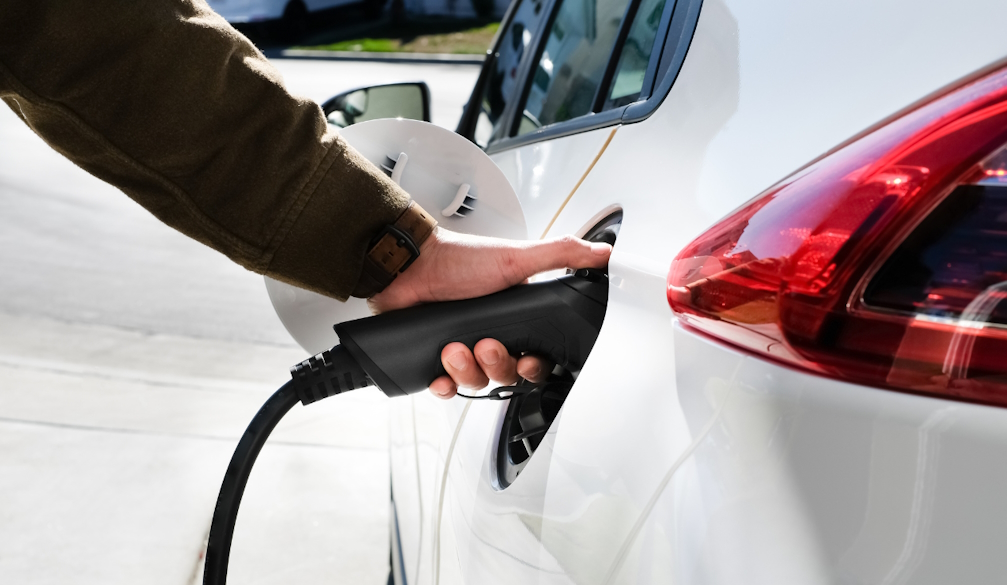
The Net Zero Plan[8] rightly identifies several priorities: clean electricity, lowering emissions by electrification and efficiency, and expanding clean fuel use. The transport plan[9] is focused on electrifying light vehicles, expanding electric vehicle charging, and developing low-carbon fuels for heavy trucks, planes and ships.
Modelling by the Climate Change Authority[10] shows major change is needed to meet the 2035 target. In transport, for example, half of all new light vehicles[11] sold by 2035 must be electric.
Such shifts are technically feasible, but they demand policy settings far stronger than those now in place.
Where problems lie
To reduce transport emissions, the government is relying heavily on the use of hydrogen for freight transport[12]. This is a shaky bet[13]. Research[14] shows hydrogen trucks are far less efficient than battery-electric ones.
Our own analysis[15] found in real-world conditions, hydrogen trucks can have two to three times the emissions intensity (the amount of greenhouse gases emitted per kilometre travelled) of electric trucks. Other research[16] has also found uncertainty about hydrogen as a fuel remained an obstacle to freight decarbonisation.
The government also proposes to use carbon-capture and storage technology[17] to handle “residual” emissions – those that remain after available decarbonisation methods have been deployed.
There is no practical way to directly capture emissions from vehicles in use. Instead, transport emissions would be offset by capturing and storing carbon emitted by other activities such as industrial plants or gas facilities.
But Australia’s track record with carbon-capture is poor. Flagship projects such as Chevron’s Gorgon facility[18] have consistently underperformed, and several international[19] reviews[20] concluded the technology has failed[21] to deliver at scale.
The government also plans to offset residual emissions through carbon removal methods such as tree-planting. But there are longstanding concerns about the quality of Australian carbon credits[22]. And carbon may only be stored in plants for a short period[23].
For these reasons, we must be sceptical about using offsets to balance out transport emissions. It doesn’t reduce fossil fuel use in transport, and it risks delaying investment in more proven solutions.
What else should be on the table?
There are proven transport decarbonisation strategies[24] that deserve more weight than carbon-capture or hydrogen.
To accelerate the electrification of cars and buses, the government should set clear sales targets. This creates certainty for manufacturers, consumers and infrastructure providers.
We can look overseas for guidance. The United Kingdom has mandated[25] that 80% of new cars and 70% of vans be zero-emission by 2030, rising to 100% by 2035. China has gone further[26], stating that by 2035, battery electric vehicles should become the mainstream of new car sales.
Fuel efficiency standards[27] should also be tightened over time, and extended to heavy vehicles[28].
Urban planning needs to reduce car dependence[29] by promoting public transport, walking and cycling. Large-scale investment[30] in public and active transport[31] is also needed.
Another policy that deserves serious attention is road-user pricing[32]. This involves charging drivers based on how much, when and where they drive.
In places such as London[33], this has led to reductions in air pollution[34] and passengers shifting to buses, walking or cycling. Modelling by my colleagues and I shows road-use charges in Melbourne could reduce car travel and cut emissions by around 13%[35].
Well-designed road pricing[36] could help reduce demand for road freight on busy routes, discourage unnecessary trips and generate revenue to support public transport or electric vehicle infrastructure[37].
Data-driven logistics[38] can enable more efficient freight. And heavy freight can be shifted from road to rail[39], supported by investment in modern rail corridors.
And instead of pursuing hydrogen to decarbonise freight transport, the government should direct resources to accelerating electrification – including offering incentives for electric trucks[40].
China unveils the world’s first 100 megawatt electric vehicle charging site, capable of powering heavy-duty trucks.The window is closing
Australia needs clear and enforceable transport policies[41] to ensure transport delivers its share of emission reductions and keeps the country on track for net zero by 2050.
Currently, Australia risks leaning too heavily on unproven transport solutions that may not deliver real cuts. We risk locking in high emissions and missing the 2035 and 2050 goals.
Real progress means focusing on what we know works: electrification, renewables, redesigning our cities and changing how we travel. Every year of delay makes the task harder. With just a decade to halve emissions, the window for action is closing fast.
References
- ^ climate target (www.dcceew.gov.au)
- ^ 62-70% (www.dcceew.gov.au)
- ^ halving (www.theguardian.com)
- ^ third-largest (theconversation.com)
- ^ widely considered (www.climatechangeauthority.gov.au)
- ^ Net Zero Plan (www.dcceew.gov.au)
- ^ six blueprints (www.dcceew.gov.au)
- ^ Net Zero Plan (www.dcceew.gov.au)
- ^ transport plan (www.infrastructure.gov.au)
- ^ Climate Change Authority (www.climatechangeauthority.gov.au)
- ^ half of all new light vehicles (www.climatechangeauthority.gov.au)
- ^ hydrogen for freight transport (www.dcceew.gov.au)
- ^ shaky bet (theconversation.com)
- ^ Research (theconversation.com)
- ^ analysis (theconversation.com)
- ^ research (theconversation.com)
- ^ proposes to use carbon-capture and storage technology (www.dcceew.gov.au)
- ^ Chevron’s Gorgon facility (ieefa.org)
- ^ international (braveneweurope.com)
- ^ reviews (ieefa.org)
- ^ failed (thebulletin.org)
- ^ quality of Australian carbon credits (www.theguardian.com)
- ^ for a short period (www.climatecouncil.org.au)
- ^ strategies (theconversation.com)
- ^ United Kingdom has mandated (www.gov.uk)
- ^ China has gone further (english.www.gov.cn)
- ^ Fuel efficiency standards (theconversation.com)
- ^ heavy vehicles (theicct.org)
- ^ reduce car dependence (digital-library.theiet.org)
- ^ Large-scale investment (transport.ec.europa.eu)
- ^ active transport (transport.ec.europa.eu)
- ^ road-user pricing (theconversation.com)
- ^ London (link.springer.com)
- ^ reductions in air pollution (oem.bmj.com)
- ^ cut emissions by around 13% (www.mdpi.com)
- ^ road pricing (www.mdpi.com)
- ^ public transport or electric vehicle infrastructure (theconversation.com)
- ^ Data-driven logistics (www.sciencedirect.com)
- ^ shifted from road to rail (www.abc.net.au)
- ^ incentives for electric trucks (cleantechnica.com)
- ^ clear and enforceable transport policies (digital-library.theiet.org)