NATO and Australia: Why a European Alliance Matters in the Indo-Pacific
- Written by: The Times
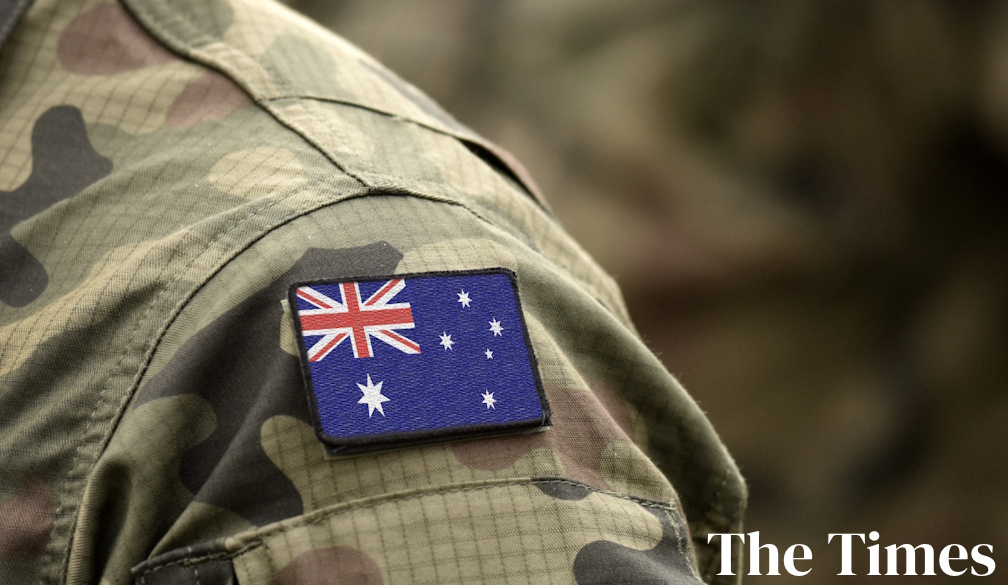
When Australians hear the term NATO, many naturally think of Europe.
The North Atlantic Treaty Organization was created in 1949 to provide collective security against the Soviet Union. Today it is a defensive alliance of 32 countries from Europe and North America. Its purpose is to protect its members through political and military cooperation.
So why was Australia represented at this week’s NATO Summit in Türkiye?
The answer is that global security no longer fits neatly into regional boxes. A war in Europe can affect fuel prices in Australia. A missile test in the Indo-Pacific can concern NATO. A cyber attack can pass through several continents before reaching a hospital, port or bank.
Australia is not a NATO member. It is not covered by NATO’s Article 5 collective defence guarantee, which treats an attack on one NATO member as an attack on all. But Australia is one of NATO’s important Indo-Pacific partners, alongside Japan, South Korea and New Zealand.
That group is often referred to as the IP4.
Australia was represented at the 2026 NATO Leaders’ Summit in Ankara by Defence Industry Minister Pat Conroy. The Australian Government said his attendance reflected Australia’s longstanding partnership with NATO and a shared commitment to security challenges across the Indo-Pacific and Euro-Atlantic regions.
For Australia, NATO matters for several reasons.
The first is defence cooperation. Australia’s security is built on alliances and partnerships. The United States remains central, but Australia also needs stronger links with Europe, Japan, South Korea and other democracies that share an interest in deterring aggression.
The second is technology. Modern defence is no longer just tanks, ships and aircraft. It is drones, satellites, cyber systems, missile defence, artificial intelligence and secure supply chains. NATO discussions increasingly focus on the industrial base needed to build and maintain those capabilities. Recent NATO talks in Türkiye included major defence procurement and arms cooperation, with drones and missile systems prominent themes.
The third is Ukraine. Australia has supported Ukraine, while NATO remains central to Europe’s response to Russian aggression. For Australia, the lesson is not only about Europe. It is about what happens when borders are challenged by force and whether democratic nations have the capacity to respond together.
The fourth is China. NATO is not an anti-China alliance, and Australia is not trying to turn NATO into a Pacific military force. But NATO increasingly understands that European security and Indo-Pacific security are connected. Russia, China, North Korea and Iran are no longer viewed as separate problems operating in separate theatres. Australian officials have also linked recent Chinese missile activity to renewed energy in NATO-Australia defence cooperation.
Australia’s role is therefore not to join NATO, but to cooperate with it.
That cooperation may include intelligence sharing, cyber security, defence industry projects, military interoperability and common planning with allied nations. It also gives Australia a voice in rooms where major democracies discuss the future of security, technology and defence production.
There is a practical Australian interest here.
If Europe is unstable, global energy markets are affected. If shipping lanes are threatened, Australian exporters and importers feel it. If the United States is stretched between Europe, the Middle East and the Indo-Pacific, Australia must work harder with other partners. If democratic countries cannot build enough defence equipment, deterrence weakens.
That is why a European alliance now matters in the Indo-Pacific.
NATO is still a North Atlantic organisation. Australia is still a Pacific nation. But the threats facing both are increasingly connected.
Australia was at the NATO table because the modern world has made distance less protective. What happens in Europe can reach Australian households, businesses and defence planners. What happens in the Indo-Pacific now matters to Europe.
Australia’s role is not membership. It is partnership.
And in a more dangerous world, that partnership is becoming more valuable.