Easier for Labor to form government in Tasmania than Liberals after final election results
- Written by: Adrian Beaumont, Election Analyst (Psephologist) at The Conversation; and Honorary Associate, School of Mathematics and Statistics, The University of Melbourne
Although the Liberals won four more seats than Labor at the Tasmanian election, it’s easier for Labor to form a government. Federal polls from Morgan and Essential are also covered.
The final seat outcome[1] for the July 19 Tasmanian state election is 14 Liberals out of 35 (steady since the March 2024 election), ten Labor (steady), five Greens (steady), five independents (up two), one Shooter, Fisher and Farmer (up one) and zero Jacqui Lambie Network (down three). The JLN did not contest this election. It’s the first time the Shooters have won a seat in a Tasmanian election.
Four of the independents (Kristie Johnston, Craig Garland, Peter George and David O'Byrne) are regarded as left-leaning, while George Razay is a centrist but has left-leaning policies[2]. Razay stood in Bass at the 2025 federal election and his voters’ preferences favoured[3] Labor by 57–43 over the Liberals.
Counting Labor, the Greens and four independents as left and the Liberals and Shooters as right gives the left a 19–15 seat lead over the right with one for Razay. So even though the Liberals won four more seats and 14% more statewide votes than Labor, it’s easier for Labor to cobble together a government than the Liberals.
A Tasmanian EMRS poll[4], conducted July 28–31 from a sample of 601, had 44% favouring the formation of a Liberal government to 38% for a Labor government. By 56–25, respondents thought Labor governing with Greens support constituted a “deal”.
Liberal leader and premier Jeremy Rockliff was at +9 net favourable, Labor leader Dean Winter at -9 and Greens leader Rosalie Woodruff at -2. Four of the five independent MPs had positive net favourable ratings (Razay was not included). Rockliff led Winter by 43–25 as preferred premier.
Electorate results summaries
I covered the Hare-Clark distributions of preferences[5] on Thursday. Tasmania uses five electorates based on its five federal seats, with each electorate returning seven members for a total of 35 MPs. A quota is one-eighth of the vote or 12.5%.
Voters are required to number at least seven candidates for a formal vote. Owing to exhaust, candidates are often elected to the final seats with less than a full quota.
In Bass[6], the Liberals had 3.34 quotas on primary votes, Labor 2.20, the Greens 1.32, the Shooters 0.32 and Razay 0.27. The Liberals won three seats, Labor two and the Greens and Razay one each, a gain for Razay from the JLN.
In Thursday’s article[7], I said that Labor was well-placed to win three seats in Bass owing to an even split among two of its candidates. However, preferences of former JLN MP Rebekah Pentland greatly favoured Razay over the Shooters and the major parties, putting him third behind the two Labor candidates.
After preferences from the Liberals and Shooters were distributed, Razay was elected sixth with 0.83 quotas, Labor’s Jess Greene was elected seventh with 0.78 quotas and Labor’s Geoff Lyons missed out with 0.75 quotas. ABC election analyst Antony Green has more details[8].
In Lyons[9], the Liberals had 3.36 quotas on primary votes, Labor 2.27, the Greens 1.08, the Shooters 0.53 and the Nationals 0.33. The Liberals won three seats, Labor two and the Greens and Shooters one each, a gain for the Shooters from the JLN. The Shooters defeated the fourth Liberal by 0.90 quotas to 0.61.
In Franklin[10], the Liberals had 2.74 quotas on primary votes, Labor 1.82, the Greens 1.08, George 1.36 and O'Byrne 0.90. The Liberals and Labor won two seats each, with one each for the Greens, George and O'Byrne, a gain for George from the Liberals. Labor’s second defeated the third Liberal by 0.94 quotas to 0.79.
In Braddon[11], the Liberals won 3.98 quotas on primary votes, Labor 1.89, Garland 0.81, the Greens 0.59 and the Shooters 0.26. The Liberals won four seats, Labor two and Garland one, a gain for the Liberals from the JLN. Garland, the fourth Liberal and Labor’s second all reached quota, with the lead Green trailing on 0.59 quotas.
In Clark[12], the Liberals had 2.45 quotas on primary votes, Labor 2.16, the Greens 1.76, Johnston 1.20 and independent Elise Archer 0.26. The Liberals, Labor and the Greens each won two seats with one for Johnston, unchanged from 2024. The final distribution decided which of two Liberals won the last seat.
Federal Morgan and Essential polls
A national Morgan poll[13], conducted June 30 to July 27 from a sample of 5,159, gave Labor a 57–43 lead by headline respondent preferences, a 0.5-point gain for the Coalition since the June 23–29 Morgan poll.
Primary votes were 36.5% Labor (steady), 31% Coalition (up 0.5), 12% Greens (steady), 7% One Nation (down 1.5) and 13.5% for all Others (up one). By 2025 election preference flows, Labor led by 57–43. The only state, gender or age group where the Coalition led was with those aged 65 and over (by 52–48).
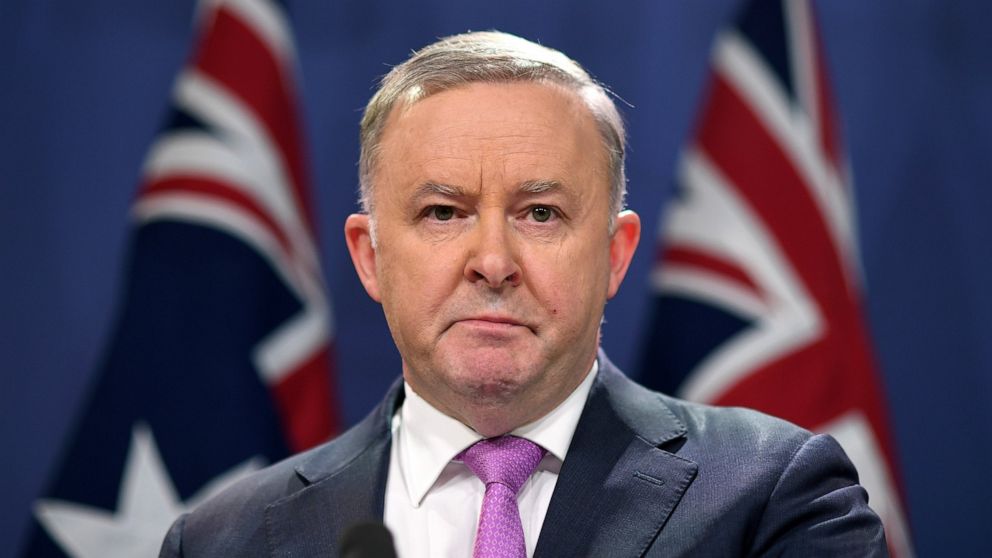
A national Essential poll[14], conducted July 23–27 from a sample of 1,012, gave Anthony Albanese a +9 net approval, down two points since May, with 50% appproving and 41% disapproving. Liberal leader Sussan Ley’s initial net approval was -2 (35% disapprove, 33% approve).
Regarding the United States tariff threat to Australia, 45% wanted the Australian government to prioritise staying on good terms with the US (up ten since March), 31% impose our own tariffs on the US (up two) and 23% (down 14) said we should accept that the US is no longer a reliable trade partner and look for new relationships.
On AUKUS, 38% (down one since November 2023) said it would make Australia more secure, 21% less secure (up three) and 41% (down one) said it would not affect our security.
On Israel’s military action in Gaza, 41% (up nine since October 2024) said Israel should permanently withdraw from Gaza, 25% (up six) agree to a ceasefire, 15% (down four) said Israel’s action is justified and 19% were unsure (down 13). On the Australian government’s response, 52% were satisfied (down four), 32% said it was too supportive of Israel (up two) and 16% too harsh on Israel (up two).
There was a 25-point drop to 40% in the share of voters saying Australia’s relationship with the US was positive since November 2023. The US led China by 41–30 on which country it would be most beneficial to strengthen our relationship with (57–14 in June 2021).
References
- ^ final seat outcome (www.abc.net.au)
- ^ left-leaning policies (www.georgerazay.com)
- ^ voters’ preferences favoured (results.aec.gov.au)
- ^ Tasmanian EMRS poll (www.emrs.com.au)
- ^ Hare-Clark distributions of preferences (theconversation.com)
- ^ Bass (www.tec.tas.gov.au)
- ^ Thursday’s article (theconversation.com)
- ^ Antony Green has more details (antonygreen.com.au)
- ^ Lyons (www.tec.tas.gov.au)
- ^ Franklin (www.tec.tas.gov.au)
- ^ Braddon (www.tec.tas.gov.au)
- ^ Clark (www.tec.tas.gov.au)
- ^ Morgan poll (www.roymorgan.com)
- ^ Essential poll (essentialreport.com.au)