Donald Trump’s visit to Asia this week will affect Australia’s role in the region
- Written by: Times Media
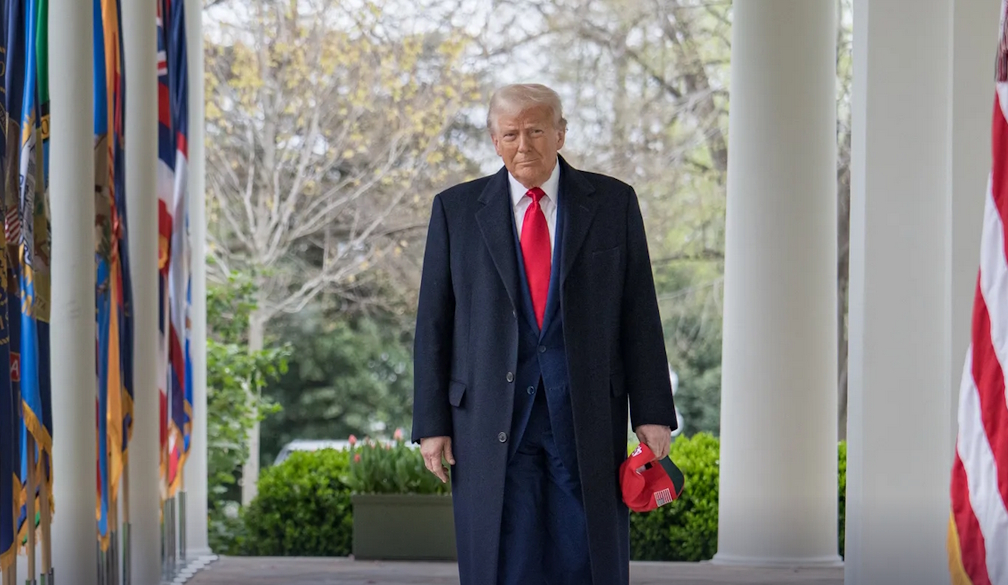
President Trump’s upcoming trip to Asia — including stops in Malaysia, Japan and South Korea — marks a significant moment for the Indo-Pacific region. For Australia, a middle power with deep ties to the United States and increasingly complex ties to its Asian neighbours (especially China), the timing and signals of this visit pose both challenges and opportunities.
The fundamental question: how will this visit shift Australia’s strategic footprint in the region — economically, diplomatically and militarily?
The context: What’s driving the trip
A few key factors are setting the scene for Trump’s visit:
Trade & Supply-chains
Trump’s return to Asia comes amid rising economic tension, especially with China. For example, Beijing’s announcement of export controls on rare-earth minerals is part of the broader tug-of-war. The US wants to restructure supply-chains, reduce dependence on China, and re-shape alliances accordingly.
For Australia — which is a major mining country, also part of large Asian trade networks — these supply-chain shifts matter.
Security & Alliances
The US has signalled a renewed or at least recalibrated focus on the Indo-Pacific, but there are signs of unpredictability in how Australia’s partners interpret US commitment. For Australia, the old assumptions of US reliability (and stability of allied structures) are under question, making its own positioning more important.
Regional realignments
The East Asian region (Japan, South Korea, ASEAN, etc) is showing signs of deeper intra-regional cooperation, perhaps as hedge against US unpredictability. For example:
“As US President Donald Trump’s protectionist policies and transactional approach disrupt traditional alliances, China, Japan and South Korea strengthen regional cooperation.”
This trend increases the complexity for Australia: the region is not simply US-led by default.
Australia’s strategic imperatives
Australia under the Australian Institute of International Affairs and other commentators is being urged to “double down” on Asia engagement rather than rely only on the US alliance. In short: Canberra needs to carefully manage its dual roles — as a US ally, and as an Asia-Pacific country embedded in Asian economic, diplomatic and security networks.
How Australia’s role may shift
With that context, here are several dimensions in which Trump’s visit could impact Australia’s regional role — and how Canberra might respond.
1. Defence & strategic posture
Australia has long been a close security partner of the US. The upcoming visit reinforces that connection, but also adds nuance. Australia may find:
-
Stronger invitation to step up in the collective Indo-Pacific security architecture, especially as the US signals renewed interest in Asia.
-
A need to clarify its strategic independence: while aligning with the US, Australia must retain credibility with Asian partners who may view the US-China axis differently.
-
Increased burden: More expectations (from the US) for Australia to host or enable operations, infrastructure, supply-chains or forward-defence capabilities.
For example, analysts have noted that Australia will need to recalibrate in light of US shifts:
“With Donald Trump mediating conflicts in Europe and the Middle East, what has become of the United States’ strategy in the Asia-Pacific region?”
And
“Australia’s future lies overwhelmingly in Asia … In this sense, Trump has done Australia a favour [by forcing this reckoning].”
Therefore, the visit may accelerate Australia’s defence footprint in the region — not just via the US alliance, but via enhancing its own capabilities, diversifying partnerships, and signalling seriousness as a regional stakeholder.
2. Economic & trade implications
Australia’s trade and supply-chain interests will be impacted by the shifts Trump is pushing for:
-
The US push for alternative supply-chains (especially critical minerals, rare earths) creates opportunity for Australia as a resource power.
-
But the pushing away of China or disrupting Asian manufacturing/ trade networks could cause blowback for Australia, which is both a commodity exporter and trading partner with several Asian economies.
-
Australia may be forced to choose alignment in trade policies (US-led) versus preserving its deep economic connectivity with Asia (including China). The balancing act becomes sharper.
For example:
“The unintended consequences of Trump’s tariffs may be the exact opposite of what was intended: closer links between ASEAN countries and China, and the creation of an even bigger manufacturing hub in south-east Asia.”
Thus, Australia must weigh how much it adapts to US supply-chain logic versus maintaining its Asia-Pacific market logic.
3. Diplomatic credibility and influence
Australia’s role as a regional mediator or influencer may shift:
-
If the US visit realigns Asia’s architecture, Australia could gain more stepping-stone status — as a trusted intermediary between US and Asia.
-
On the other hand, if Australia is seen as too closely following Washington, it risks being sidelined by Asian neighbours who seek autonomy or hedging.
-
Australia should use the moment to assert its voice: emphasise its own diplomacy in Southeast Asia, Pacific Islands, and ASEAN rather than purely react to US leadership.
From the commentary:
“Australian uncertainty on trade settings has created opportunities for Australia to strengthen and diversify our relationships in the Asia-Pacific.”
So the visit could prompt Australia to shift from a follower of US policy in Asia to a more independent regional actor.
4. Strategic autonomy and hedging
One of the most significant long-term shifts could be in how Australia conceptualises its own strategic autonomy:
-
If the US is seen as less predictable, Australia may accelerate its “Asia-driven” strategy, deepening ties with ASEAN, Japan, Korea, and the Pacific Islands.
-
That means less lopsided reliance on the US and more engagement in multilateral regional architectures (ASEAN-led, APEC, etc).
-
Australia may reinforce its identity as an Indo-Pacific power, rather than simply an “extra-regional” partner of the US.
As noted:
“The US pivot to Asia — has Donald Trump changed course?”
And
“Australia must engage with the world … our commercial success and security requires global interconnection.”
Hence, the visit may trigger Australia to recalibrate its strategy: not simply “US plus Asia” but “Asia plus US”.
Potential scenarios and outcomes for Australia
To make it concrete, here are plausible scenarios for how Australia’s role could evolve as a result of this visit — and what Canberra might do.
Scenario A: Reinforced US-Australia Leadership
In this scenario, the visit delivers a robust US reaffirmation of its Indo-Pacific strategy — Australia is elevated as a key partner. Outcomes:
-
Australia offers more hosting of US/Allied assets or operations in the region.
-
Joint supply-chain initiatives (critical minerals, defence tech) shift to include Australian industry.
-
Australia uses this leverage to deepen ties with smaller Pacific Islands, presenting itself as the regional gateway for US engagement.
Action for Australia: Invest heavily in defence infrastructure (naval bases, submarine support, logistics hubs); negotiate trade/industry deals tied to US supply-chains; strengthen bilateral defence ties with Japan, Korea under shared US-led umbrella.
Scenario B: US Focus Wobbles — Australia Shifts Towards Asia
Here, the visit might expose cracks or ambivalence in US commitment — either through mixed messaging or lack of concrete deliverables in Asia. Outcomes:
-
Asian states hedge more, strengthen intra-Asian cooperation. Australia finds itself needing to lean into Asia directly.
-
Australia intensifies diplomatic/ economic outreach to ASEAN, India, Pacific Islands, reducing emphasis on US dependency.
-
Australia becomes a more independent regional actor rather than just a US ally.
Action for Australia: Expand trade agreements and regional diplomacy (ASEAN, RCEP), invest in Asia-linguistic/ cultural capacity (to build “Asia literacy”), diversify defence partnerships beyond US (e.g., Japan, India, ASEAN). This is supported by calls from commentators: “Australia’s future lies overwhelmingly in Asia.”
Scenario C: Trade/Defence Friction — Australia in the Middle
In this scenario, the visit triggers aggressive US trade/defence demands (e.g., tariffs, supply‐chain realignments) but Australia must face economic fallout from Asia (especially China) resisting the US frame. Outcomes:
-
Australia faces economic cost if US-China trade war intensifies; risk of being squeezed between alliance demands and market realities.
-
Australia must navigate carefully so as not to alienate China (its largest trading partner) while aligning with US defence.
-
Australia may have to moderate its role: prioritise diplomacy to avoid choosing sides overtly.
Action for Australia: Build resilience across export markets (not just China), invest in downstream processing of minerals rather than just export, ensure trade diplomacy to manage US-China tension, maintain lines of communication with Beijing even as it supports US defence architecture.
Why this matters for Australia now
Several reasons explain why Australia should care deeply about this visit:
-
Timing: This visit comes at a point of flux—the Indo-Pacific order is under stress, US foreign policy is less predictable, and China is increasingly assertive. Australia cannot afford to be passive.
-
Strategic location: Australia sits in the Indo-Pacific as both a mid-power and an advanced economy. How it responds now will shape its future strategic weight, not just in defence but also economics, trade, diplomacy and regional standing.
-
Economic interdependence: Australia’s export markets, supply-chains and investment flows are deeply tied to Asian region. Changing US-Asia dynamics will ripple into Australian business and investment decisions.
-
Alliance vs region duality: Australia has long walked the line of being a US ally and an Asia-Pacific neighbour. As the US recalibrates in Asia, so must Australia refine that balance.
-
Opportunity for leadership: If Australia acts decisively now, it can elevate its role from regional “junior” to more equal player — for example, by hosting more infrastructure, processing supply-chains, shaping regional dialogues, and offering alternative partnerships.
What should Australia do?
Given the above, here are some strategic recommendations for Canberra to maximise the upside and minimise the risks of Trump’s visit to Asia:
-
Leverage defence partnerships smartly
-
Use any US-Australia defence commitments emerging from the visit to build Australian industrial-capability (ship-building, submarine support, logistics).
-
Ensure that hosting or enabling US/Allied operations comes with economic-industrial dividends (jobs, skills, local industry).
-
Maintain clarity of strategic narrative (Australia is not a mere out-post but a regional hub and sovereign actor).
-
-
Deepen Asia-Pacific diplomatic and economic engagement
-
Expand trade/investment ties across ASEAN, India, Pacific Islands — not only China.
-
Build “Asia literacy” in government, business and community to strengthen cultural/linguistic capacity for deeper region-engagement. As noted, Australia has some weakness in this area.
-
Promote Australia as “bridge” between US and Asia—not always a follower, but a partner.
-
-
Manage trade/supply-chain risks
-
Capitalise on US demand for alternative supply-chains (critical minerals, rare earths) — Australia is well-placed.
-
Mitigate risk of being caught in US-China trade conflict by diversifying export markets, value-adding resources domestically, and maintaining stable relations with China.
-
Ensure Australian businesses are supported to adapt to shifting trade architecture.
-
-
Clarify strategy for regional autonomy
-
Develop a national strategy for Indo-Pacific that recognises both alliance commitments and independent regional roles.
-
Invest in multilateral regional frameworks (ASEAN, APEC, Pacific Islands Forum), not just bilateral US ties.
-
Communicate clearly to regional neighbours that Australia’s role is not purely an extension of US policy but one rooted in shared regional interests (security, economic, environmental).
-
-
Public diplomacy and narrative
-
Articulate publicly Australia’s vision for the region — a “free, open, inclusive Indo-Pacific” with Australia actively contributing, not just reacting.
-
Use media, think-tanks, business forums to signal that Australia is confident in performing a region-wide role.
-
Engage domestic audiences in understanding Asia-Pacific dynamics (so public support exists for adjustments in policy).
-
Risks and caveats
It’s worth flagging some of the risks in how this plays out:
-
If the US pullback is more significant than signalled, Australia could find itself over-extended or exposed when the US does less than expected.
-
If Australia leans too heavily into the US side at the expense of Asian relationships (especially China or ASEAN), it may lose credibility with regional partners.
-
Economic disruption: If trade wars intensify, Australia’s export-oriented economy may suffer.
-
Capacity constraints: Australia may lack enough industrial base, diplomatic capacity or strategic culture to pivot as rapidly as needed.
-
Domestic political backlash: A shift in strategic emphasis might meet resistance from sectors of business or public wary of over-militarisation or alignment choices.
Conclusion
President Trump’s visit to Asia this week represents a significant inflection point for the Indo-Pacific region. For Australia, the stakes are real: it must decide how to respond — whether to lean further into its US alliance, how to engage Asia more robustly, and how to redefine its strategic role.
If Australia handles this well, it can emerge as a more consequential Indo-Pacific power—not just a supporting ally of the US, but a regional hub in its own right: blending defence, diplomacy and economics with Asia-Pacific neighbours. However, if Australia misreads the moment, it risks being caught off-balance between a shifting US strategy and a more autonomous Asia.
In short: Australia must move from being a passive follower to a strategic driver of its own regional future.