The objectives of each side from the Trump Xi meeting
- Written by: Times Media
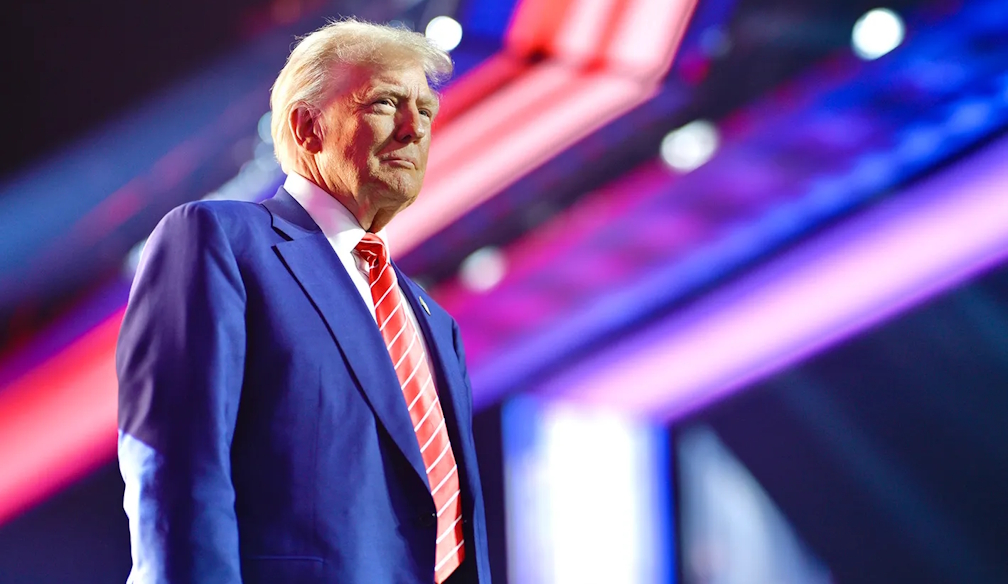
When the Donald Trump-led U.S. administration meets with Xi Jinping’s Chinese leadership (often framed as a meeting between the President of the United States and the top Chinese leader), the event is far more than a ceremonial handshake. Such high-level summits signal strategic intent, mediate deep structural competition and co-operation, and serve multiple domestic and international objectives for both sides.
In what follows we unpack what each side is aiming for — the United States and China — in such a meeting: the objectives, the constraints, and the underlying strategic logic. For clarity, we treat the U.S. President as the elected leader and China’s Xi Jinping as the centralised, top-leadership figure (often characterised in Western commentary as a “dictator” or authoritarian leader, though that label is politically loaded).
1. U.S. Objectives
For the United States, a summit with China’s top leadership has several overlapping and sometimes conflicting aims.
1.1 Manage strategic competition
The U.S. recognises that the bilateral relationship with China is one of its most consequential — economically, technologically, militarily and geopolitically. As one commentary notes:
“The American and Chinese flags are photographed on the negotiating table … There is no credible way for the United States to seal itself off from the effects of China’s actions.”
In plain terms, the U.S. seeks to:
-
Ensure that China’s rise does not undermine U.S. global leadership or erode its alliances.
-
Prevent miscalculations or unintended escalation (especially given military, trade or technology flash-points).
-
Clarify the “rules of the road” for competition — for example, on technology export controls, intellectual property, market access.
1.2 Stabilise the relationship / prevent crisis
While competition is real, outright conflict would be costly. Thus one U.S. objective is to maintain enough stability that bilateral relations do not spiral into confrontation. As one analysis put it:
“A rare in-person meeting … will provide an opportunity to put a range of issues on a firmer footing. But don’t expect any breakthroughs.”
Concretely, this may involve:
-
Re-opening or reinforcing hotlines, military-to-military communications.
-
Agreeing on crisis-management protocols.
-
Setting “red lines” or signalling to allies and adversaries what the U.S. considers intolerable.
1.3 Secure economic/technological interests
The U.S. has significant economic interests at stake in its China relationship: trade imbalances, market access, supply-chain dependencies, technology dominance, etc. The meeting provides a platform to:
-
Press for greater Chinese purchases of U.S. goods or open access to Chinese markets.
-
Address Chinese export controls or restrictions (e.g., on rare-earth elements, chip-making equipment) which can impact U.S. industry. (See recent news about rare-earth export controls and U.S. tariff threats.)
-
Signal to U.S. domestic constituencies (business, labour, voters) that “we are doing something” about perceived unfairness.
1.4 Promote global issues / manage transnational threats
Beyond bilateral issues, the U.S. may use the meeting to advance cooperation on global challenges where China matters: climate change, non-proliferation, artificial intelligence governance, North Korea, etc. For example:
The U.S. and China agreed to avoid giving artificial intelligence control of nuclear weapons systems in their 2024 meeting.
Thus, the U.S. objective is to show leadership in global governance and to enlist China’s cooperation — or at least reduce obstruction.
1.5 Domestic political signalling
High-level summitry also has domestic politics dimensions:
-
The U.S. President uses the meeting to show strength, that the U.S. is dealing with “the China challenge”.
-
It helps manage Congressional and public opinion on trade, jobs, national security.
-
It may also hedge electoral risk: showing that policy is being implemented or that diplomacy is making headway.
2. Chinese Objectives
From China’s perspective, a summit with the U.S. President is an opportunity to advance Beijing’s goals, manage external tension, and legitimise its rise and system. Key aims include:
2.1 Safeguard core interests and strategic autonomy
China regards certain issues — national sovereignty (especially over Taiwan, Hong Kong, South China Sea), development path, regime legitimacy — as “red lines”. For example, the Chinese Foreign Ministry described the meeting in 2024 as reaffirming “four red lines” on Taiwan, system/path, democracy/human rights, and the right to development.
In the summit context, China will aim to:
-
Signal to the U.S. that it expects respect for its system and its core interests.
-
Avoid being coerced into concessions that undermine domestic legitimacy.
-
Maintain freedom of manoeuvre in its region without U.S. interference.
2.2 Secure favourable economic and technological terms
China’s modernization and growth strategy depends on: domestic investment, export markets, access to advanced technology, and control over strategic supply chains. A summit can help Beijing:
-
Lock in large agreements or purchases that support growth.
-
Ease or delay U.S. sanctions, tariffs or export bans (especially on advanced chips, rare earths).
-
Secure commitments that reduce disruption to its supply-chains or access to foreign markets.
2.3 Manage U.S. pressure and global narrative
China is increasingly exposed to criticism and pressure from the U.S. and its allies (on human rights, Taiwan, trade practices). The summit allows Beijing to:
-
Portray itself as a responsible major power seeking stable relations. For example Xi told the U.S. in 2024: “Make the wise choice… keep exploring the right way for two major countries to get along.”
-
Avoid being isolated by demonstrating diplomacy with the U.S.
-
Prevent an alliance of democracies from further squeezing China — by keeping dialogue open.
2.4 Shape global governance in China’s favour
China wants a world in which it has a major voice (and perhaps agenda-setting ability) rather than simply being a follower. Through the summit it might:
-
Promote cooperation on global challenges (AI, climate, trade) but on Chinese terms — i.e., emphasising sovereignty, non-interference, multipolarity.
-
Use the meeting to advance frameworks whereby China’s model is seen as viable and its leadership credible.
2.5 Manage domestic legitimacy
For the Chinese leadership, foreign diplomacy and strong international position contribute to domestic legitimacy (especially when paired with continuing economic growth). A summit that yields positive headlines domestically can bolster support for the regime. Conversely, being seen as caving in to U.S. pressure can be politically risky.
3. Comparative Constraints & Mutual Interests
It’s important to examine where objectives overlap, conflict, or are constrained.
3.1 Areas of overlapping interest
-
Stable economic relations: Both sides benefit if trade and investment flows are managed rather than unravelled. The U.S. cannot decouple fully without major cost; China needs foreign demand and technology.
-
Crisis prevention: Both recognise the risk of a military or diplomatic mis-step. Thus protocols and signalling matter.
-
Global governance cooperation: Despite competition, many issues (climate, AI, pandemics) cannot be resolved unilaterally. The recent AI-for-nukes agreement is illustrative.
3.2 Primary points of tension
-
Technology competition and supply-chains: U.S. seeks to maintain superiority; China seeks to catch up.
-
Trade imbalances, market access, industrial policy: U.S. sees China as unfair in trade; China sees U.S. sanctions as containment.
-
Geopolitics (Taiwan, South China Sea, alliances, influence in Asia and beyond): These are existential for China, and major strategic concerns for the U.S.
-
Values/human rights/ideological competition: The U.S. emphasises liberal democracy norms; China emphasises non-interference and its own development path.
3.3 Constraints on both sides
-
Domestic politics: Leakages, behind-the-scenes deals, public backlash constrain what each side can do.
-
Alliance commitments / international image: The U.S. must answer to allies; China must answer to its domestic audience and its legitimacy claims.
-
Economic interdependence: Full decoupling is risky; each side must weigh the costs of restraint.
-
Communication and trust deficits: Past cycles of promise and disappointment mean each side is cautious about over-promising. As one analysis put it: “Don’t expect breakthroughs.”
4. Why This Meeting Matters
A summit between the U.S. President and China’s leader matters for four reasons:
-
Symbolic signalling: It sends a message to the global audience about the bilateral dynamics — either a reset, de-escalation or deepening competition.
-
Agenda-setting power: It can shape key frameworks (trade truce, technology export controls, crisis prevention protocols) that carry forward for years.
-
Risk management: Given the high stakes (military flashpoints, economic disruption), the meeting offers an opportunity to reduce the chance of mis-calculation.
-
Domestic reassurance: For both leaderships, it feeds into their narratives (U.S.: “we’re tough on China”; China: “we’re respected and independent”).
In short, while such a meeting will likely not settle all outstanding issues (and analysts routinely caution against expecting major breakthroughs) it can establish stabilising mechanisms, set guard-rails, and calibrate competition so that it remains manageable rather than chaotic.
Conclusion
When an elected U.S. President meets with China’s top leader, the objectives are deep, multifaceted and often less visible than the photo-op suggests. For the U.S., the aims are to manage competition, stabilise the relationship, safeguard economic/technological interests, and show leadership. For China, the goals centre on protecting its core interests, securing favourable terms, shaping global order, and maintaining domestic legitimacy.
The challenge is that their interests both overlap and clash. The meeting therefore often becomes about managing the tension — not eliminating it — and ensuring that competition doesn’t slide into conflict. In a world of interdependence and rising strategic friction, these summits matter precisely because both sides recognise they cannot afford the “big failure”.