Liberals tick off deal on hate crime measures
- Written by: Michelle Grattan, Professorial Fellow, University of Canberra

While federal parliament devoted Monday to emotion-filled Bondi condolence speeches, behind the scenes government and opposition inched to a deal to pass on Tuesday Labor’s fall-back measures relating to hate.
Late Monday, the Liberal Party room ticked off on the agreement.
The legislation will be introduced into parliament on Tuesday morning and put through both houses in a day. The measures will facilitate the banning of organisations that promote racial hatred, as well as enabling the refusal or cancellation of visas on the basis of hate-motivated conduct.
The deal is a parachute for both Anthony Albanese and Sussan Ley, who have each been criticised as they faced off in an impasse over the government’s earlier, now split, omnibus bill.
While everything is being undesirably rushed – illustrated by the fact the report of a parliamentary inquiry into the measures was not expected to be tabled until Tuesday – both sides on Monday were anxious for a quick settlement.
The government, after having to scrap the anti-vilification part of its original package, wanted to deliver what was left of its measures at this special parliamentary sitting. The opposition was aware of the risk of looking hypocritical if it were to oppose everything.
The changes obtained in the negotiations include:
-
strengthening aggravated offences so all extremist preachers and leaders, including visiting speakers, are captured by the law
-
strengthening the role of parliament in examining these powers, including by inserting mandatory two year reviews by the Parliamentary Joint Committee on Intelligence and Security to ensure new powers are effective, proportionate and accountable
-
making the Prohibited Hate Groups Listing Framework more targeted to those most dangerous hate groups seeking to incite violence
-
requiring consultation with the Leader of the Opposition on both the listing and delisting of extremist organisations, strengthening the bipartisan approaching to national security
-
closing gaps in hate crime definitions so Commonwealth offences are properly covered, and
-
ensuring migration powers are used decisively to remove extremists who threaten community safety.
The broad changes the opposition wanted went through Sunday’s shadow cabinet meeting.
The Nationals were still examining the detailed outcome on Monday evening.
Nationals leader David Littleproud told the ABC’s 7.30 program the Nationals wanted to make sure the proposed ban on hate groups did not contain any “overreach”. “We are trying to do that as quickly and carefully as we can,” he said.
Albanese and Ley met early Monday. The opposition put forward changes it sought, which the government took away to consider.
The opposition is set to vote against the package’s gun reform measures but these are assured of passage with the support of the Greens.
Nationals Senate Leader Bridget McKenzie said in a statement the Nationals would oppose “unfair gun laws which will punish law abiding Australian firearms owners for the actions of Islamic extremists”.
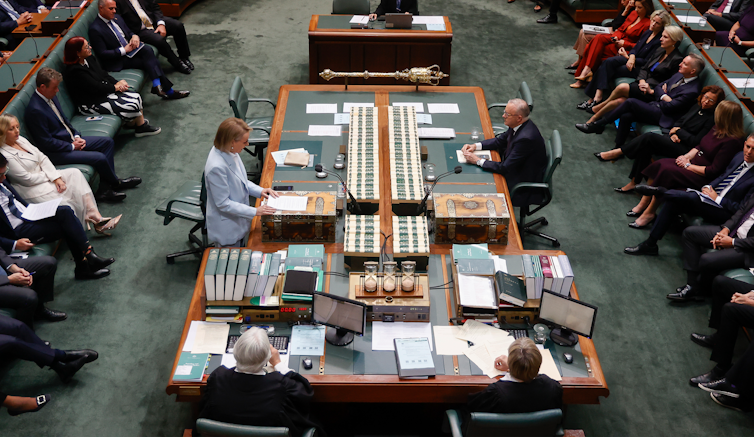
By Monday afternoon, the detail of the measure relating to banning organisations appeared the main issue being finessed.
Opposition home affairs spokesman Jonno Duniam said it was “excellent” that the government at the weekend ditched the racial vilification provision in its original package. “They were unworkable and the cost, the potential impacts on freedom of speech, were not worth contemplating in the rushed process we’re going through.”
But, asked whether the government should go back to an anti-vilification measure, given the special envoy to combat antisemitism Jillian Segal recommended it, Duniam told Sky the government “should consider bringing it back and indeed go through a proper process”.
Crossbencher Allegra Spender said, “I am deeply disappointed that our parliamentarians have not been able to unite around anti-vilification legislation. We have heard a lot of speeches today about pushing out hatred and extremism, but our MPs haven’t yet been able to unite around a practical way of achieving that vision.”
Victorian Labor MP Josh Burns, who is Jewish, said: “I know that there would be people inside the Coalition right now who would be deeply uncomfortable with their position on the racial vilification and serious vilification clauses that should have been in this bill.
"I genuinely hope that there’s no incidents and that no one has to deal with this. And if that’s the case, and we can all walk away and we’ve got enough done. Well, so be it. But I fear that that may not be the case,” he said.
Read more https://theconversation.com/view-from-the-hill-liberals-tick-off-deal-on-hate-crime-measures-272435