Trump has threatened European countries with higher tariffs if he doesn’t get Greenland. Will it work?
- Written by: Shannon Brincat, Senior Lecturer in Politics and International Relations, University of the Sunshine Coast
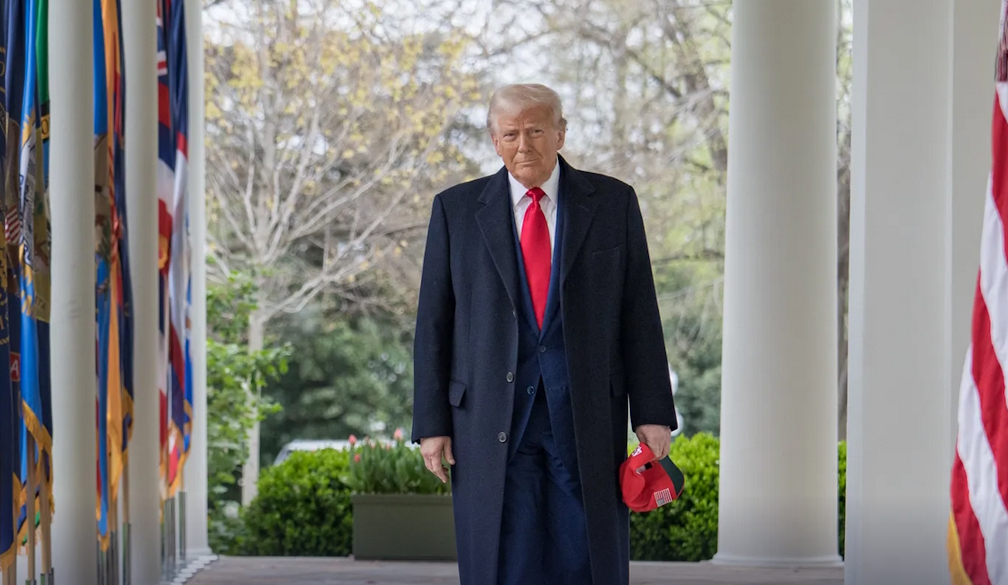
In an extraordinary escalation of his bid to claim Greenland, US President Donald Trump has threatened[1] eight European countries – Denmark, Sweden, Norway, Finland, Great Britain, France and Germany and the Netherlands – with a 10% tariff on all goods coming into the United States from February 1 until he is able to buy the semi-autonomous Danish territory. That tariff will then increase to 25% on June 1.
On the one hand, Greenland is potentially rich in raw materials and rare earth minerals[2], highly desirable for US tech giants who control key levers of power in Washington. On the other, Trump claims it is necessary for national security[3].
Greenland is part of a sovereign country, Denmark, and any offensive action against it would constitute an act of aggression[4].
In the past few days, a small number of European troops have arrived[5] in Greenland to bolster its defences. Trump’s recalcitrant stance has sent shockwaves across Europe, which is now questioning the future of NATO.
So what might happen now?
The US needs a pretext of self-defence
Aggressive wars are illegal under international law. Under the UN Charter[6], the use of force is lawful only when
1. authorised by the UN Security Council under Chapter VII
2. as self-defence under Article 51[7] in response to an armed attack.
In this case, as the US’ claims have no backing from the UNSC, its use of force would require a pretext or provocation that would allow self-defence – in other words, an attack or imminent attack[8].
As I always tell my students in international law, these must be scrutinised carefully as there is long, chequered history behind such claims. The key problem are “false flags[9]” by which states fabricate or manufacture a threat or attack to justify their own offensive operations.
A recent example of this is the illegal use of force in the US-led 2003 Iraq War. This was publicly sold on two claims that had no factual basis[10]: that Saddam Hussein possessed weapons of mass destruction and/or had close ties to al-Qaeda (and, by implication, the September 11 attacks). Even though these have been disproven, many continue to believe it[11].
The US wants to take over Greenland as a forward base, so we should be wary of false flags that may arise in this context. The US has justified its claim as preventing aggression from China and Russia[12], even though there is no evidence of their presence.
However, the potential of rivals in a region does not authorise the use of force against a third-party state. Any attack on Greenland would remain naked aggression.
What could Europe do?
There are several things Europe could do in response.
It could deploy forces, as already requested by Greenland. The Danish government has already expanded its military in Greenland[13] and launched “Operation Arctic Endurance” in cooperation with allies[14] including France, Germany, Norway and Sweden.
But sending 50-100[15] troops to Greenland is hardly a show of strength, with a handful of soldiers to cover areas the size of Switzerland[16].
Countries in NATO have an agreement[17] for collective defence. In the unlikely event of a US attack, the alliance would be sorely tested, especially given the US is a long-standing member. NATO has weathered inter-alliance disputes before, such as the 1956 Suez Crisis[18].
Many question whether NATO would dissolve, or if many members would leave. Certainly, it would weaken its reputation and paralyse it for some time.
Europe could threaten to close access to all military bases in Europe as this would dramatically hamper US capabilities not only in Europe but Russia, the Middle-East, and North Africa.
However, the biggest retaliatory threat Europe could muster is the Anti-Coercion Instrument[19] (ACI) and selling off of US bonds[20], of which Europe holds substantial leverage (around 28% of foreign holdings). If other states, such as China, followed suit, the US economy would likely collapse because of the rapid devaluing of the dollar. However, this is the “nuclear option”, and risks self-harm to European financial power at the same time.
Overall, Europe is in a much weaker position – hampered not only by lack of military parity but energy dependency on the US. After the mysterious destruction of the Nord Stream Pipeline[21], Europe is energy dependent on the US[22] – and everyone knows it.
Moreover, if Europe took action against the US in Greenland, it would then also have to shoulder the commitment to Ukraine in the war with Russia. It would be hard-pressed on two fronts.
What would Australia and other allies do?
It is doubtful many states would actively defend Greenland against the US. But not many states would actively support it either, and with that turning away from the US as “saviour”, world order would have profoundly shifted. It would likely signal the end of the liberal international order, taking any semblance of international law with it.
All other allies would be put on notice of a rogue ally. Emboldening Trump would be highly dangerous: Cuba and Iran have already been listed. More operations in Venezuela would be possible. But he has also made statements about sending troops to Mexico[23] and threatening Colombia[24]. Canada is already extremely worried[25], given Trump’s claims of making it “the 51st state[26]” in early 2025. Where would it end?
Australia would be in the extremely difficult position of having to side with either the US, Europe, or take an independent stance.
It would also be worried about risking the AUKUS agreement – a treaty essential for Australian defence. Taiwan would be questioning the credibility of US protection. World public opinion, already dangerously low regarding Trump, would plummet further.
For these reasons, it highly like this is all just bluster from the US to coerce Greenland from Denmark. Some have explored how US security concerns could be met without annexing Greenland[27] but this is not the point for Trump, who is seeking to appear as the “strong man” to his MAGA supporters.
What appears likely is that European powers will offer concessions so that Trump appears to “win” for his domestic base. It has been reported that EU officials will propose to use NATO to bolster Arctic security[28] and give the US concessions on mineral extraction[29]. This is classic appeasement. Emboldened, we could expect further aggressive US action elsewhere.
The long-term damage would be to US credibility, with all allies on notice of aberrant and erratic behaviour. Trump’s attempts to grasp at resources and forward defences highlights US decline more than anything else.
Europe seems likely to fare little better, revealed to be utterly dependent on the US and a distinct lack of principles for its members. The real loser is the West: fractured and eating itself.
References
- ^ has threatened (www.abc.net.au)
- ^ rich in raw materials and rare earth minerals (theconversation.com)
- ^ national security (www.abc.net.au)
- ^ act of aggression (legal.un.org)
- ^ have arrived (www.bbc.com)
- ^ UN Charter (www.un.org)
- ^ Article 51 (legal.un.org)
- ^ attack or imminent attack (avalon.law.yale.edu)
- ^ false flags (www.britannica.com)
- ^ that had no factual basis (www.pewresearch.org)
- ^ continue to believe it (www.commondreams.org)
- ^ China and Russia (www.bbc.co.uk)
- ^ expanded its military in Greenland (www.fmn.dk)
- ^ allies (nltimes.nl)
- ^ 50-100 (www.youtube.com)
- ^ a handful of soldiers to cover areas the size of Switzerland (www.youtube.com)
- ^ agreement (www.nato.int)
- ^ 1956 Suez Crisis (www.robertmenziesinstitute.org.au)
- ^ Anti-Coercion Instrument (policy.trade.ec.europa.eu)
- ^ selling off of US bonds (economictimes.indiatimes.com)
- ^ Nord Stream Pipeline (www.youtube.com)
- ^ energy dependent on the US (www.reuters.com)
- ^ sending troops to Mexico (newrepublic.com)
- ^ Colombia (www.bbc.com)
- ^ Canada is already extremely worried (macleans.ca)
- ^ the 51st state (www.youtube.com)
- ^ could be met without annexing Greenland (www.theguardian.com)
- ^ bolster Arctic security (www.politico.eu)
- ^ concessions on mineral extraction (www.politico.eu)