Kamala Harris’ battle for the White House
- Written by: Clare Corbould, Associate Professor, Contemporary Histories Research Group, Deakin University
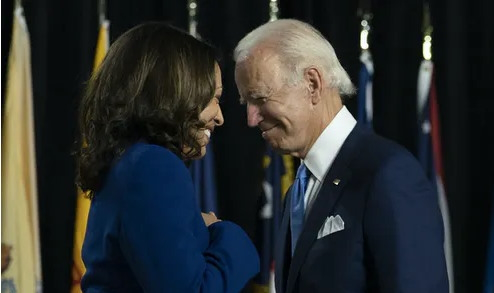
Mainstream media are surprisingly muted at the prospect of the world’s most powerful nation being led for the first time by a woman – specifically a woman of colour, Vice President Kamala Harris[1]. Using past elections as our guide, we could have expected an outpouring of commentary on this potentially historic moment. Why haven’t we seen this?
We could point to the gravity of the election, as Trump and the Republicans ramp up their ethnonationalist[2] rhetoric. We could also point to a continuing desire in media circles for disunity in the Democratic Party; the chances of which have been stymied by Biden’s late withdrawal from the nomination process followed by a swift endorsement of Harris.
But the best and most simple explanation is simply that the legacy media have not –at least for the first few days of her campaign – taken Harris’s candidacy seriously enough. The reason is that they have not taken Harris herself seriously enough.
Narratives about Harris’ 2019 campaign for the nomination to lead the Democratic Party ticket said it was “unclear what she stood for”. We have heard that judgment repeated in recent days, including in liberal media op-eds[3] and podcasts[4].
Critics deplore her vice-presidency as another period in which Harris has failed to put her stamp on any particular issue. And yet, at the same time, they note how strong she is on abortion.
And there’s the rub. The issue on which Harris is electoral gold – a person’s right to decide on medical procedures pertaining to reproduction or gender presentation —is not one the legacy media regard as genuinely important. Too many regard the issue as a minority interest rather than a universal one.
Instead, we are getting endless think pieces[5] on how Harris is not qualified enough for the role, as if 30-odd years in public service, including two terms as district attorney in California and two as state attorney-general, four years as a US senator and four years as vice-president, is insufficient. (And as if her opponent’s credentials are not more worthy of scrutiny.)
On the New York Times’ Daily podcast[6], the host and a polling expert fretted that Harris doesn’t have enough campaign experience on the grounds that many of her elections were in relatively liberal electorates. Did they not see her eviscerate Mike Pence[7] in the 2020 VP debate?
The intense focus on who Harris’ running mate will be also betrays the lack of seriousness with which many in the media have treated the woman who has raised a record-breaking tens of millions of campaign financing dollars this week.
Sexism and racism abound
Although it’s more polite, such reporting and opining come from the same wellspring as the openly racist and sexist ways Harris is treated by Republican opponents. Trump this week called Harris “dumb[8]”, while two US representatives called her the “DEI candidate[9],” “intellectually just really kind of the bottom of the barrel” and warning “when you go down that route, you get mediocrity”.
Republican vice presidential candidate J.D. Vance’s first comment after Biden endorsed Harris was to ask[10]: “What the hell have you done other than collect a government check for the past 20 years?” This was a clear dogwhistle, recalling the image of lazy “black welfare queens” that were a staple of conservative campaigning from the 1970s[11] to 1990s.
How are we to understand the basic disrespect with which Harris is treated? No doubt it bears similarities to commentary about previous candidates who were not white men. Hillary Clinton copped endless discussion of her pantsuits and was widely referred to as “Hillary”, as Harris is being called “Kamala”. Barack Obama was, like Harris, derided for a lack of governing experience.
But to understand the way legacy media have explained Harris to the American people, we need also to take account of the specific experience of women of colour.
Women of colour in the US
Harris, whose parents were both migrants to the United States, from India and Jamaica, identifies as both a woman of colour and as African-American. Most Americans perceive her as African-American.
African-American women’s experience of discrimination has significant overlap with that of white women and that of African-American men. But it is also a thing of its own.
This is what the theory known as “intersectionality[12]” encourages us all to understand. We cannot simply “add together” the experiences of gender discrimination and racism to comprehend the totality of the disrespect with which women of colour are so often treated. One of the best ways to grasp this distinction is via the title of a classic 1980s Black Studies book[13], All the Women Are White, All the Blacks Are Men, But Some of Us Are Brave.
Read more: Kamala Harris refers to herself as a 'woman of colour'. Is it okay if everyone else does too?[14]
Fortunately for the Democrats and for those committed to beating Donald Trump, Harris’ campaign shot out of the gates this week, addressing head-on the particular challenges she faces as a presidential candidate who is a woman of colour. In short, they are leaning into the very things the opposition has tried to make her weaknesses.
Since Monday, they have flooded social media with memes, videos and links to alter the narrative that mainstream media have proffered. That means we’ve seen extensive use of the vice president’s first name, including in Harris’ very first campaign video ad[15]. It means we’ve seen countless videos of Harris laughing.
Republicans[16] and others[17] have long disparaged Harris for laughing too much, to try to frame her with the stereotype of being a loud and unserious Black woman. Images of Harris’ wit and joy also have the effect of lessening the chance of her being painted with another stereotype, that of the “angry black woman[18]”.
While J.D. Vance derides Harris as a “childless cat lady”, social media this week are replete with positive, affirming messages from her husband, stepdaughter and, quite movingly, her husband’s ex-wife. And knowing that women politicians are often criticised for having none of the warmth of idealised mothers-who-bake, supporters are sharing widely videos of Harris cooking (including on her very own “Cooking with Kamala[19]” YouTube channel) or giving instructions to a TV producer, just before going on air, on how to brine[20] a Thanksgiving turkey.
Alongside all this character-focused material, the campaign has also launched right into policy areas that Democrats sometimes waver on. Harris’ stump[21] speech[22] uses the word “abortion”, which alone is almost novel, and she promises gun control. Her social media calls for reproductive freedoms generally, guaranteeing the availability of IVF[23].
Although Harris has not condemned the war in Gaza as genocide, she declined to attend Israeli Prime Minister Benjamin Netanyahu’s address to Congress. She has since reiterated her March 2024[24] call for a ceasefire, saying she “will not be silent[25]” on the suffering in Gaza.
Twice as good for half the respect
The force with which Harris has made these statements on issues that often trip up politicians also conveys that she is strong, commanding and competent — all the things African-American women have to work harder to prove than, say, white women and especially of course white men.
Harris’ rise this week has been met with enormous enthusiasm. The hype reflects a keen desire to support a fresh face in the fight against Trump. But the joy and hope have also been fuelled by the savvy way Harris and her team have worked against and within the specific constraints placed on an African American woman and South Asian American who aims to become US president.
That this has surprised so many people shows once again that Harris (and her team) have had to be, in the old adage that parents of colour teach their children, “twice as good” to be accorded “half the respect”.
References
- ^ Vice President Kamala Harris (www.whitehouse.gov)
- ^ ethnonationalist (theconversation.com)
- ^ op-eds (www.nytimes.com)
- ^ podcasts (podcasts.apple.com)
- ^ think pieces (www.wsj.com)
- ^ podcast (www.nytimes.com)
- ^ eviscerate Mike Pence (www.theguardian.com)
- ^ dumb (www.nbcnews.com)
- ^ DEI candidate (www.huffpost.com)
- ^ was to ask (www.wsls.com)
- ^ 1970s (www.latimes.com)
- ^ intersectionality (theconversation.com)
- ^ book (www.feministpress.org)
- ^ Kamala Harris refers to herself as a 'woman of colour'. Is it okay if everyone else does too? (theconversation.com)
- ^ first campaign video ad (x.com)
- ^ Republicans (www.newsweek.com)
- ^ others (www.youtube.com)
- ^ angry black woman (hbr.org)
- ^ Cooking with Kamala (www.youtube.com)
- ^ brine (www.tiktok.com)
- ^ stump (www.whitehouse.gov)
- ^ speech (www.youtube.com)
- ^ IVF (x.com)
- ^ March 2024 (edition.cnn.com)
- ^ will not be silent (x.com)