The RBA Will Deliver Its Decision as Inflation and Uncertainty Prevail
- Written by: The Times
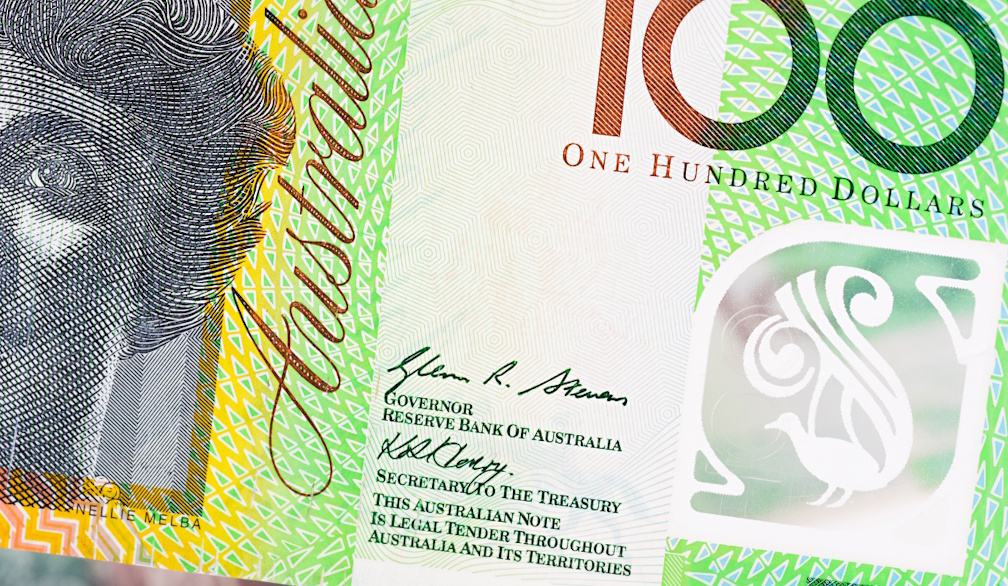
The Reserve Bank of Australia (RBA) is once again at the centre of economic attention, with its next interest rate decision landing against a backdrop of stubborn inflation, global instability, and cautious domestic growth. For households, businesses and investors alike, the question is simple: what will the RBA do next? The answer, as has increasingly been the case, is anything but simple.
This is an environment where economic signals are mixed, risks are layered, and certainty is in short supply. The RBA’s decision will not just reflect current conditions—it will attempt to anticipate what comes next.
What is the RBA decision?
At its core, the RBA decision refers to the setting of the official cash rate—the benchmark interest rate that influences borrowing costs across the economy.
When the RBA raises the cash rate:
-
Mortgage rates typically rise
-
Business lending becomes more expensive
-
Consumer spending often slows
-
Inflationary pressures are intended to ease
When the RBA lowers the cash rate:
-
Borrowing becomes cheaper
-
Spending and investment are encouraged
-
Economic activity is stimulated
The objective is to maintain price stability (inflation generally within a 2–3% target band), support full employment, and contribute to overall economic prosperity.
However, the challenge lies in timing and magnitude. Move too aggressively, and economic growth can stall. Move too slowly, and inflation can become entrenched.
In the current cycle, inflation remains a dominant concern. While it has eased from peak levels, it has proven more persistent than policymakers would prefer. At the same time, households are already under pressure from elevated borrowing costs, and business confidence is fragile.
This creates a narrow path for the RBA—one that requires precision, restraint, and a willingness to adjust quickly.
When are the decisions announced each year?
The RBA’s Monetary Policy Board meets regularly—typically once a month, excluding January—to assess economic conditions and determine the appropriate cash rate setting.
Decisions are usually announced on the first Tuesday of each meeting month, at 2:30 pm (AEST/AEDT), and are closely watched by:
-
Financial markets
-
Banks and lenders
-
Economists and analysts
-
Media and the broader public
These announcements are followed by a statement outlining the reasoning behind the decision, including the RBA’s assessment of inflation, employment, global conditions, and domestic demand.
In addition, more detailed insights are provided through:
-
Quarterly Statements on Monetary Policy
-
Speeches by the RBA Governor
-
Parliamentary appearances
Together, these communications form the narrative that markets attempt to interpret—and often over-interpret.
Who do the decisions affect?
In short: everyone.
For homeowners and borrowers
Interest rate changes directly impact mortgage repayments. For households with variable-rate loans, even a small adjustment can translate into hundreds of dollars per month.
For renters
While not directly tied to the cash rate, higher interest costs for landlords can flow through to rents, particularly in tight housing markets.
For businesses
The cost of capital is a critical factor in investment decisions. Higher rates can delay expansion, hiring, and innovation, while lower rates can encourage risk-taking and growth.
For savers and retirees
Higher interest rates can benefit those relying on savings income, but they also come with broader economic trade-offs, including slower growth and potential job market impacts.
For the broader economy
The RBA’s decisions influence:
-
Employment levels
-
Wage growth
-
Consumer confidence
-
Currency strength
They are, in effect, one of the most powerful levers shaping Australia’s economic trajectory.
Inflation and uncertainty: the defining forces
The current decision cycle is being driven by two dominant themes: inflation and uncertainty.
Inflation
While headline inflation has moderated, underlying inflation remains a concern. Services inflation, in particular, has been sticky, reflecting strong demand and rising costs in areas such as housing, insurance, and labour.
The RBA is acutely aware that allowing inflation to persist risks embedding higher expectations, making it harder to bring under control without more aggressive measures later.
Uncertainty
Global conditions are adding complexity:
-
Geopolitical tensions affecting energy and supply chains
-
Volatility in commodity markets
-
Diverging monetary policies among major economies
Domestically, the picture is equally mixed:
-
Strong employment data coexists with slowing consumption
-
Housing affordability remains a structural issue
-
Business sentiment is cautious
In this environment, each data release carries disproportionate weight—and can shift expectations rapidly.
Too hard to predict: wait and see
If there is one consistent theme in recent RBA cycles, it is the difficulty of prediction.
Economists, banks, and market commentators publish forecasts with confidence—but outcomes often diverge. The reason is straightforward: monetary policy is inherently forward-looking, while the data it relies on is backward-looking.
By the time inflation figures are released, conditions may already be changing. By the time employment data is analysed, underlying trends may have shifted.
The RBA must make decisions based on incomplete information, balancing risks rather than reacting to certainty.
For households and businesses, this creates a practical dilemma. Planning becomes more difficult when:
-
Interest rate paths are unclear
-
Economic signals are mixed
-
Policy direction can change quickly
In such an environment, the most prudent approach is often the simplest: prepare for multiple scenarios.
For borrowers, that may mean:
-
Stress-testing budgets against higher rates
-
Building financial buffers where possible
For businesses:
-
Maintaining flexibility in investment plans
-
Managing debt exposure carefully
For investors:
-
Avoiding overreliance on a single rate outcome
The reality is that no single forecast will prove consistently correct. The RBA itself has emphasised that it is “data dependent”—a phrase that, in practice, means decisions will evolve as conditions change.
The broader perspective
While each RBA announcement generates intense scrutiny, it is worth remembering that monetary policy operates with a lag. The full impact of rate changes can take months, even years, to flow through the economy.
This means:
-
Some households are still absorbing previous increases
-
Some inflation pressures may already be easing beneath the surface
-
Future decisions will build on effects not yet fully visible
It also means that patience—often in short supply in markets—is a necessary component of policy effectiveness.
Final word
The upcoming RBA decision will be shaped by inflation and uncertainty, but it will not resolve them.
For Australians, the key takeaway is not just what the RBA decides, but how it navigates the path ahead. In a world of shifting data and unpredictable shocks, certainty is elusive.
The only reliable expectation is that conditions will continue to evolve—and that the RBA will adjust accordingly.
For now, the most accurate forecast may also be the least satisfying: it’s too hard to call with confidence.
Watch the data. Listen to the signals. And be prepared to adapt.