Government faces likely High Court challenge to its CFMEU legislation
- Written by: Michelle Grattan, Professorial Fellow, University of Canberra
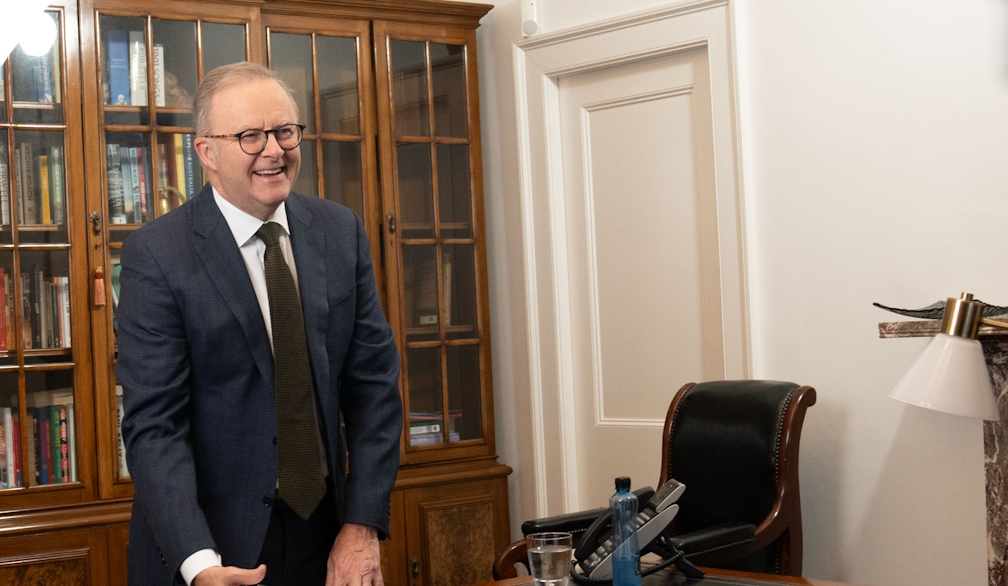
The Albanese government faces a likely High Court challenge to its installation of an administrator into the construction division of the CFMEU.
As thousands of the union’s members held rallies in cities across the country, its former Queensland secretary Michael Ravbar – who’s been dismissed together with almost all other officials – said he would launch a challenge against the legislation passed last week to put the union into administration. An administrator was immediately installed.
Ravbar told the Brisbane rally: “This is going to be the biggest challenge and the biggest fight that we’ve ever had, but we’re all up for it. You’ve got to get control of our union back.”
Ravbar urged members to vote against Labor at the October state election and next year’s federal election, and attacked Prime Minister Anthony Albanese, who he said had “always been anti-union”.
The High Court action is likely to argue the Commonwealth lacked the authority to take over a democratically organised union and sack nearly 300 officials, who had not been convicted of any offence. No court was involved in the action. Earlier court proceedings that were underway, brought by the Fair Work Commission’s general manager, are set to be discontinued after the government’s action.
The government said late Tuesday it was not aware of any CFMEU challenge.
On Tuesday Prime Minister Anthony Albanese denied the claim by the union’s former Victorian secretary John Setka that the government had made “a deal” with the union that there would be no move for an administrator if he resigned his position.
Setka claimed on Channel 7 at the weekend that after Nine sent allegations of malfeasance to the union, he had offered to “pull the pin today” so the union would avoid administrators being sent into the Victorian branch. He had conveyed this to the union’s national secretary Zach Smith.
He claimed there had been talks between Smith, then Workplace Relations minister Tony Burke and ACTU national secretary Sally McManus.
“At twenty to six the call came through, [saying] yes, there’s a deal. Now when you do a deal with the government you expect them to honour it,” Setka said.
“I think Tony Burke has betrayed construction workers in Australia.”
Nine published a series of devastating allegations of criminal infiltration of the union, bullying and bribery. The government immediately made it clear publicly Setka’s resignation and other actions by the union to try to ward off intervention were not enough.
Albanese told a news conference: “Obviously we didn’t make a deal. The evidence is in what’s happened”. The PM said he “not quite sure why people gave [Setka] some more oxygen. But John Setka is someone who will always look for publicity.”
Greens MP Max Chandler-Mather, addressing the Brisbane rally, said: “Labor has used these untested allegations to attack an entire union”.