Why Americans do political speeches so well (and debates so badly)
- Written by: David Smith, Associate Professor in American Politics and Foreign Policy, US Studies Centre, University of Sydney
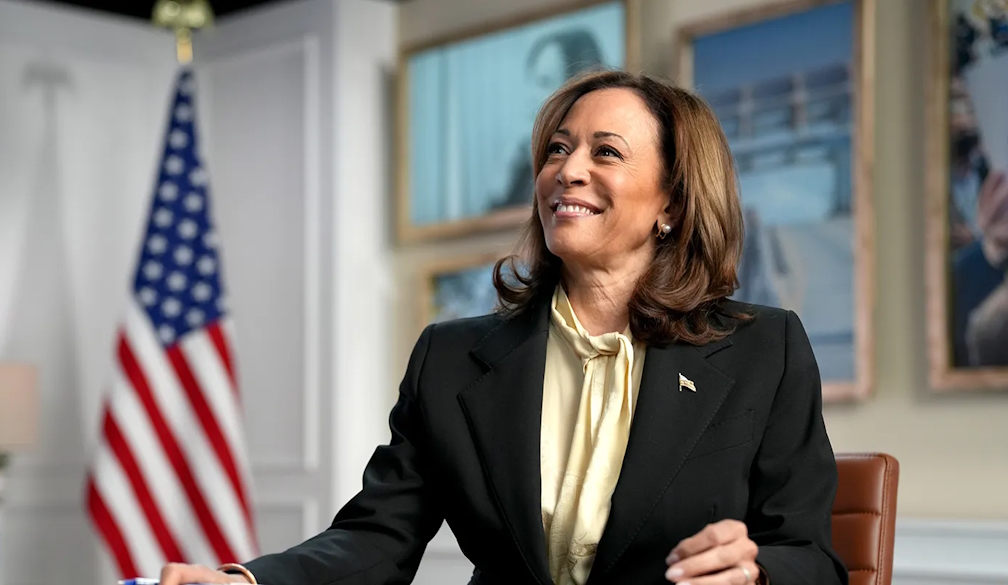
The recent Democratic National Convention in Chicago was a showcase of impressive speeches[1]. Presidential nominee Kamala Harris justified the newfound enthusiasm of Democrats[2] with a strong acceptance speech, but even she couldn’t match the oratorical power of Michelle[3] and Barack[4] Obama two nights earlier.
US political culture is marked by visionary speeches, from Abraham Lincoln’s Gettysburg Address[5] and William Jennings Bryan’s “Cross of gold[6]” to Martin Luther King’s “I have a dream[7]” and Ronald Reagan’s “Tear down this wall[8]”. This rhetorical tradition infuses events such as party conventions, where memorable speeches can lay the groundwork for presidential careers[9].
Australia also has some justly famous political speeches. There was Robert Menzies’ “Forgotten People[10]” address of 1942, Paul Keating’s Redfern speech[11] in 1992, and Julia Gillard’s “misogyny speech[12]” to parliament in 2012. Noel Pearson’s eulogy for Gough Whitlam[13] in 2014 was a rhetorical masterpiece[14].
But these speeches are memorable because they are so rare. Australian politicians need to be good communicators, but they are not expected to deliver the kind of soaring, visionary rhetoric we see so often in the US. Why is this?
Politics with the soul of a church
US party conventions often look like Hollywood awards ceremonies[15], and Steven Spielberg was involved in the planning[16] of the recent DNC. Hollywood has become an indelible part of US political culture.
Reagan, a former Hollywood actor, set new standards for how telegenic[17] and entertaining[18] presidents could be. Donald Trump may not be everyone’s idea of a great orator, but the former reality TV star is certainly a master of televised spectacles[19].
The tradition of preaching is an even deeper cultural source of US political rhetoric. With about 30% of Americans attending religious services regularly[20], the sermon is the most prevalent form of public speech in the US.
American preachers need to be compelling, given the level of religious competition, and church is where many future politicians first encounter the craft of public speaking. American political speeches often reflect the combination of uplift and warning[21] found in preaching.
While evangelical Christianity is usually associated with the Republican Party, it is also in the DNA of Democrats because of the Civil Rights Movement and the black church[22]. One of the standout speakers of the DNC was Georgia Senator Raphael Warnock[23], senior pastor of the same Baptist church in Atlanta where Martin Luther King Jr preached[24].
Warnock described Trump in biblical terms as a “plague on the American conscience”. But he also described a vote as “a kind of prayer for the world we desire for ourselves and for our children”.
Australia has no shortage of politicians who were raised as Christians and have Christian commitments. But unlike in the US, where even secular politicians must pay lip service to prayer, Christian politicians in Australia must adapt themselves[25] to the secularism of Australian culture[26]. This culture does not expect politicians to preach.
Strong speeches for weak parties
Michelle Grattan last week described Australian party conferences as “mind-numbing[27]” compared with the “Hollywood extravaganzas” of their US counterparts.
But the spectacles at US party conventions testify to the weakness[28] of American political parties. The Democratic and Republican National Committees have little power[29]. Party organisations are localised and fragmented. They lack the central authority found in Australian parties, and the national convention every four years is the only time a nationwide party truly comes into existence.
Even in Congress, parties have few mechanisms for disciplining their members[30]. Party leaders are forced to negotiate with their own side, not always successfully[31]. Party conventions see an extravagant display of unity behind a newly nominated candidate. This is one of the few moments party unity is guaranteed.
While there is plenty of competition for power within Australian parties, in Australia it mostly takes place behind closed doors within party hierarchies[32]. In the US, would-be legislators and executives need to campaign publicly to win the often brutal primary elections that earn them the party’s nomination.
Successful candidates must create their own personalised campaigns. They have help from local party organisations, which coordinate resources and volunteers, but they need much more than that. A candidate for national office must build their own coalition of donors that would dwarf[33] anything a party could provide.
Hence the need for good speech-making. Competition for the attention of donors and voters is fierce, and a compelling speech is a vital way to stand out. This is especially true of candidates such as Barack Obama[34], who came from outside the party’s traditional power bases.
In Australia, inspirational speeches don’t have the same political currency. A system of strict party discipline[35], small preselection contests and short, relatively cheap election campaigns[36] means candidates are rewarded more for other political skills.
The Australian advantage: debating
While a US politician might give a more entertaining stump speech than an Australian one, an Australian politician would probably perform better in any scenario that requires unscripted comments – especially a debate with an opponent.
Even superb US political orators can be underwhelming[37] when they don’t have a script and a receptive audience. Congressional debates consist of prepared speeches with little direct engagement between opponents. There is no equivalent to Parliamentary Question Time[38], and holders of executive office (such as the president or state governors) aren’t even in the legislature.
While Congressional committee hearings can sometimes provide a simulation of the rowdiness[39] we associate with Question Time, the structure of Congress isn’t conducive to debate in the same way.
The physical format of Westminster parliaments, with opponents facing each other directly, attests to an adversarial nature that was there from the beginning[40]. The power of Gillard’s “misogyny speech”, which went viral globally, came partly from the way she delivered it straight into Tony Abbott’s face[41].
US Congress was designed differently. The framers of the Constitution loathed the idea of factions[42], and imagined a legislature made up of representatives who would negotiate with each other to find consensus. Congress in turn would have to negotiate with the president, who would rarely need to engage publicly[43] with its members.
This may explain why, despite the routine brilliance of convention speeches, US presidential debates are so tedious and forgettable. Commentators who try to hype these debates by citing “great moments” from past debates inevitably reach for the same ancient zinger, “you’re no Jack Kennedy[44]”, delivered by forgotten vice-presidential candidate Lloyd Bentsen in 1988.
The sad reality is that the most memorable and consequential presidential debate in living memory is the one we just saw, where Joe Biden performed so badly he ended his hopes of a second presidency.
In the land of the scripted, the teleprompter is king[45].
References
- ^ showcase of impressive speeches (theconversation.com)
- ^ justified the newfound enthusiasm of Democrats (theconversation.com)
- ^ Michelle (www.youtube.com)
- ^ Barack (www.youtube.com)
- ^ Gettysburg Address (www.loc.gov)
- ^ Cross of gold (historymatters.gmu.edu)
- ^ I have a dream (www.youtube.com)
- ^ Tear down this wall (www.youtube.com)
- ^ lay the groundwork for presidential careers (www.youtube.com)
- ^ Forgotten People (www.menziesrc.org)
- ^ Redfern speech (www.youtube.com)
- ^ misogyny speech (www.youtube.com)
- ^ eulogy for Gough Whitlam (www.youtube.com)
- ^ rhetorical masterpiece (theconversation.com)
- ^ Hollywood awards ceremonies (www.washingtonpost.com)
- ^ Steven Spielberg was involved in the planning (www.hollywoodreporter.com)
- ^ telegenic (www.theguardian.com)
- ^ entertaining (www.youtube.com)
- ^ master of televised spectacles (www.aljazeera.com)
- ^ 30% of Americans attending religious services regularly (www.statista.com)
- ^ uplift and warning (www.preaching.com)
- ^ Civil Rights Movement and the black church (www.pewresearch.org)
- ^ Georgia Senator Raphael Warnock (www.motherjones.com)
- ^ same Baptist church in Atlanta where Martin Luther King Jr preached (time.com)
- ^ adapt themselves (www.theguardian.com)
- ^ secularism of Australian culture (theconversation.com)
- ^ mind-numbing (theconversation.com)
- ^ weakness (washingtonmonthly.com)
- ^ little power (www.reuters.com)
- ^ disciplining their members (jackson.yale.edu)
- ^ not always successfully (www.theguardian.com)
- ^ behind closed doors within party hierarchies (theconversation.com)
- ^ dwarf (issueone.org)
- ^ candidates such as Barack Obama (sg.news.yahoo.com)
- ^ strict party discipline (theconversation.com)
- ^ short, relatively cheap election campaigns (thedailyaus.com.au)
- ^ underwhelming (edition.cnn.com)
- ^ Parliamentary Question Time (www.tandfonline.com)
- ^ simulation of the rowdiness (apnews.com)
- ^ there from the beginning (www.parliament.uk)
- ^ straight into Tony Abbott’s face (www.sbs.com.au)
- ^ factions (www.history.com)
- ^ rarely need to engage publicly (en.wikipedia.org)
- ^ you’re no Jack Kennedy (www.youtube.com)
- ^ teleprompter is king (uk.news.yahoo.com)
Read more https://theconversation.com/why-americans-do-political-speeches-so-well-and-debates-so-badly-237314