Is Iran’s anti-Israel and American rhetoric all bark and no bite?
- Written by: Shahram Akbarzadeh, Convenor of the Middle East Studies Forum (MESF), and Acting Director the Alfred Deakin Institute for Citizenship and Globalisation, Deakin University
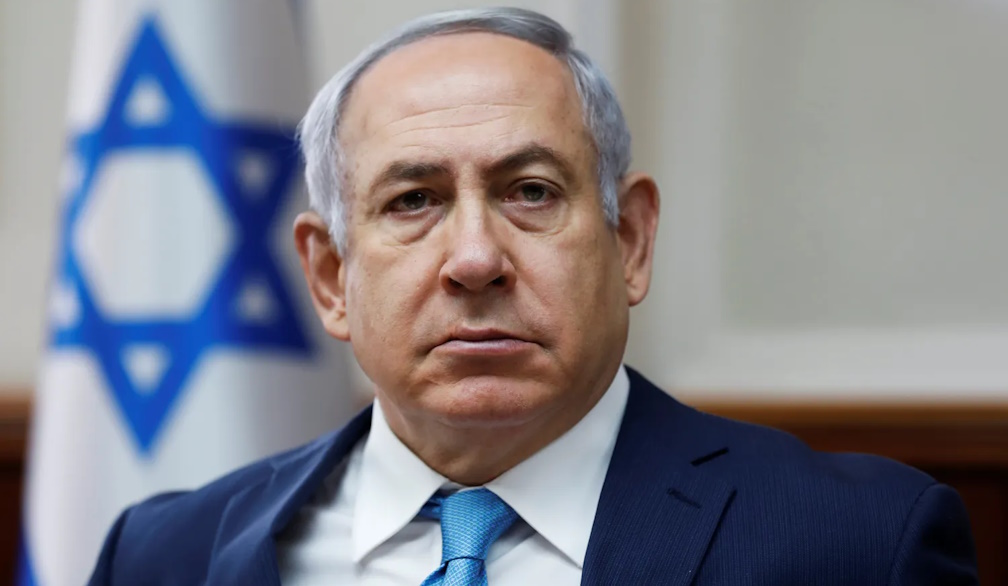
On August 27, Ali Khamenei, the supreme leader of the Islamic Republic of Iran, told the newly elected president, Masoud Pezeshkian, and his cabinet that talking to the enemy[1] may be useful.
In a thinly veiled reference to Iran’s engagement with the international community – and specifically the United States – Khamenei said Iran should not pin its hopes on such engagement, but that is no reason not to hold talks with the enemy.
This is the kind of green light that Pezeshkian needs to engage again with the International Atomic Energy Agency and Western countries on Iran’s nuclear program, and to engage with international interlocutors over its heightened tensions with Israel.
This statement seems to signal a desire to walk back from the brink of an all-out war with Israel over the assassination[2] of Hamas political leader Ismail Haniyeh on Iranian soil in July and revert back to the mutual deterrence that had defined their relationship for years.
This, however, may not be an option given how much the region has changed over the past year.
Crossing a threshold in April
In April of this year, Israel targeted Iran’s embassy complex in Damascus[3], killing members of the Islamic Revolutionary Guards Corps.
This led to a carefully choreographed Iranian response. Iran could not ignore the Israeli attack, which the authorities condemned as an assault on Iranian sovereign territory, but did not wish to go into war with Israel. As a result, Iran reportedly gave advance warning[4] of its impending response[5], which allowed Israel and its allies to shoot down most of the 300-odd missiles and drone fired from Iran.
This response was nonetheless seen as a victory in Iran, as it demonstrated its technological capacity to reach Israel. It also marked a departure from Iran’s default position of talking tough, but not getting involved in direct confrontation.
Iran clearly crossed a threshold in April, but seems very uneasy about the consequences.
Then, on July 31, Haniyeh was assassinated[6] while on a visit to Iran. Although Israel has neither confirmed or denied[7] responsibility, it is widely believed[8] to have been behind it.
This has put the Iranian leadership in a bind. There have been calls from hardliners for retaliation to restore Iran’s image as a country that can defend itself and avenge the killing of a close ally. Khamenei has also insisted[9] Israel will be punished for its action, but the time would be of Iran’s choosing.
It is clear the Iranian leadership cannot afford to look weak and risk damaging their standing among their allies and proxies in the region, which include Hamas, Hezbollah in Lebanon, the Houthi rebels in Yemen and other Shi'a militant groups in Iraq and Syria. But there are also other considerations that weigh heavily on their mind.
A crisis of legitimacy
A direct response to Israel could open a Pandora’s box. It would pave the way for further direct attacks by Israel, perhaps even targeted assassinations of Iranian leaders.
This is a real possibility. Israel has demonstrated its willingness to respond to any threat with force under the rubric of self-defence. It has also demonstrated its ability to carry out precision attacks in Iran, such as its retaliatory strike[10] on a radar system in the city of Isfahan after Iran’s missile and drone attack in April.
Furthermore, such escalation presents the real risk of drawing the United States into the conflict.
The Iranian leadership has made an art of brinksmanship. Anti-Americanism is ingrained in the political discourse of the political elite and frames Iranian foreign policy. But Iran has so far avoided war with the United States, because that could risk everything.
The reason: Iran’s leaders are already nervous about their political future, and conflict with Israel and the US could seriously exacerbate the situation.
There is a major disconnect between large segments of society and the ruling regime at the moment. Two years ago, Iran was rocked by spontaneous anti-regime mass protests under the banner of “Woman, Life, Freedom[11]”. They started in response to the death of Mahsa Amini[12] in custody for not wearing her hijab properly, but soon morphed into an anti-establishment revolt that called for the “fall of dictatorship” and an end to the Islamic regime. The revolt was put down by force, arbitrary detentions and executions[13].
The death of President Ebrahim Raisi in a helicopter crash in May this year offered an opportunity for the ruling regime to seek a reconciliation with its reformist critics. Pezeshkian, a reformist parliamentarian, was vetted and approved to run in the election[14] to replace Raisi with the intention of increasing voter turnout. Iran’s supreme leader[15] has repeatedly pointed to the voter turnout rate as an indicator of the regime’s legitimacy.
Yet, the participation rate[16] in the first round of the election was just 39.9% – the lowest in a presidential election in Iran’s history – and only reached[17] 49.8% in the final round. This points to the depth of public disillusionment with the political system. Many reformists boycotted the election and dismissed the exercise as a sham and smokescreen for the ruling regime.
Iran’s crisis of legitimacy is at its highest point, making it ripe for another explosion. War with Israel or the United States can ignite this tinder box.
A potential solution for Iran?
So the Iranian leadership faces a dilemma. It cannot walk back from its anti-Israel and anti-US rhetoric. Tehran has built its foreign policy and formed an extensive network, the so-called Axis of Resistance[18], based on it. It cannot betray this pillar of its identity.
But acting on it would risk the survival of the regime. So the leadership has been looking for an increasingly difficult-to-find balance.
Hezbollah’s recent exchange of fire[19] with Israel may have been the answer. By supporting Hezbollah, Iran can claim to have inflicted pain on Israel without striking itself.
This is aimed at restoring the status quo that existed before April. This strategy outsources the fighting to Hezbollah and Iran’s other proxies to protect the ruling regime from a direct confrontation and ward off an existential threat to the leaders’ rule.
But this may be wishful thinking. This strategy could give Israel the justification it needs to strike Iranian targets again. And this, in turn, could serve as the spark for the public’s pent-up frustration aimed at the brutality of the ruling regime.
References
- ^ talking to the enemy (www.voanews.com)
- ^ assassination (www.nytimes.com)
- ^ embassy complex in Damascus (www.afr.com)
- ^ advance warning (edition.cnn.com)
- ^ impending response (carnegieendowment.org)
- ^ assassinated (www.aljazeera.com)
- ^ neither confirmed or denied (edition.cnn.com)
- ^ widely believed (www.nytimes.com)
- ^ insisted (www.reuters.com)
- ^ retaliatory strike (www.timesofisrael.com)
- ^ Woman, Life, Freedom (www.ohchr.org)
- ^ Mahsa Amini (www.bbc.com)
- ^ executions (www.bbc.com)
- ^ election (www.theguardian.com)
- ^ supreme leader (www.aljazeera.com)
- ^ participation rate (www.theguardian.com)
- ^ reached (www.theguardian.com)
- ^ Axis of Resistance (theconversation.com)
- ^ exchange of fire (theconversation.com)
Read more https://theconversation.com/is-irans-anti-israel-and-american-rhetoric-all-bark-and-no-bite-237662