Federal Newspoll still tied but Albanese’s ratings up; Queensland Newspoll has big LNP lead
- Written by: Adrian Beaumont, Election Analyst (Psephologist) at The Conversation; and Honorary Associate, School of Mathematics and Statistics, The University of Melbourne
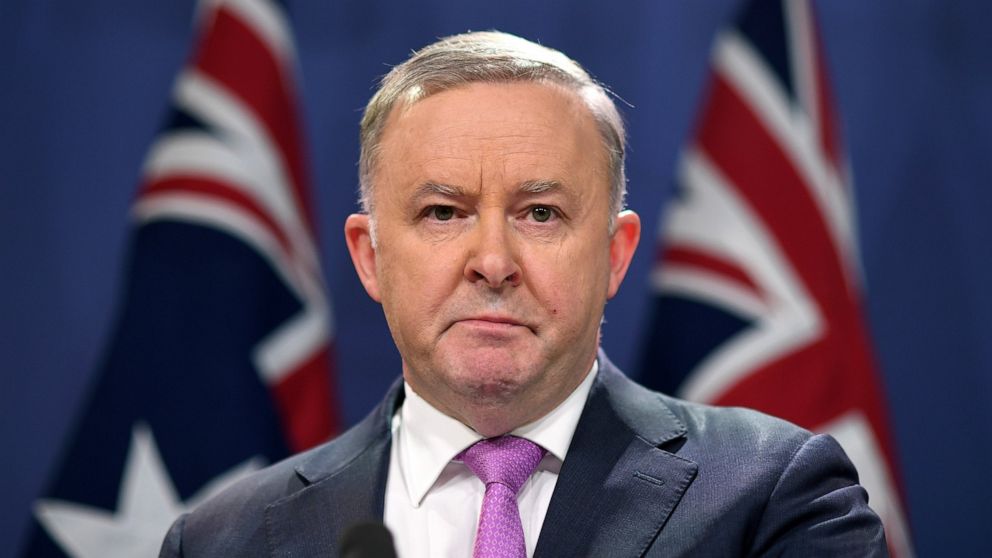
A national Newspoll[1], conducted September 16–20 from a sample of 1,249, had a 50–50 tie for the third consecutive time. Since the last Newspoll three weeks ago, primary votes were 38% Coalition (steady), 31% Labor (down one), 13% Greens (up one), 6% One Nation (down one) and 12% for all Others (up one).
Anthony Albanese’s net approval improved five points to -8, with 51% dissatisfied and 43% satisfied. Peter Dutton’s net approval was down two points to -15. Albanese led Dutton as better PM by 46–37 (45–37 previously).
The graph below shows Albanese’s net approval in Newspoll this term. It has plus signs for the Newspoll results and a smoothed line has been fitted. After dropping to -13 net three weeks ago, Albanese’s ratings have rebounded to where they’ve been for most of this year, poor but not dreadful.

Other recent federal polls have not been as good for Albanese and Labor as Newspoll. Albanese’s net approval was at -22 in YouGov and -15 in Freshwater, and Labor trailed by 52–48 in Freshwater, one of their worst results from any pollster this term. Freshwater leans a little to the Coalition relative to other polls.
Asked what aspect of cost of living worried them most, 40% selected housing, 25% groceries, 18% energy and 11% insurance.
Queensland Newspoll has thumping lead for LNP
The Queensland state election will be held on October 26. A Newspoll[2], conducted September 12–18 from a sample of 1,047, gave the Liberal National Party (LNP) a 55–45 lead, a one-point gain for the LNP since the last Queensland Newspoll in March. Primary votes were 42% LNP (steady), 30% Labor (steady), 12% Greens (down one), 8% One Nation (steady) and 8% for all Others (up one).
Labor Premier Steven Miles’ net approval was up one point to -10, with 51% dissatisfied and 41% satisfied. LNP leader David Crisafulli’s net approval dropped two points to +12. Crisafulli had a 46–39 lead as better premier (43–37 in March).
Asked whether Labor deserved to be re-elected, 57% said it was time to give someone else a go (down one since March), while 29% said they deserved to be re-elected (up three). By 53–47, voters were confident that the Crisafulli LNP is ready to govern.
Labor will be a little relieved that this poll was not worse. A YouGov poll[3] in July and a Wolf + Smith poll[4] in August had both given the LNP a 57–43 lead. Nearly ten years after they gained power in Queensland following the January 2015 election, Labor appears doomed.
Further federal polls: YouGov poll tied
A national YouGov poll[5], conducted September 13–19 from a sample of 1,619, had a 50–50 tie, unchanged from the previous YouGov poll in late August[6]. Primary votes were 39% Coalition (up two), 30% Labor (down two), 14% Greens (up one), 7% One Nation (down one) and 10% for all Others (steady).
In the previous YouGov poll, Labor was unlucky not to lead given the primary votes. In this poll, Labor is lucky not to trail.
Albanese’s net approval slumped 11 points to -22, with 58% dissatisfied and 36% satisfied. Dutton’s net approval was down five points to -10. Albanese led as preferred PM by 42–39 (43–38 in August).
Freshwater has one of Coalition’s best results this term
A national Freshwater poll[7] for The Financial Review, conducted September 13–14 from a sample of 1,057, gave the Coalition a 52–48 lead, a one-point gain for the Coalition since the August Freshwater poll. This is one of the best results for the Coalition from any pollster this term. Primary votes were 42% Coalition (up one), 30% Labor (down two), 13% Greens (up one) and 15% for all Others.
Albanese’s net approval was down five points to -15, with 49% unfavourable and 34% favourable. Dutton’s net approval was down one point[8] to -4. Albanese led Dutton as preferred PM by an unchanged 45–41.
Asked to give their top three issues, 74% selected cost of living as a top issue, and the Coalition increased its lead over Labor on cost of living from seven points in August to 14. The Coalition also had a 16-point lead on economic management (13 in August).
Morgan poll: Labor has narrow lead
A national Morgan poll[9], conducted September 9–15 from a sample of 1,634, gave Labor a 50.5–49.5 lead, a 0.5-point gain for the Coalition since the September 2–8 Morgan poll.
Primary votes were 37.5% Coalition (up one), 30.5% Labor (up 0.5), 12.5% Greens (down two), 5.5% One Nation (down 0.5), 10% independents (up 0.5) and 4% others (up 0.5).
The headline figure uses respondent preferences. By 2022 election preferences, Labor led by an unchanged 52–48.
Redbridge and Accent Research MRP poll tied at 50–50
A national Redbridge and Accent Research multi-level regression with post-stratification (MRP) poll[10], conducted July 10 to August 27 from a sample of 5,976, had a 50–50 tie, a two-point gain for the Coalition since the last MRP poll[11] between February and May. Primary votes were 38% Coalition (up two), 32% Labor (steady), 12% Greens (down one) and 19% for all Others (steady).
MRP polls use modelling to estimate the number of seats that would be won by each party. The August MRP poll had a point estimate of 69 Labor seats out of 150, 68 Coalition, three Greens and ten others. In the May poll, Labor had 77 seats out of 151, the Coalition 60, the Greens three and others 11.
The August poll had no chance either major party would win a majority (76 seats), but Labor had a 75% chance of winning the most seats. These probabilities reflect the poll’s data, and are not predictions for the election, due by May 2025.
References
- ^ national Newspoll (www.theaustralian.com.au)
- ^ Newspoll (content.api.news)
- ^ YouGov poll (theconversation.com)
- ^ Wolf + Smith poll (theconversation.com)
- ^ YouGov poll (au.yougov.com)
- ^ late August (au.yougov.com)
- ^ Freshwater poll (www.afr.com)
- ^ down one point (www.afr.com)
- ^ Morgan poll (www.roymorgan.com)
- ^ (MRP) poll (6b72024e-077a-44e2-88f5-dc1a0ed81099.usrfiles.com)
- ^ MRP poll (6b72024e-077a-44e2-88f5-dc1a0ed81099.usrfiles.com)