The 90s was a boom time for Australian fashion and faces. What happened?
- Written by: Sasha Sarago, First Nations Cultural Innovation Lead - Beauty and Technology, Charles Sturt University
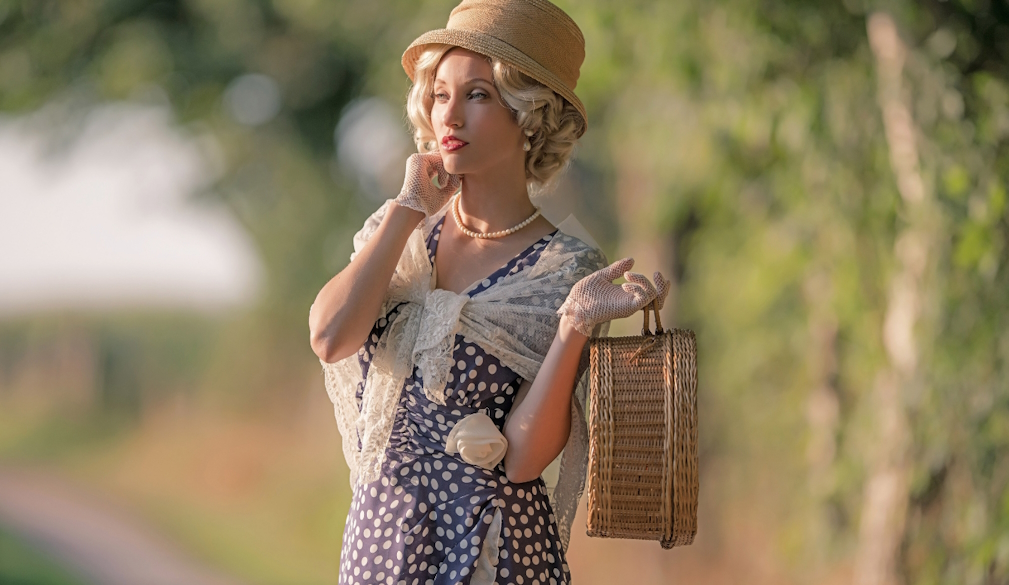
The In Vogue: The 90s[1] series transports audiences back to the glamour and grandeur of a transformative decade for fashion. Set against the backdrop of New York, London and Paris, the series explores the rise of supermodels, designer powerhouses and fashion’s global influence. But the fashion scene in Australia – a country that was also enjoying a meteoric rise in international success at the time – does not crack a mention.
The 1990s marked a golden era for fashion[2]. Supermodels like Linda Evangelista, Naomi Campbell, Cindy Crawford and Christy Turlington became style icons. Designers like Tom Ford, Jean-Paul Gaultier, and John Galliano pushed the boundaries of fashion[3] creating moments that defined the times and influenced everything from pop culture[4] to politics.
Even though Australia may not have had the runway clout of Paris or New York, the nation was making significant strides in fashion[5] during the same period. Australian designers’ and models’ distinct styles were impressive – giving fashion heavyweights a run for their money.
So, what went wrong?
The 90s turned the fashion industry upside down.Australian designers, international success
In the 1990s, Australian designer houses such as Alannah Hill, Collette Dinnigan, Akira Isogawa and Sass & Bide signified Australia’s “coming of age[6]” in fashion, with each designer bringing a unique flair and Australian sensibility to the international market.
Alannah Hill created a whimsical aesthetic with an edgy twist. Her designs, worn by celebrities Nicole Kidman, Helena Christensen and Courtney Love, earned her a cult following[7]. Business skyrocketed from her Chapel Street boutique in Melbourne to the department stores Selfridges and Browns in London and Bergdorf Goodman and Henri Bendel in Fifth Avenue, New York City.
In 1996, Collette Dinnigan[8] gained worldwide acclaim as the first Australian designer to showcase her collection at Paris Fashion Week. Dinnigan’s delicate lace dresses and couture craftsmanship found a spotlight at London’s Victoria & Albert Museum’s Fashion in Motion[9] exhibition. Striking while the iron was hot, Dinnigan secured a lingerie collaboration with Marks & Spencer.

Akira Isogawa, known for his blend of Japanese and Western aesthetics[11] shared his first collection in 1994. He has presented subsequent collections in Paris bi-annually[12], a legacy sustained since 1998. Innovative from the jump, he turned early constraints to strengths. When the budget for his first big show didn’t stretch to shoes, he sent models down the runway in little red socks[13]. The fashion statement helped him eventually secure more than 50 retail partners[14].
Sass & Bide, founded in 1999 by friends Sarah-Jane Clarke and Heidi Middleton, brought a youthful, urban energy from London’s Portobello Road Markets[15] back to Australian shores. Their signature brand quickly gained popularity and was acquired by Myer in a A$42.3 million[16] two-part deal. Australia was no longer a disconnected island but a wild card in the global fashion ecosystem.
Australian faces and Elaine George’s Vogue cover
Australian designers weren’t the only superstars gaining fashion fame.
By the time the supermodel phenomenon etched itself into the fashion zeitgeist, Australian model and businesswoman Elle Macpherson (known then as The Body[17]) was already well known. Australian models Sarah Murdoch, Kristy Hinze, Kate Fisher and Alyssa Sutherland[18] would follow.
 Sarah Murdoch (nee O'Hare, pictured with Anneliese Seubert and Emma Balfour in 1996) graced Australian catwalks in the 90s. Patrick Riviere/Getty[19]
Magazine cover models throughout the 90s[20] showed sun-kissed “girl next door[21]” charm. The exception was Emma Balfour[22], often touted as Australia’s androgynous counterpart to Kate Moss’s grunge-bohemian look.
But 1993 produced a turning point in Australia’s beauty paradigm. It was the year Elaine George, Australia’s first Aboriginal fashion model, arrived[23] on the cover of Vogue Australia magazine, making fashion history. Elaine’s presence highlighted the Australian fashion industry’s prioritisation of Eurocentric beauty ideals[24].
First Nations beauty and fashion talent urgently needed celebrating. But Vogue’s Australian readers had to wait until October 2000 until Torres Strait Islander singer-songwriter and actress Christine Anu[25] was featured on the cover. The gap showed the stain of underrepresentation and inequity within Australian fashion’s reputation had remained.
The 2000s, when fashion got much faster
While the 1990s were a period of optimism and growth for Australian fashion, the momentum failed to continue into the 2000s. Several factors contributed to this decline[26].
One of the most significant changes was the rise of fast fashion[27] in the early 2000s. Brands like Zara, H&M and Forever 21 began dominating the global market with affordable, quickly produced garments.
This shift left many independent designers, including those from Australia, struggling to compete. The slow, meticulous craftsmanship that had defined Australian designers in the 90s could not keep up with the fast-fashion cycle.
Another challenge was the lack of sustained support for the Australian fashion industry. Unlike New York, London or Paris, which had well-established fashion infrastructures, Australia’s fashion scene was still relatively young. There was no long-term strategy[28] to nurture emerging talent or to promote Australian fashion on a global scale. Many designers either relocated abroad or found it difficult to maintain the same level of success they had achieved in the 90s.
A new Renaissance?
The story of Australian fashion in the 1990s is one of promise, yet ultimately missed opportunity. Today, Australia has a chance to enter a new renaissance fuelled by digital innovation and its unique cultures[29].
The rise of digital fashion[30] enables Australian designers to break free from the constraints of traditional fashion markets. With virtual clothing[31] (simulated for real wear or digital realms), AI-powered design tools and metaverse runways[32], Australian creatives can harness technology to showcase their work globally.
The championing of Indigenous models, designers[33] and multicultural identity is essential. This inclusivity could position Australia as sustainable and ethical fashion innovator and present a compelling alternative to the fast-fashion giants.
 Today, model Elaine George, pictured second from right, runs indigenous modelling workshops. AAP Image/Liz Hobday[34]
References
- ^ In Vogue: The 90s (www.imdb.com)
- ^ golden era for fashion (www.theselectsgallery.com)
- ^ pushed the boundaries of fashion (www.vogue.com)
- ^ influenced everything from pop culture (edition.cnn.com)
- ^ making significant strides in fashion (www.vogue.com.au)
- ^ coming of age (www.ngv.vic.gov.au)
- ^ cult following (louiselove.com.au)
- ^ Collette Dinnigan (collettedinnigan.com)
- ^ Fashion in Motion (collections.vam.ac.uk)
- ^ 4Susie/Shutterstock (www.shutterstock.com)
- ^ blend of Japanese and Western aesthetics (www.ngv.vic.gov.au)
- ^ in Paris bi-annually (www.portrait.gov.au)
- ^ little red socks (style.nine.com.au)
- ^ 50 retail partners (www.theguardian.com)
- ^ from London’s Portobello Road Markets (www.vogue.com.au)
- ^ A$42.3 million (insideretail.com.au)
- ^ The Body (www.hellomagazine.com)
- ^ Alyssa Sutherland (www.shondaland.com)
- ^ Patrick Riviere/Getty (www.gettyimages.com.au)
- ^ cover models throughout the 90s (www.portrait.gov.au)
- ^ girl next door (www.mamamia.com.au)
- ^ Emma Balfour (www.smh.com.au)
- ^ arrived (www.vogue.com)
- ^ Eurocentric beauty ideals (www.theguardian.com)
- ^ Christine Anu (www.portrait.gov.au)
- ^ contributed to this decline (www.businessoffashion.com)
- ^ fast fashion (www.nytimes.com)
- ^ no long-term strategy (www.theguardian.com)
- ^ its unique cultures (www.csu.edu.au)
- ^ digital fashion (www.ted.com)
- ^ virtual clothing (www.vox.com)
- ^ metaverse runways (power.xyz)
- ^ championing of Indigenous models, designers (www.marieclaire.com.au)
- ^ AAP Image/Liz Hobday (ph-prod-cdn.aap.com.au)