Americans have voted for Donald Trump to become president again, and the economy is the biggest reason
- Written by: David Smith, Associate Professor in American Politics and Foreign Policy, US Studies Centre, University of Sydney
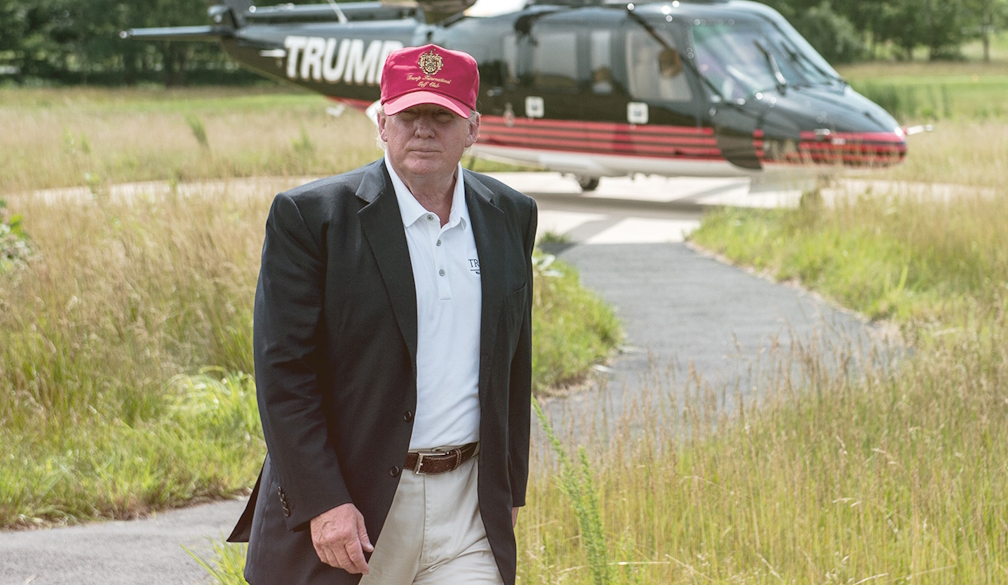
Donald Trump has been elected the 47th president of the United States. He is just the second president in US history to win a second non-consecutive term in office after being defeated – the first was Grover Cleveland in 1892.
His is a decisive victory, sweeping every one of the much-analysed “swing” states by two or three percentage points. These state wins were not huge, but they were good enough where it counted.
We are yet to see the final popular vote, but it’s entirely possible Trump will win that too, becoming the first Republican candidate to do so since George W. Bush in 2004. And the result emerged quickly this time, unlike in the 2020 election where the early results were mixed and the count dragged on for a long time.
Economic pain won Trump votes where it mattered
There will be much post-election analysis in the coming days and weeks, but I believe the biggest reason Trump won was discontent with the Biden administration. Kamala Harris could not separate herself from it, given she was vice president, and a lot of Americans feel the past four years have not served them well.
Harris certainly performed a lot better in this election than President Joe Biden would have. But the fact is that a lot of Americans’ perception and experience of the economy is that it is in dire shape, and they are dealing with the biggest price shocks since the 1970s. This is something they experience every time they buy groceries or fill up the car with petrol – and they took it out on Harris.
Polls show[1] most Americans feel they are worse off than four years ago. Only a small proportion think the country is on the right track economically.
So when people were looking for change that they believed would improve their lives, they turned to Trump. People’s memories of the first Trump administration were that the economy was stronger then, even though the last year of COVID was pretty disastrous.
However, they do not seem to hold that against him, and instead think they were better off then than they are now, and that was a very powerful sentiment for the vice president to be fighting against.
Lingering misogyny
Being a woman was also probably a disadvantage for Harris. From the time she became the presumptive Democratic nominee, we saw she was fighting against a misogynistic culture. The level of debasement and obscenity from the Trump campaign only got worse, and disturbingly, they paid no penalty for it. That in itself says a lot about what Harris was up against.
While there was much talk early in the campaign about abortion playing a major role in the vote, in the end it was overshadowed by other issues. Abortion was always going to be overshadowed by the economy, because the economy is what people are dealing with every day. The same goes for immigration - it did not play as big a role in the vote as some expected. So two big issues that each side ran hard on were not as significant, in the end, as the economy.
Some significant demographic shifts
It’s clear from the results that Trump has significantly improved his vote with Latinos. Exit polls showed him in the mid-40s with Latinos, which was up there with other electorally successful presidents, and clearly the controversy over a racist joke about Puerto Ricans did not change Latinos’ willingness to vote for Trump. Many Latinos tend to be socially conservative, and they have been hit very hard by inflation and economic strain.
One of the exit polls showed Trump with 12% of the African-American vote. If that proves to be the case once all the votes have been counted, that is a significant increase for him. It might seem like a small proportion, but at the margins it could have been pretty important.
Trump has managed to persuade conservatives among Latinos and African-Americans that the Republican party has a place for them – that it’s not just a party for white people.
Harris won among young people, but her margin in that group wasn’t as big as Biden’s in 2020. This is extraordinary given she’s nearly 20 years younger than him, but there are probably a few different factors at play: young people are also hard hit by the economy, and are only just forming their voting habits. They may have found much of the contest to be uninspiring.
What now for the Democrats?
The Democrats will likely have a significant period of despondency. We need to see how the House of Representatives turns out – there’s a chance it too may have a Republican majority. But whatever happens, the Democrats will need to rebuild from opposition.
In recent history, parties have rebuilt themselves quite quickly from opposition, as Americans tend to turn on their governments very quickly.
They may well look for a new generation of leadership. Remember that by the end of his four-year term, Trump will look very old, and is likely the last of the baby-boomer leaders. Also, he can’t run for president again.
So Democrats may take the message that they can’t win just by opposing – or just by not being Donald Trump. One observation from this campaign was that they didn’t stand for enough, they didn’t promise enough, and they didn’t represent enough. Younger leading Democrats such as Alexandria Ocasio-Cortez will be trying to push the party in a more progressive direction.
Others in the party might blame the loss on them being too progressive. But I think Harris actually spent most of her time appealing to moderate and conservative voters. It might be time to try something new.
Second Trump term will not be dull
Trump has promised a lot of genuinely horrifying things, some of which are just to entertain his base, and some of which are really what he believes. But whether he will actually be able to do the things he says he will do is another matter. I’m sure he does want to deport every illegal immigrant in the country, for example, but the legal and practical difficulties of that are very real and limiting.
If he wants to impose tariffs as broadly as he says, he’ll need the cooperation of Congress. Many will caution against it. We might think other elected Republicans are completely in his thrall, but given he’s not running again, I wonder whether those with their eyes on the future might try to carve out a more independent path.
One of his plans is to fire as many bureaucrats as possible and replace them with loyalists who would not oppose him on any measure. On one hand, he might be able to fill the government with people who do what he wants, but on the other it might be hard for him to govern if he fires everyone who knows how government works. So while he certainly has a lot of big plans, it remains to be seen just how many of them he will actually be able to implement.