Everything you say to an Alexa speaker will be sent to Amazon – starting today
- Written by: Kathy Reid, PhD Candidate, School of Cybernetics, Australian National University

Amazon has disabled two key privacy features[1] in its Alexa smart speakers, in a push to introduce artificial intelligence-powered “agentic capabilities” and turn a profit from the popular devices.
Starting today (March 28), Alexa devices will send all audio recordings to the cloud for processing, and choosing not to save these recordings will disable personalisation features.
How do voice assistants work?
A voice assistant works by constantly listening for a “wake word”, such as “Alexa”. Once woken, it records the command that is spoken and matches it to an action, such as playing a music track. Matching a spoken command to an action requires what computer scientists call natural language understanding[2], which can take a lot of computer power.
Matching commands to actions can be done locally (on the device itself), or sound recordings can be uploaded to the cloud for processing. On-device processing has improved substantially in recent years[3], but is still less accurate than using the cloud, where more computer power is available.
Amazon is making two changes today
Alexa devices send recordings to the cloud by default. However, some high-end Echo models previously supported a setting called “Do not send voice recordings”.
If this setting was enabled, all recordings were processed locally. In practice, only a tiny fraction of Echo users (around 0.03%[4] had this turned on.
In the first change, this setting is being disabled, and all recordings will be sent to the cloud.
Once in the cloud, recordings can be deleted or saved.
Saved recordings are used for Amazon’s Voice ID feature[5], which distinguishes between speakers in the same household and aims to provide a personalised experience[6].
Alexa users also have a setting called “Don’t save recordings”, which, if enabled, deletes cloud recordings once they’re processed. In the second change, if the “Don’t save recordings” setting is enabled, Voice ID will stop working, and with it, access to personalised features such as user-specific calendar events.
This two-step change means Alexa users need to make a trade-off between privacy and functionality.
Alexa loses a lot of money
Put simply, Amazon needs Echo devices to start making money.
As US voice assistant expert Joseph Turow has detailed[7], Amazon began selling Echo devices very cheaply as a “loss leader[8]”. Amazon says it has sold more than 500 million Alexa devices, but between 2017 and 2021 alone the company lost more than US$25 billion[9] on the project.
Amazon is looking to generative AI to turn the business around, with a US$8 billion investment in OpenAI competitor Anthropic[10].

In February, Amazon launched a new AI-powered Alexa+ system[11]. It promises more natural interaction and the ability to carry out tasks[12] such as booking flights. Alexa+ is currently only available in the United States.
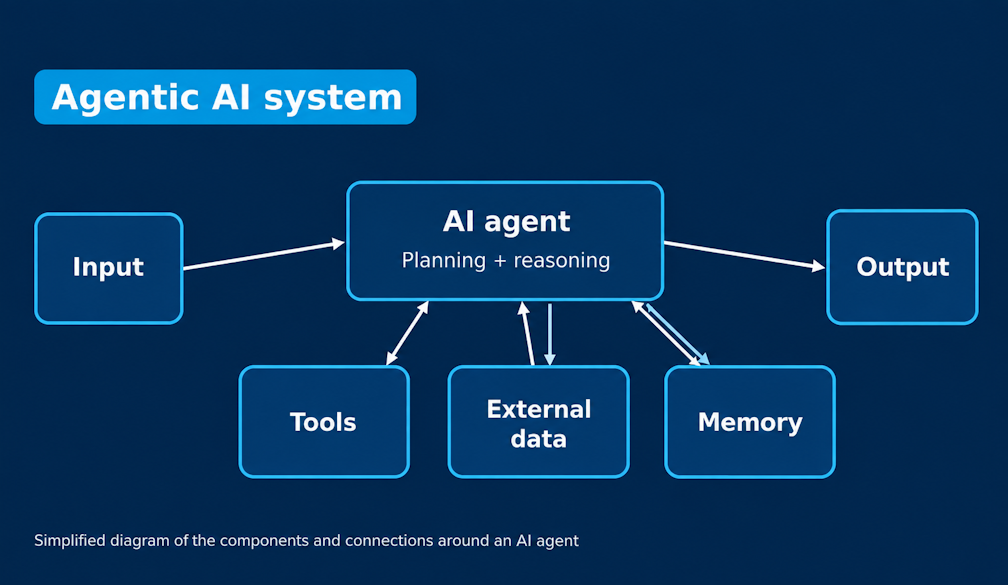
“Agentic capabilities” such as booking flights require detailed profile information about the user on whose behalf they are acting. This would include details such as preferred products or services.
Voice ID and data from spoken commands assist Amazon in tying preferences to a particular person.
An AI-powered intermediary
How will Alexa+ help Amazon make money? The first way is via direct subscription fees: the service will eventually[13] only be available to Amazon Prime members or people who pay US$19.99 per month.
But what may prove more important is that it will help Amazon to position itself as an intermediary[14] between buyers and sellers. This is what Amazon already does with its existing e-commerce platform.
It’s easy to see the system in action when you search for a product on Amazon’s website. Alongside items sold directly by Amazon, you are presented with products from multiple sellers, each of whom pays Amazon to be listed.
Everybody pays the platform
Agentic capabilities are likely to have a similar business model. Service providers – such as airlines or restaurant reservation companies – would pay Amazon when Alexa+ refers customers to them.
Amazon’s move is part of a broader phenomenon termed “platform capitalism[15]”. This takes in the crowdsourced content of social media platforms, “sharing economy” businesses such as AirBnb, and the automated gig work of the likes of Uber.
Platform capitalism has delivered benefits for consumers, but in general the greatest benefits flow to those who own the platforms[16] and design their infrastructure, services and constraints.
How to protect your privacy
After receiving a US$25 million fine from the US Federal Trade Commission[17] for retaining childrens’ voice recordings in contravention of US laws, Amazon has overhauled Alexa’s privacy settings[18].
The settings can be viewed and changed from the Alexa app on your smartphone, under “More > Alexa Privacy”. Alexa users may wish to review the settings in “Manage your Alexa Data” to choose how long recordings are saved for and which voice recordings to delete. Recordings may also be deleted using a voice command.
As Alexa+ becomes available more widely, users will need to decide whether they are comfortable sharing data about their preferences with Amazon to enable agentic capabilities.

What are the alternatives?
For users who are uncomfortable with the privacy settings now available with Alexa, a private voice assistant may prove a better choice.
The Home Assistant Voice Preview[19] is one example. It gives people the option to have voice recordings processed on-device, but offers less functionality than Alexa and can’t work with as many other services. It’s also not very user-friendly, being aimed more at technical tinkerers.
Users may face a trade-off between privacy and functionality, both within Alexa itself and when considering alternatives. They may also find themselves grappling with their own place in the increasingly inescapable systems of platform capitalism.
References
- ^ disabled two key privacy features (arstechnica.com)
- ^ natural language understanding (en.wikipedia.org)
- ^ improved substantially in recent years (dl.acm.org)
- ^ around 0.03% (www.usatoday.com)
- ^ Amazon’s Voice ID feature (www.amazon.com)
- ^ aims to provide a personalised experience (www.amazon.science)
- ^ detailed (yalebooks.yale.edu)
- ^ loss leader (en.wikipedia.org)
- ^ lost more than US$25 billion (arstechnica.com)
- ^ US$8 billion investment in OpenAI competitor Anthropic (www.theverge.com)
- ^ Alexa+ system (www.aboutamazon.com)
- ^ carry out tasks (www.aboutamazon.com)
- ^ eventually (www.theverge.com)
- ^ intermediary (journals.sagepub.com)
- ^ platform capitalism (onlinelibrary.wiley.com)
- ^ flow to those who own the platforms (doi.org)
- ^ US$25 million fine from the US Federal Trade Commission (web.archive.org)
- ^ Alexa’s privacy settings (www.amazon.com)
- ^ Home Assistant Voice Preview (www.home-assistant.io)