Six politics experts explain the key seats across the country
- Written by: David Clune, Honorary Associate, Government and International Relations, University of Sydney
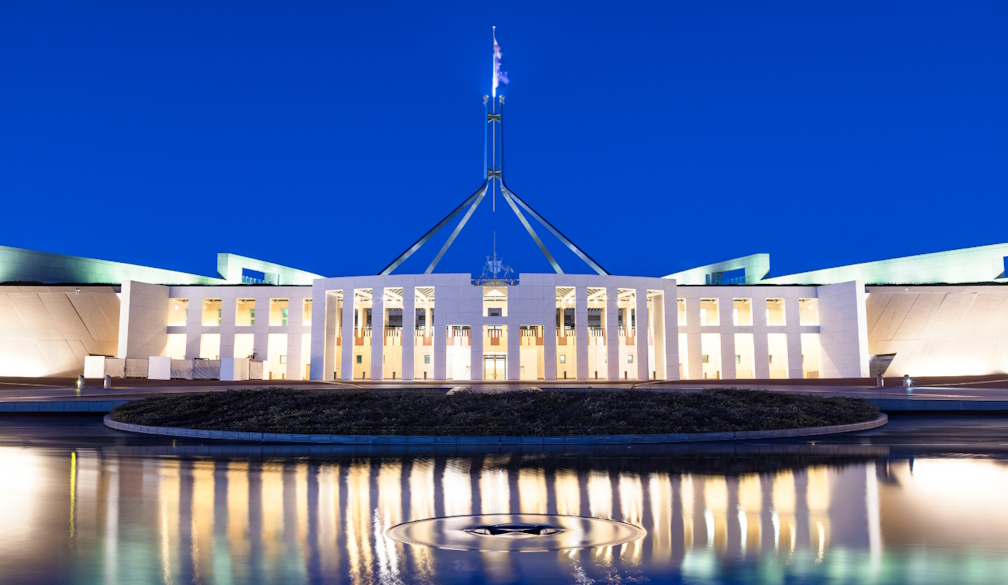
The five-week election campaign is now in full swing throughout the nation.
Amid the flurry of photo opportunities and press conferences, candidates campaign in specific areas for a reason: to shore up or win back key seats.
But which seats are key? Here, six experts explain the seats to watch in New South Wales, Queensland, South Australia, Tasmania, Victoria and Western Australia.
New South Wales
David Clune, honorary associate, government and international relations, University of Sydney
How the 2025 federal election will play out in NSW is difficult to predict for two reasons.
The first is the recent redistribution which, as ABC analyst Antony Green’s pendulum[1] shows, has redefined many electoral boundaries.
The second is the number of crossbench MPs. There are three Teals in formerly safe Liberal seats: Mackellar (Sophie Scamps), Warringah (Zali Steggall) and Wentworth (Allegra Spender). Teal Kylie Tink’s seat of North Sydney has been abolished.
All were lifted into parliament by the rising tide of resentment against former Prime Minister Scott Morrison. Now that tide has gone out, the survival of these MPs depends on how they have performed as local members. The overall impression is that they have done well in connecting with their constituents and will be hard to shift.
There is a chance the formerly safe upper north shore seat of Bradfield could augment their numbers. Teal Nicolette Boele gave Liberal Paul Fletcher a very uncomfortable election night in 2022 when she slashed his majority. After the redistribution, the Liberals hold the seat by a narrow 2.5%. Fletcher is not recontesting. Boele is running a well-financed campaign with a lot of grass roots support.
The redistribution has pushed many former North Sydney voters into Bradfield. Whether they remain Teal or revert to being true-blue Liberals remains to be seen.
Much of the rest of the former North Sydney has gone into the very marginal Labor seat of Bennelong, which is now notionally marginal Liberal.
The Nationals have a problem in Calare, where former Nationals MP, now independent, Andrew Gee, is recontesting. The Nationals are also facing challenges from the left on the upper north coast due to demographic change. They hold Cowper by 2.4%.
Liberal-aligned independent, Dai Le, narrowly won Fowler in Sydney’s western suburbs in 2023. Labor has endorsed Tu Le, also of Vietnamese descent, in what promises to be a tough fight. Parramatta is another marginal seat in the western suburbs, held by Labor’s Andrew Charlton with a two-party preferred margin of 3.7%.
The government is concerned about seats on the central coast and in the Hunter and Illawarra regions, where concerns about wind farms and job losses due to renewable energy are a major issue. Most of the government’s vulnerable seats are in these areas: Gilmore, Robertson, Paterson and Hunter would all be lost with a two-party-preferred swing of 5%.
Queensland
Paul Williams, associate professor in politics and journalism, Griffith University
For decades we said Queensland was a key “battleground” in federal elections where seats north of the Tweed so often held the keys to The Lodge.
The 1975 election saw the Coalition leave Labor with a single seat, and the 1996 poll bequeath Labor just two. Conversely, Labor’s Kevin Rudd rode to victory on his nine-seat haul in in 2007, with Rudd losing seven of those in 2010.
But, for the past 15 years, federal elections have seen little movement in Queensland except, of course, for 2022 when the Greens won three seats. In short, Queensland is no longer the “make-or-break” state. Even the retirements of Keith Pitt (Hinkler), Karen Andrews (McPherson), Warren Entsch (Leichhardt) and Graham Perrett (Moreton) will hardly affect the mood.

The electoral pendulum confirms this. Labor holds just five of Queensland’s 30 seats, with Blair – a mix of outer-suburban and regional proclivities – Labor’s most marginal, but still held by a healthy 5.2% buffer. Given the two-party-preferred (2PP) swing to the Liberal-National Party (LNP) in Queensland will likely be under five percentage points – far lower than the 7.0% two-party-preferred swing the LNP attained at last October’s state election – the Coalition is unlikely to seize any more Labor property.
Conversely, despite the LNP holding seven Queensland seats on margins under 5%, the electoral tide is well and truly out for a Labor Party, whose Queensland brand is damaged at all levels. Inflation and housing shortages have hit Queensland hard, and especially so in the regions. Peter Dutton’s seat of Dickson – the LNP’s most marginal on just 1.7% – is therefore safe.
Climate action and other “community” candidates (some reject the “Teal” moniker) are standing on the Gold Coast (McPherson and Moncrieff), on the Sunshine Coast (Fisher and Fairfax), and in Groom and Dickson. None will win, but some will carve out a respectable primary vote.
All eyes will instead be on the cashed-up inner-urban seats of Ryan (potentially returning to the LNP), Griffith (a possible Labor win) and Brisbane (a genuine three-way race) - all three useful, but not essential, to Labor’s pathway to minority government.
In the Northern Territory, Labor’s Marion Scrymgour holds Lingiari by 1.7%, making that seat one to watch.
South Australia
Rob Manwaring, associate professor of politics and public policy, Flinders University
South Australia is rarely a key battleground in federal elections, and only comprises ten electoral seats[3].
There are, however, three key seats[4] worth watching as they will tell us a lot about how the election campaign is playing out: Sturt, Boothby and Mayo.
In Sturt, the Liberals hold this key seat in Adelaide’s eastern suburbs with a margin of 0.5%. A fresh challenge for the incumbent James Stevens is that he faces a threat from SA’s first real Teal candidate, Verity Cooper. This potentially pulls this seat into a three-way fight.
Boothby, in Adelaide’s southern suburbs, will be a good litmus test of how well Labor’s campaign is performing. Labor won the seat for the first time ever in 2022, and Louise Miller-Frost has a 3.3% margin. Liberal candidate Nicolle Flint is resurrecting her political ambitions and would be a useful ally for Peter Dutton, if she were to win.
Finally - a question - does Rebekah Sharkie like pizza? Infamously, when state Labor Premier Jay Weatherill needed a critical independent vote to secure office in 2014, he drove to Port Pirie and brokered a deal over pizza[5] with Geoff Brock. Sharkie holds the seat of Mayo in the Adelaide Hills as a member of the Centre Alliance party with a safe 12.3% margin. Sharkie aligns herself with the Teals, and if a Dutton-led victory looks likely, then she may well be ordering her favourite slice to thrash out the terms of any support.
Tasmania
Robert Hortle, deputy director of the Tasmanian Policy Exchange, University of Tasmania
There are two main seats to watch in Tasmania.
The large, rural seat of Lyons is one of the most marginal in the country. Labor’s Brian Mitchell won with a 0.9% margin in 2022, but he’s made way for Rebecca White. Despite an underwhelming record as Tasmanian Labor Leader – three state election defeats – White is very popular in Lyons. However, Liberal candidate Susie Bower was somewhat unlucky to lose in 2022 after winning 37.2% of the primary vote, and has been in campaign mode for the past three years.
On the surface, Franklin – Australia’s only non-contiguous electorate – looks like a safe Labor seat. Julie Collins, the MP since 2007 and a cabinet minister, has a 13.7% margin. But her primary vote fell in 2022, and community backlash against salmon farming in Franklin’s waterways – which Labor and the Coalition both support – could make her vulnerable.
If independent Peter George (former journalist and anti-salmon campaigner) can get ahead of the low-profile Liberal candidate at some point in the count, Liberal preferences may get him across the line.
Two other Tasmanian seats are unlikely to change hands, but feature some interesting dynamics.
Liberal MP Bridget Archer’s 1.4% margin in the northern seat of Bass might look vulnerable. However, she managed a strong primary vote in 2022 despite a big swing against the Liberal Party. She’s very popular in the community for her willingness to stick to her values – even if it means voting against her party 28 times – and should hold her seat despite rumours of internal moves against her[6].
In Braddon, long-serving Labor Senator Anne Urquhart has quit the upper house to run. Incumbent Liberal MP Gavin Pearce is retiring, and his replacement candidate, Mal Hingston, is a bit of an unknown. It’s unlikely Urquhart will be able to overturn the 8% two-party preferred margin, but prominence in the community might give her a glimmer of hope.
Another point of interest is who will pick up the votes won by the Jaquie Lambie Network (JLN) in 2022. The JLN is not running candidates following a spectacular implosion at state level – and where those voters find a home could be crucial, particularly in Lyons.
Victoria
Zareh Ghazarian, senior lecturer in politics, school of social sciences, Monash University
Victoria is shaping up to be a crucial state for the major parties. Several seats are held by the Labor and coalition parties with a margin of less than 5%.
According to Antony Green[7], Chisholm is the most marginal seat Labor currently holds. The eastern Melbourne seat has been held by both major parties over the past 30 years.
Next up is Aston, further east of Chisholm, which Labor won at arguably the Liberal Party’s lowest ebb in this electoral cycle at a byelection in 2023.
McEwen, on the other hand, is a provincial electorate to the north of Melbourne. Holding onto these three seats will be a significant feat for Anthony Albanese and may set up Labor to hold a majority government.
For the Coalition, the most marginal seat is Deakin, which is a neighbouring electorate to Aston and Chisholm. The seat is held by a margin of just 0.02%, making it the most marginal in the country.

Monash is also a very interesting seat as it was won by Russell Broadbent, who lost Liberal Party preselection and has decided to run as an independent. His local profile may provide a boost to his primary vote, but may not necessarily be enough to win the seat, which will likely be held by the Liberals.
The Coalition will be in trouble if it fails to retain any of its seats in Victoria. It would need to reclaim Chisholm and Aston if it has any chance of forming majority government.
Other seats to watch include Kooyong, held by Monique Ryan with a margin of 2.2% who defeated Josh Frydenberg in 2022, and Goldstein, held by Zoe Daniel with a margin of 3.3% after defeating Liberal Tim Wilson. These will be a test of whether the Liberal Party is able to reconnect with voters who had traditionally supported them in the past.
Western Australia
Narelle Miragliotta, associate professor in politics, Murdoch University
The five WA seats to watch are Curtin, Bullwinkel, Forrest, Pearce and Tangney.
The affluent inner metropolitan seat of Curtin is held by Teal Kate Chaney on a 1.3% margin. The Liberal’s 2022 defeat was existential and the party are investing heavily[9] in reclaiming it, although Chaney is not likely to be outspent entirely, or outmanoeuvred.
Bullwinkel is a new seat on the eastern fringes of Perth. The majority[10] of its voters are in the metropolitan area, but the seat also takes in regional parts of the state. The seat’s geography and lack of incumbent led to the Nationals fielding Mia Davies, who was leader of the Nationals in the state parliament between 2017 and 2023.
 Labor is trying to appeal to voters young and old to retain their seats in Western Australia. Lukas Coch/AAP[11]
As a result, this notional Labor seat is the site of a fierce three-way contest. YouGov[12] projects a “Coalition” gain, although the outcome will be influenced by whether the Liberals and Nationals can contain simmering hostilities.
Forrest, in the state’s southwest, is held by the Liberals on a 4.2% margin[13]. The retirement of the incumbent and the presence of a Climate 200-backed candidate[14], adds an interesting dimension to the contest.
Pearce, in the state’s far north, is held by Labor on a comfortable 8.8% margin[15]. However, it’s one of the most indebted electorates in the nation, and the state Labor government experienced large swings against it in outer suburban and regional state electorates[16] earlier this year.
Tangney, in the state’s southern suburbs, was a major win for Labor in 2022. A blue-ribbon inner-city seat held uninterrupted by the Liberals since the early 1980s, Tangney is Labor’s most marginal WA seat (2.6% margin). To Labor’s advantage is the fact that several of the once-safe Liberal inner metro electorates within Tangney’s boundaries have recently voted with Labor at a state level. However, it will be a tight contest.
References
- ^ pendulum (www.abc.net.au)
- ^ Mick Tsikas/AAP (photos.aap.com.au)
- ^ ten electoral seats (www.abc.net.au)
- ^ key seats (www.abc.net.au)
- ^ deal over pizza (www.indaily.com.au)
- ^ rumours of internal moves against her (www.abc.net.au)
- ^ Antony Green (www.abc.net.au)
- ^ James Ross/AAP (photos.aap.com.au)
- ^ investing heavily (thewest.com.au)
- ^ majority (www.pollbludger.net)
- ^ Lukas Coch/AAP (photos.aap.com.au)
- ^ YouGov (au.yougov.com)
- ^ 4.2% margin (www.abc.net.au)
- ^ presence of a Climate 200-backed candidate (www.watoday.com.au)
- ^ 8.8% margin (www.abc.net.au)
- ^ outer suburban and regional state electorates (www.abc.net.au)