Faced with new tariffs and a truculent Trump, Japan and South Korea toe a cautious line
- Written by: Sebastian Maslow, Associate Professor, International Relations, University of Tokyo
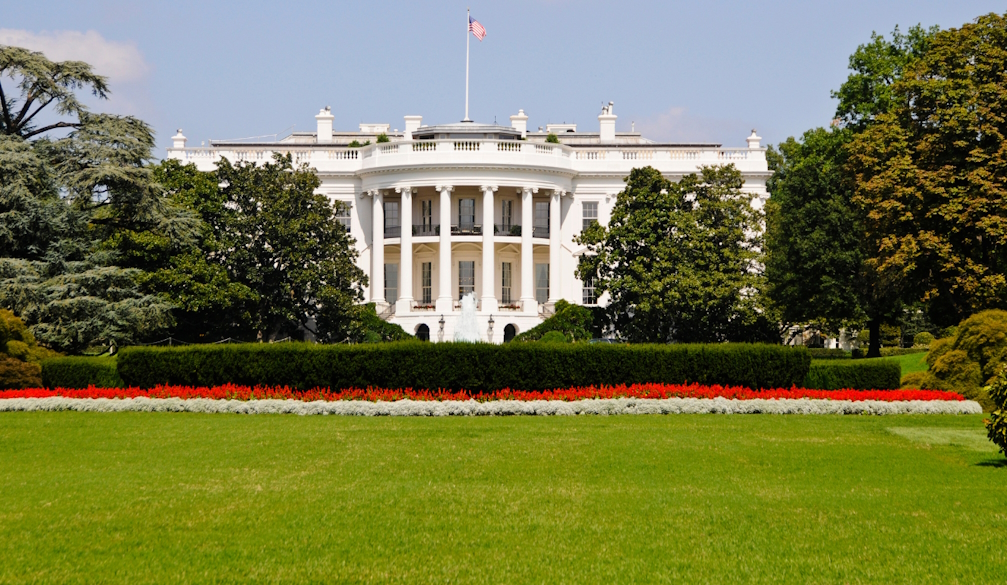
Two months into US President Donald Trump’s second term, the liberal international order is on life support.
Alliances and multilateral institutions are now seen by the United States as burdens. Europe and NATO are framed as bad business, “ripping off[1]” the US. On his so-called “Liberation Day”, Trump also imposed 20% tariffs[2] on all European Union imports.
The Trump administration has been far less critical of the US’ alliances in the Indo-Pacific region. On a visit to Tokyo this week, US Defence Secretary Pete Hegseth described[3] Japan as America’s “indispensable partner” in deterring Chinese aggression.
Yet, Japan and South Korea fared even worse than the EU with Trump’s new tariffs. Trump slapped[4] Japan with 24% tariffs and South Korea 25%. (Both countries enjoy a trade surplus[5] with the US.)
So, how are the US’ two main allies in the Indo-Pacific dealing with the mercurial US leader? Will they follow Europe’s lead in reassessing their own security relationships with the US?
Japan: a positive summit but concerns remain
America’s post-war security strategy in Asia differs from Europe. While NATO was built on the premise of collective defence among its members, the US adopted a “hub-and-spokes” model in Asia, relying on bilateral alliances to contain the spread of communism.
Japan and South Korea have long sheltered under the US nuclear umbrella and hosted major US military bases. Both are also highly sensitive to changes in the US’ Indo-Pacific policies.
Japan, in particular, has a long history of careful alliance management with the US, epitomised by former Prime Minister Shinzo Abe’s courting of Trump[6].
During Trump’s first term in office, Abe’s policy goals[7] aligned closely with the US: transforming Japan’s security posture to make it a serious military and diplomatic power. Japan increased military spending, lifted arms export restrictions and deepened ties with India and Australia.
Prime Minister Fumio Kishida continued to raise Japan’s security profile from 2021-24, again increasing military spending and taking a tough line on Russia’s invasion of Ukraine. He emphasised “Europe today could be Asia tomorrow[8]”.
His successor, Shigeru Ishiba[9], had a successful summit[10] with Trump in February, immediately after his inauguration. The joint statement[11] reaffirmed US security guarantees to Japan, including over the Senkaku Islands, which are claimed by China.
Japan also agreed to import American liquefied natural gas, and later committed to working with South Korea to develop a US$44 billion (A$70 billion) plan[12] to export LNG from Alaska.
However, these positive developments do not mean the relationship is on firm ground.
In early March, Trump complained the US-Japan security agreement signed in 1960 was “one-sided[13]” and a top administration official again called for Japan to increase its defence spending[14] to 3% of gross domestic product (GDP) – a huge increase for a country facing serious demographic and fiscal pressures.
Reports also emerged the US was considering cancelling a new joint headquarters[15] in Japan aimed at deeper integration between US and Japanese forces.
South Korea: extremely vulnerable on trade
South Korea faces similar pressures. Ties between the two countries were strained during Trump’s first term over his demand South Korea increase the amount it pays to host US forces by nearly 400%[16]. A 2021 agreement[17] restored some stability, but left Seoul deeply worried about the future of the alliance.
South Korea’s acting president, Choi Sang-mok, has expressed a desire to strengthen ties with the US, though Trump has reportedly been cool to his advances[18].
With a US$66 billion (A$105 billion) trade surplus with the US, South Korea is considered the country most vulnerable[19] to trade risk with the Trump administration, according to a Swiss research group.
Trump’s past suggestions that both South Korea and Japan develop[20] nuclear weapons or pay for US nuclear protection has also rattled some nerves. As confidence in the US alliance erodes, both countries are engaging in an urgent public debate[21] about the possibility of acquiring nuclear weapons.
Tensions moving forward
Potential for conflict is on the horizon. For example, Tokyo and Washington are set to renegotiate[22] the deal that dictates how much Japan pays to host US troops next year.
Both allies pay huge sums to host US bases. South Korea will pay US$1.14 billion (A$1.8 billion)[23] in 2026, and Japan pays US$1.72 billion (A$2.7 billion)[24] annually.
A trade war could also prompt a reassessment of the costs of US efforts to decouple from China, potentially leading to closer economic ties between Japan, South Korea and China. The three countries have agreed to accelerate[25] talks on a trilateral free trade agreement[26], which had been on hold since 2019.
Another challenge is semiconductors. Japan’s new semiconductor revitalisation strategy[27] is prioritising domestic investment, raising questions about whether Trump will tolerate “friendshoring” if Japan diverts investments from the US.
In 2024, Japan outspent[28] the US in semiconductor subsidies (as a share of GDP), while Taiwan’s TSMC, the world’s largest contract chipmaker, expanded its production capacity in Japan.
Seoul remains an important partner to Washington on semiconductors. Samsung and SK Hynix are both boosting their investments[29] on new semiconductor plants in the US. However, there is now uncertainty[30] over the subsidies promised to both companies to invest in America under the CHIPS Act.
Ultimately, the strength of these alliances depends on whether the Trump administration views them as long-term bulwarks against China’s rise in the region, or merely vassals that can be extorted for financial gain.
If the US is serious about countering China, its regional alliances are key. This would give Japan and South Korea some degree of leverage – or, in Trump terms, they’ll hold valuable cards. Whether they get to play them, however, depends on what Trump’s China policy turns out to be.
References
- ^ ripping off (www.reuters.com)
- ^ 20% tariffs (www.politico.eu)
- ^ described (www.nbcnews.com)
- ^ slapped (koreajoongangdaily.joins.com)
- ^ trade surplus (www.wsj.com)
- ^ courting of Trump (www.tandfonline.com)
- ^ policy goals (www.csis.org)
- ^ Europe today could be Asia tomorrow (www.euronews.com)
- ^ Shigeru Ishiba (theconversation.com)
- ^ successful summit (www.internationalaffairs.org.au)
- ^ joint statement (www.whitehouse.gov)
- ^ develop a US$44 billion (A$70 billion) plan (www.nytimes.com)
- ^ one-sided (www.japantimes.co.jp)
- ^ increase its defence spending (www3.nhk.or.jp)
- ^ joint headquarters (www3.nhk.or.jp)
- ^ 400% (edition.cnn.com)
- ^ agreement (www.reuters.com)
- ^ cool to his advances (www.wsj.com)
- ^ most vulnerable (www.wsj.com)
- ^ develop (www.cbsnews.com)
- ^ public debate (asiatimes.com)
- ^ renegotiate (www.csis.org)
- ^ US$1.14 billion (A$1.8 billion) (en.yna.co.kr)
- ^ US$1.72 billion (A$2.7 billion) (asia.nikkei.com)
- ^ accelerate (asianews.network)
- ^ trilateral free trade agreement (www.asahi.com)
- ^ semiconductor revitalisation strategy (www.meti.go.jp)
- ^ outspent (asia.nikkei.com)
- ^ investments (www.koreaherald.com)
- ^ uncertainty (www.theinvestor.co.kr)