Albanese has been a ‘proficient and lucky general’. But if he wins a second term, we are right to demand more
- Written by: Paul Strangio, Emeritus Professor of Politics, Monash University
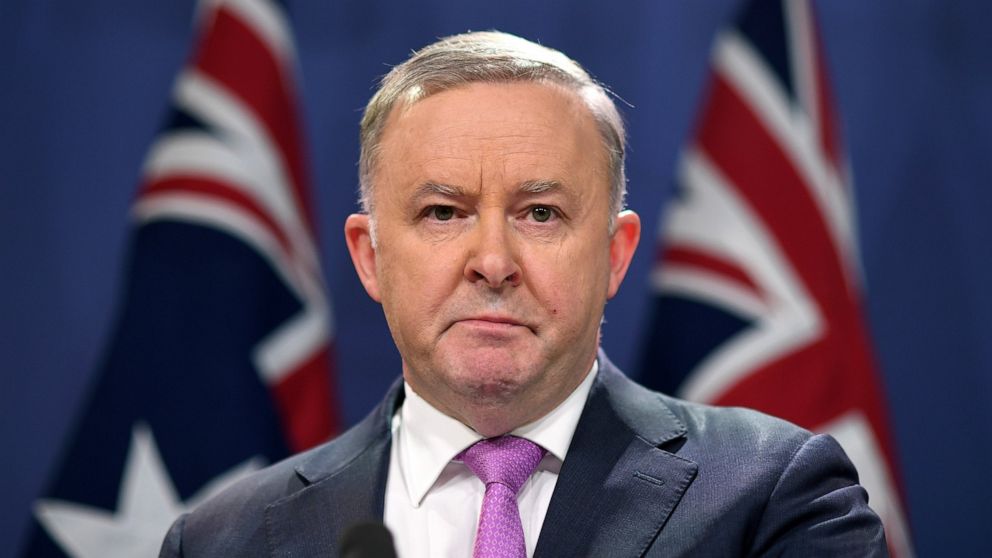
Barring a rogue result, this Saturday Anthony Albanese will achieve what no major party leader has done since John Howard’s prime-ministerial era – win consecutive elections. Admittedly, in those two decades he is only the second of the six prime ministers (the other is Scott Morrison), who has been permitted by his party to contest successive elections. The other four – Kevin Rudd, Julia Gillard, Tony Abbott and Malcolm Turnbull – were cut off at the knees by their colleagues before having the chance to seek re-election.
For a prime minister who has spent much of the past three years derided as a plodder, uninspiring and weak, this is no small feat. If longevity in office is the principal measure of the success of prime ministers, then Albanese will soon have claim to be the best of the post-Howard group. Before election day, he will leapfrog Turnbull’s tenure and if, as the polls suggest, he is returned to government on May 3, he will shortly thereafter exceed Gillard’s incumbency with a whole three years ahead to build on his reign.
Of course, duration of office is not the only benchmark of prime-ministerial achievement – more important is how power is exercised, the legacy that is left behind. Arguably, the productive Gillard still outranks Albanese in this respect, highlighted by her government’s establishment of the National Disability Insurance Scheme. This is widely regarded as the most transformative social reform since the advent of universal health care. On the other hand, if he is granted a second term by voters, Albanese will be in a position to build on his policy edifice and produce his own signature reform, something he still lacks.
A leader for the times?
When sitting down to write this essay about Albanese, I looked back at two of the questions I raised about him shortly before and after his May 2022 election. The first[1] was whether he was capable of switching “to a more dynamic galvanising mode of leadership or will the circumspection that has defined him in opposition shackle him in government?”
The second question[2] was whether voters would stick by the dogged and gentler type of leadership Albanese promised. Or if, in an environment of pent-up dissatisfaction with the order of things, they would lose patience with him and instead hanker for a “strong” leader: one who conquered and divided, and offered black and white solutions to the complex challenges of the early 21st century.
As recently as early March, the answer to both of these questions seemed a definite no. For some 18 months, the opinion polls had signalled the electorate was profoundly underwhelmed by Albanese and his Labor government.
Despite a busy legislative program, the incremental methods of his prime ministership had proved incompatible with the public’s disenchantment with business-as-usual practices. Precious little Labor had done had registered with voters.
By way of contrast, the Liberal opposition leader, Peter Dutton, gave the impression of being in tune with the disgruntled milieu. Not that the public had warmed to him: a common focus group reaction[3] was he was “nasty”.
Yet Dutton had the hallmarks of a quintessential “strong” leader. He was a political hard man, a trader in fear and division. He projected decisiveness. Where Albanese was prone to looking wishy-washy, Dutton was a man to get things done.
As Niccolò Machiavelli recognised in his notorious, and mostly misunderstood, treatise on statecraft, The Prince, the fate of political leaders is significantly determined by “fortuna”. These are the forces largely beyond a prince’s control.
Fortuna has undoubtedly intervened in Albanese’s favour over the past couple of months. This began with Cyclone Alfred giving him a steal on Dutton. Manning the deck during the cyclone’s painstakingly slow landfall on the east coast of the Australia, Albanese had the advantage of a prime ministerial bearing. His government’s response to Alfred also enabled him to exercise two of his emotional calling cards: empathy and compassion.
Additionally, the cyclone was a timely demonstration of the increased frequency of extreme weather events in a climate change affected environment. This is a phenomenon the prime minister could credibly speak to. Whereas the opposition leader, at the head of a Coalition in which climate change denialism still runs deep, has dissembled about a connection by protesting he is not a scientist.
Alfred also compelled the delay of the election to a time more propitious for Labor. The April campaign has been heavily shadowed by the spectre of US President Donald Trump’s wilful and reckless disturbance of geopolitics and the international economy. Unquestionably, Albanese would have been better placed to capitalise on Washington’s caprice and the undiscriminating damage it is visiting on purported allies like Australia had his government opted for a less orthodox America-dependent defence and security posture.
Yet Trump’s second presidency is principally a liability for Dutton. This is not because he is a Trump ventriloquist. Dutton’s right-wing populist stance on issues such as immigration and climate change and his hostility to identity politics are indigenous to Australia rather than imported from America. He is exploiting themes unleashed in the Liberal Party by Howard, which have been rendered more aggressive by Howard’s successors, first Abbott and now Dutton.
My hunch has always been the opposition leader was misreading the national psyche. Australians are more optimistic, forward-looking and generous-hearted than he was banking on. They are less scared and less paranoid. Women and young voters especially loomed as a formidable barrier to his prime-ministerial ambitions. But the parallels between his locally originated brand of reactionary populism and Trumpism are sufficient to have made his tilt for power still more difficult.
Bloodless, perhaps, but methodical and scandal-free
Albanese’s political renaissance since March, however, is not solely a product of happenstance. Nor is it only due to Dutton’s unravelling: his quest for office has also been damaged by the Coalition’s flimsy policy development and his stumbles on the hustings.
The opinion polls currently indicate Labor’s primary and two-party preferred votes are hovering around the same level as at the 2022 election. If this translates into Saturday’s result, it would represent the first time a novice government has not shed support in modern Australian political history on its initial return to the polls. Gough Whitlam, Malcolm Fraser, Bob Hawke, Howard and so on all went backwards.
It is true Albanese is starting from a low base because of his slender victory in 2022. Still, should Labor hold its ground, this will surely owe something to an acceptance by the electorate, even if grudging, that Albanese deserves a second term. In other words, this could not merely be considered a victory by default, but also a degree of positive endorsement of his prime ministership.
On the cusp of his 2013 election win, Abbott pledged a return to “grown-up” government. After three years of destructive leadership conflict between Rudd and Gillard, he assured voters the “adults” would be back in charge. Over the course of the next nine years of Coalition rule, Abbott’s promise went woefully unfulfilled. It was a period blighted by further leadership civil war and policy indolence. By way of contrast, Albanese’s government has been united, orderly, industrious and scandal-free.
With the exceptions of the Gillard and Turnbull administrations, the other post-Howard governments have been notable for departing from conventional cabinet practices, an unhealthy level of leadership centralisation, a domineering Prime Minister’s Office (PMO) and a tendency to run roughshod over the bureaucracy. The evidence from Albanese’s first term is he has learned from, and chiefly avoided, these follies.
An admirer of the governance practices of Hawke and Howard, the latter whom he closely observed over the despatch box between 1996 and 2007, Albanese does not “sweat the small stuff”. He avoids micromanaging his government, as Rudd was notoriously guilty of.
Detractors attribute this to a dearth of policy curiosity and a want of drive. But, whatever its explanation, the effect has been to give a competent ministerial team, many of them battle-scarred veterans of the tumultuous Rudd-Gillard years, leeway in their portfolios rather than choking their autonomy. The prime minister reaches down[4] only when things “go awry” and, in those circumstances, he intervenes “forcefully” to “assume control”.
His PMO, headed since 2022 by Tim Gartrell, has been largely stable and has resisted the excessive command and control methods of many of its predecessors. After a decade of cutbacks under the Coalition and the degrading of its policy function through widespread outsourcing to giant consulting firms, the public service has been replenished and its policy input encouraged and respected.
Albanese has maintained a tight group of ministerial confidants around him, including the talented economics portfolio duo of Jim Chalmers and Katy Gallagher, as well as Deputy Prime Minister Richard Marles and Mark Butler, Penny Wong and Tony Burke.
The continuity in membership of this “kitchen cabinet” suggests a prime minister gifted in collaboration and relationship management.
The downside to the ‘lone wolf’
The story is not all blue skies. As originally identified by the political correspondent, Katharine Murphy, now a media director in Albanese’s office, his early life as the only child of a single mother and invalid pensioner planted in him a powerful streak of self-sufficiency. This “lone wolf[5]” element can see him lapse into relying too much and too stubbornly on his own judgement.
After a lifetime in the game, he is convinced he possesses uncommon political instincts. Yet his radar is sometimes astray. Examples include little things such as attending the wedding of shock jock Kyle Sandilands, as well as bigger miscalculations, such as purchasing an expensive beachfront property[6] during a housing affordability crisis.
Few, if any, prime ministers avoid the urge for captain’s calls. Indeed, on occasions, going out on a solitary limb is essential for leaders. But Albanese has left ministers high and dry with some of his unilateral interventions, including blindsiding and humiliating environment minister and one-time leadership rival, Tanya Plibersek, by vetoing legislation[7] to establish a national environment protection authority.
Albanese routinely cites a laundry list of achievements from the past three years. Against a backdrop of significant international turbulence, Labor’s handling of the economy has been mostly deft: inflation has been reduced, employment has grown, interest rates are finally on a downward trajectory and real wages have increased.
Analysis indicates[8] it is households from low socioeconomic areas that have benefited most from the government’s tax and welfare changes. In short, redistributive action we expect from a Labor government.
The government has thrown its weight behind pay increases for poorly renumerated and predominantly female workforces in aged care and childcare. Childcare support has been extended and cheaper medicines delivered.
Labor has also introduced free TAFE and trimmed the debts of university students. In addition, the government has presided over amendments to industrial relations laws to improve protections for vulnerable workers in the gig economy.
Notwithstanding criticisms of its approval of new fossil fuel projects, Labor has pursued a concerted strategy to curb carbon emissions, encouraging a major increase in renewable energy supply and implementing complementary measures such as the vehicle efficiency standards scheme[9].
On the other hand, there have been glaring gaps in the Albanese government’s record. These include:
-
the stalling on banning gambling advertising, despite this being widely desired by the Australian public
-
the failure to lift many of the most disadvantaged members of the community out of poverty through a meaningful increase in JobSeeker and related income support payments, despite this being repeatedly recommended[10] by the Labor appointed Economic Inclusion Advisory Committee
-
the inadequate due diligence applied to the Morrison government’s AUKUS agreement, an oversight all the more imprudent given the inconstancy of Trump’s America
-
the doleful silence on the Uluru Statement of the Heart agenda since the defeat of the Indigenous Voice to Parliament referendum. This leaves Albanese at risk of joining several of his predecessors, including Malcolm Fraser and Hawke, who later identified the lack of progress on First Nations affairs as the greatest regret of their prime ministerships.
The government’s reputation for stolidity has been exacerbated by Albanese’s deficiencies. In retrospect, he booby-trapped his own prime-ministership by crouching too low at the 2022 election. The Australian people wanted desperately to be rid of Morrison, affording Labor scope for a more expansive manifesto. The absence of audacity in the party’s program undoubtedly contributed to the public’s tepid embrace of the incoming government. Labor’s primary vote was at a century low.
In turn, because Albanese was intent on not exceeding his narrow mandate, he was hamstrung in office. He had to be needled by colleagues to finally walk away at the beginning of 2024 from the campaign promise not to amend Morrison’s stage three tax cuts despite their regressive nature – a change of stance the public welcomed.
His pedestrian communication skills, while congruent with his everyman persona, have had a dulling effect on his government. As Gillard did to her cost, he seems to operate on the premise his government will be known by its deeds rather than words or gestures of emotional freight. He is devoid of memorable or moving phrasing. Where Keating had the Redfern address, Rudd the Stolen Generation apology and Gillard, after repetitive provocation, the misogyny speech, it is hard to imagine Albanese delivering anything commensurately stirring or enduring.
The lament that governments lack an overarching narrative is commonplace in contemporary politics. But Albanese has showed little proclivity for weaving a compelling tale for his government, to joining the dots between its actions, or projecting what lies ahead on the horizon.
In that absence, each measure has been at risk of disappearing into the ether through the warp-speed media cycle. And he has been conspicuously tongue-tied on interpreting Australia’s national identity, a theme fruitfully mined by his most accomplished predecessors. At a moment when the distinctiveness of Australia’s democracy has come into sharp relief, this is a missed opportunity.
Some Labor insiders are confident that, in a second term, Albanese will pursue a more adventurous program. Change to an outmoded tax regime, which is particularly fuelling generational inequality, is widely considered the holy grail of reform.
One reason why the centre is holding better in Australia relative to other comparable democracies can be traced back to the modernising reforms executed in the final decades of the 20th century by the governments of Hawke and Keating, and the early Howard government. Crucially, under the former intrepid Labor duo, major social stabilisers were also introduced, such as Medicare and compulsory superannuation.
Though not without their own destabilising effects, these policy innovations helped insulate Australia from the deadly combination of drastic austerity, severe erosion of living standards and gross inequalities experienced in a number of other countries. These are the conditions on which aggressive right-wing populism has dined. The rub is, however, that the reforms of late last century are running out of puff, and patching the policy edifice built in those years is also exhausting its utility. We are on borrowed time.
If he is returned to the prime ministership on Saturday, there is an imperative for Albanese to spread his wings, to go beyond doggedly nudging the country along. Yet the danger is he will interpret election success as proof of his self-narrative that he has always been underestimated. As confirmation of his rare power of political intuition. As evidence he need not deviate from his first term formula of what he characterises[11] as “considered, measured government”.
Albanese is a well-intentioned prime minister of evidently decent values. An individual of good character at the helm of nations matters, as anyone who studies leadership comes to recognise. What we can confidently say of him is that as prime minister, he has fulfilled the injunction of the Greek physician and philosopher, Hippocrates: “first, do no harm”.
In an era in which the potential of mad and bad rulers to wreak havoc is painfully on display, doing no harm is actually quite a mighty thing. To have a prime minister, who believes, as Albanese said during one of the campaign leader debates, that “kindness isn’t weakness” is, indeed, comforting as we witness shrivel-hearted strong men menance the globe.
Albanese has been a proficient as well as a lucky general. But we are right to yearn for more. A second term will test whether he can make the transition from a solid to a weather-making prime minister. We will also discover, should that step be beyond him, if he has the self-knowledge and grace of spirit, to pass the office on.
References
- ^ first (theconversation.com)
- ^ second question (theconversation.com)
- ^ focus group reaction (www.smh.com.au)
- ^ reaches down (www.theguardian.com)
- ^ lone wolf (www.blackincbooks.com.au)
- ^ expensive beachfront property (www.theguardian.com)
- ^ vetoing legislation (www.theguardian.com)
- ^ indicates (www.theguardian.com)
- ^ vehicle efficiency standards scheme (www.abc.net.au)
- ^ repeatedly recommended (www.acoss.org.au)
- ^ he characterises (www.smh.com.au)