Peter Dutton declares Welcome to Country ceremonies are ‘overdone’ in heated final leaders’ debate
- Written by: Andy Marks, Vice-President, Public Affairs and Partnerships, Western Sydney University
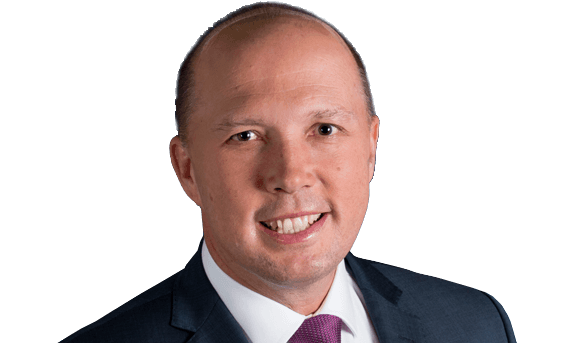
Prime Minister Anthony Albanese and Opposition Leader Peter Dutton have had their fourth and final leaders’ debate of the campaign. The skirmish, hosted by 7News in Sydney, was moderated by 7’s Political Editor Mark Riley.
Cost of living and housing affordability featured in the clash, with both leaders acknowledging the price pain being felt by many Australians. Immigration, US President Donald Trump, energy policy and welcome to country ceremonies were also thrashed out in a number of lively exchanges.
How did each leader perform? Have they done enough to convince undecided voters before polling day? Three experts give their analysis
Andy Marks, Western Sydney University
This is the election, Seven’s opening voiceover proclaimed, “that will decide the future of Welcome to Country ceremonies.”
Puzzled voters no doubt welcomed the promise of clarification. So Riley cut to the chase. Some people, he said, are “uncomfortable” with the ceremonies.
Dutton agreed:
I think a lot of Australians think it is overdone and cheapens the significance of what it was meant to do.“
Albanese said it was up to event organisers to decide whether to have a ceremony. On the lost Voice referendum? He "accepts the outcome”.
No fight. Just consensus from both leaders January 26 should remain as Australia Day.
Lack of spark was never going to stop Seven. A dramatic soundtrack rumbled away behind the leaders’ statements added an Oscars vibe, with each rushing their answers before being played off.
It worked. Halfway in, a fire was lit. “It’s hard to believe anything you say”, Dutton said to his opponent. “You’ve made promises you haven’t delivered. People are getting smashed.”
Albanese shot back. “Peter can attack me. But I won’t let him attack the wages of working people.”
Hostilities abated as Riley asked Albanese if he had Trump’s mobile number. “Do you have [UK Prime Minister] Keir Starmer’s?” Dutton added.
Nuclear power reheated the debate. “I am proud”, Dutton said of the Coalition’s energy plans[1]. But he would not commit to visiting any of the proposed sites in the final days of the campaign.
Suddenly it became a science lesson. Dutton asked “how will solar work at night?” When you turn on a tap, Albanese responded, water still comes out even when it isn’t raining.
A highlight? Dutton almost quoted Taylor Swift[2]. “The prime minister promises a band-aid on a bullet wound” he quipped on cost of living.
Blair Williams, Monash University
“This is the debate for every Australian”, the Channel 7 voiceover said at the start of the debate. However, to reference Sex and the City’s Carrie Bradshaw[3], I couldn’t help but wonder if this debate would truly include everyone.
We saw the usual quibbles between Albanese and Dutton over various crises, such as housing and the cost of living. Albanese argued he would help through initiatives such as cheaper medicines and childcare.
However, he put his foot down on scrapping negative gearing as it’s a measure that “will not build supply”.
Dutton’s response made it clear he was not planning to include “everyone” in this debate, as he quickly blamed immigrants for the housing crisis in Australia.
Riley posed a question to both leaders about Welcome to Country, saying booing during an ANZAC event[4] sparked an “important discussion […] there are people in Australia who are uncomfortable being welcomed to Country”.
Riley asked both leaders if the ceremonies are “overdone”.
Dutton argued they do have a place but he wants “everyone to be equal” as “we are all equal”. Dutton said he wanted the country to be “one”. This overlooks how structural disadvantages, such as racism and sexism, result in inequality[5].
Albanese took a more Keating-esque perspective, citing ANZAC Day in New Zealand and the central place of Maori language in their events, emphasising the importance of First Nations people and multiculturalism in Australia.
The debate ended without any discussion of violence against women. So far this year, 24 women[6] have been killed as a result of gendered violence, with three in just the past week. Yet both parties have barely mentioned it during the campaign or the debates.
Women’s issues were also barely raised. While Albanese mentioned cheaper childcare, Dutton failed to reference any issues that might specifically impact women. He has done little in this campaign and during this debate to win them over.
Instead, both leaders wasted time arguing over the Coalition’s plan to produce nuclear energy in 2035.
“Is this helping you decide?” Channel 7 asked viewers. For many women – and other – around the country, it merely showed two white men in suits and ties yelling over each other. This could explain why a third of Australians will preference a minor party or independent at the ballot box. Perhaps these are the voters who have felt left out.
Michelle Cull, Western Sydney University
While the debate started off friendly, it became quite heated very quickly. Dutton found it difficult to finish his talking points on time but had no problem interrupting Albanese. Cost of living was central to the debate.
There wasn’t much the leaders could agree on – no surprises there. Although both concurred there should be no change to the date for Australia Day.
When asked about Welcome to Country ceremonies, Dutton mentioned them happening at the “start of every meeting at work” and they were “divisive”. Perhaps there was some confusion here with Acknowledgement of Country.
Dutton focused on short-term cost-of-living relief and his fuel excise cuts. He blamed Albanese for high inflation, high interest rates and housing affordability issues. The prime minister was quick to remind him not everything was “hunky dory” when Labor took office.
Albanese did well to promote many of the Labor policies targeted at reducing cost of living through lower HECS-HELP, free TAFE and cheaper childcare. He was the only leader to include what his party was doing for renters and those in social housing, as well as first home buyers. Albanese also responded to Dutton’s short-term cost-of-living relief with Labor’s more permanent help through wage increases and tax cuts.
Dutton was clever enough to throw Labor’s proposed superannuation changes[7] into the debate by referring to the plan to tax unrealised capital gains on superannuation balances greater than A$3 million. But this didn’t seem to make it much further in the debate, as it did not relate to the question being asked.
We’ll now have to wait until Saturday to see if the leaders really managed to sway any undecided voters.
References
- ^ energy plans (www.abc.net.au)
- ^ Taylor Swift (www.google.com)
- ^ Carrie Bradshaw (en.wikipedia.org)
- ^ ANZAC event (www.abc.net.au)
- ^ inequality (theconversation.com)
- ^ 24 women (www.smh.com.au)
- ^ proposed superannuation changes (www.aph.gov.au)