Labor to slash more consultant costs and increase visa charges to pay for fresh election commitments
- Written by: Michelle Grattan, Professorial Fellow, University of Canberra
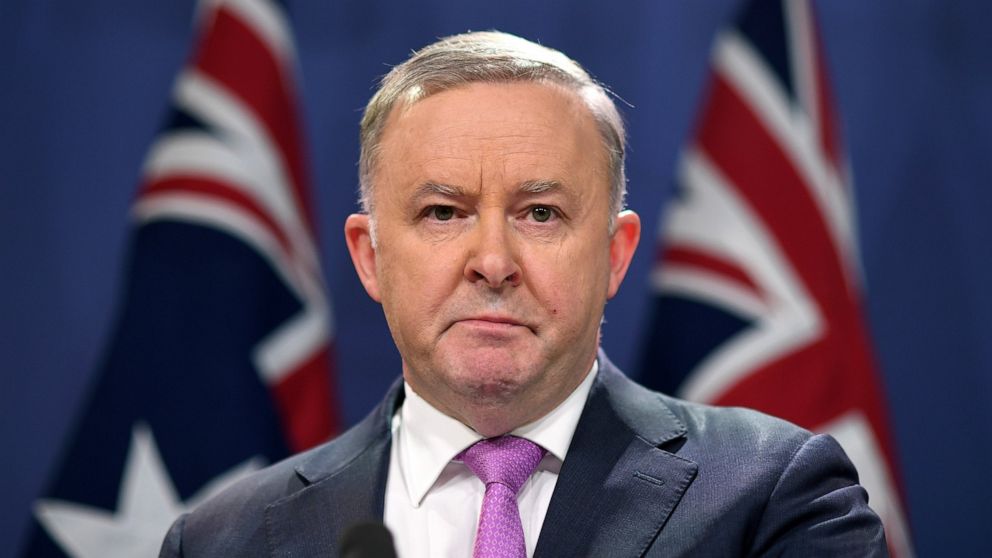
The government has dug out last-minute savings of more than A$7 billion, to ensure its election commitments are more than offset in every year of the forward estimates.
Its costings, released Monday, include savings of $6.4 billion from further reducing spending on consultants, contractors and labour hire, as well as non-wage expenses including travel, hospitality and property.
The second saving is $760 million from increasing the visa application fee for primary student visa applicants to $2000 from July 1.
Treasurer Jim Chalmers told a news conference Labor’s costings “show that we will more than offset our election campaign commitments in every year of the forward estimates”.
“We will finish this election campaign with the budget in a stronger position than at the start of the election campaign”.
“We have improved the budget position by more than $1 billion, comparing the pre-election outlook to the costings that we release today,” he said.
With its costings out, Labor is piling the pressure onto the opposition to produce its numbers.
“We call on the Coalition now to come clean on their cuts. We’ve made it very clear what our costs are and how we will pay for the commitments that we have made in this election campaign,” Chalmers said.
The opposition “need to come clean on what their secret cuts for nuclear reactors means for Medicare, for pensions and payments, for skills and housing and other essential investments.
"They have committed more than $60 billion in this election campaign and in their policy commitments, and that’s before we get to their $600 billion of nuclear reactors.”
Chalmers said if the opposition costings did not include the cost of the nuclear reactors they “will not be worth the paper they are written on”.
Shadow treasurer Angus Taylor said opposition costings, coming later this week, would project a stronger budget position than Labor’s. He also said if the Coalition was elected it would have an economic statement later this year.
As the costings war ramps up, ratings agency S&P warned Australia’s AAA credit rating could be threatened if election promises resulted in larger structural deficits, and debt and interest expenses increased more than expected.
Given deficits and international circumstances, “how the elected government funds its campaign pledges and rising spending will be crucial for maintaining the rating”, the agency said.
Asked about the comments, Chalmers said: “I say to that particular agency, indeed, all of the ratings agencies, that in our time in office, we’ve engineered the biggest positive turnaround in a budget of any parliamentary term ever”. He pointed to the improvement in the budget numbers during the campaign to underline Labor’s credentials.
The fresh impact of Labor’s promises on the bottom line has also been limited because most of them were already factored into the budget.
After the savings and spends are netted out the deficit for 2025-26 is estimated to be $41.9 billion compared to the $42.2 billion in the pre-election economic and fiscal outlook.
Chalmers says Dutton to build nuclear reactor in his own seat
Jim Chalmers must carry off the prize for the most brazen “scare” of a campaign full of attempted scares.
Chalmers picked up on Anthony Albanese’s question to Peter Dutton in Sunday’s debate, when the PM asked the opposition leader whether he’d be willing to have a nuclear power plant in his seat of Dickson. Dutton said he would.
Chalmers’ message to voters in “that wonderful part of southeast Queensland” is: “your local member wants to build a nuclear reactor in your suburbs.”
“[The Labor candidate,] Ali France, is not going to build a nuclear reactor in your local community but Peter Dutton wants to.
"I would encourage you to think about that […] as you choose your local member,” Chalmers told his news conference.
The treasurer kept a straight face while delivering this warning to Dickson voters.
Dutton questions Welcome to Country ceremonies at Anzac Dawn services
Peter Dutton has widened his criticism of the extent of Welcome to Country ceremonies by saying he does not believe they belong at Anzac Day dawn services.
He said that listening to veterans, “I think the majority view would be that they don’t want it on that day”. But he said it was an individual decision up to the RSLs.
Discussion of the Welcome to Country ceremonies has come to the fore after a group of neo-Nazis heckled the ceremony at the Shrine of Remembrance service on Friday. It also came up in Sunday’s debate between the leaders, when Dutton said the ceremonies should be reserved for significant occasions such as the opening of parliament.
Questioned by reporters on Monday, Dutton said the acknowledgment to country given by Qantas when planes landed was “over the top”.
“We are all equal Australians,” he said. “I believe we should stand behind one flag united to help Indigenous Australians deal with disparity around health outcomes, around education outcomes, around housing, around safety […] I want to provide support for practical reconciliation. The prime minister’s policy is to please inner city Greens, which is not something we signed up to.”