Australia’s economy grew — so why doesn’t it feel like it?
- Written by: The Times
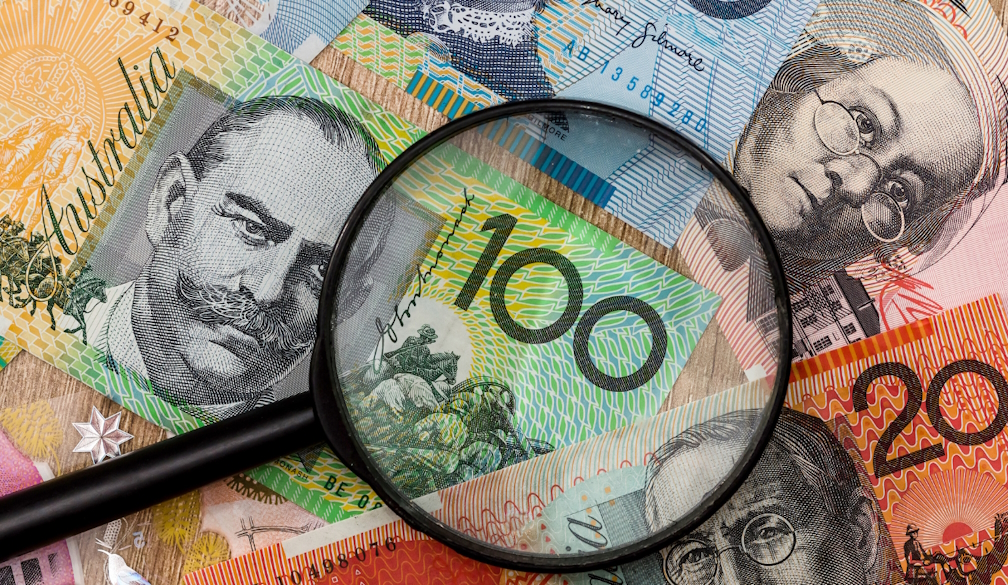
Australia has avoided recession and recorded another quarter of economic growth. Yet for households carrying larger mortgages, paying more for food and fuel and watching their spending more carefully, the official result may bear little resemblance to everyday life.
Australia’s economy grew by 0.4 per cent during the June quarter and by 2.1 per cent over the year, according to the latest national accounts.
Treasurer Jim Chalmers described the result as evidence of Australia’s resilience amid war, global uncertainty and higher energy costs.
That assessment is not without foundation. Australia continues to grow, unemployment remains comparatively low and dwelling investment has strengthened. The economy has absorbed considerable international disruption without falling into recession.
But the headline GDP number tells only part of the story.
Once population growth is taken into account, GDP per person was unchanged during the quarter. Labour productivity was also flat and remained 0.2 per cent lower than a year earlier.
Australia became economically larger, but the economic position of the average Australian barely advanced.
That distinction helps explain why a positive set of national accounts has not produced a positive national mood.
Growth without the feeling of progress
Gross domestic product measures the total value of goods and services produced across the economy. It is an important measure, but it does not tell us how the benefits are distributed or whether individual households are becoming more prosperous.
An economy can grow because its population has increased, even when production per person has hardly moved.
The latest figures show GDP per capita was effectively unchanged in the June quarter. It was 0.7 per cent higher over the year, but the immediate momentum has stalled.
Real net national disposable income per person — a broader indication of the income Australians have available after accounting for depreciation and international income flows — fell by 0.4 per cent during the quarter.
That is much closer to the experience many Australians describe.
The country may be producing more in total, but higher housing costs, interest payments, rents, insurance, food and transport expenses can consume any nominal improvement before households feel it.
Mortgage costs are still climbing
The effect of higher interest rates is now clearly visible.
Mortgage interest costs rose by 10.4 per cent in the June quarter. The Treasurer also acknowledged that the full effects of recent interest-rate increases have yet to flow through the economy.
That matters because mortgage payments are not discretionary. A household can postpone a holiday, reduce restaurant visits or delay replacing furniture, but it cannot simply ignore its home loan.
Higher repayments remove money from other parts of the economy. Retailers, hospitality businesses, tourism operators and service providers eventually feel the consequences when households cut spending elsewhere.
Those renting their homes are not insulated. Landlords facing larger financing, insurance, maintenance and compliance costs may attempt to recover some of that increase through higher rents.
The pressure therefore travels through the economy, even if it reaches Australians in different ways.
Australians are spending differently
Household consumption increased by 0.4 per cent during the quarter, but that result also requires explanation.
Vehicle purchases rose by 10.3 per cent and accounted for almost two-thirds of the quarterly increase in household consumption. The shift was led by increased purchases of electric and more fuel-efficient vehicles as high petrol prices changed buying decisions.
This does not necessarily represent a broad return of consumer confidence.
It suggests that Australians are rearranging their spending in response to fuel prices. Some households with the financial capacity to do so are paying more upfront for a vehicle that may reduce their future exposure to petrol costs.
At the same time, spending associated with operating vehicles fell by 0.6 per cent, while expenditure connected with overseas travel weakened.
This is the national accounts version of a familiar household response: drive less, reconsider travel and look for ways to reduce continuing fuel costs.
It also demonstrates how deeply the Middle East conflict and global oil disruption are now reaching into the Australian economy. The consequences are no longer confined to the price displayed outside service stations.
Higher oil costs are affecting freight, aviation, agriculture, construction, manufacturing and household decisions.
The Australian Bureau of Statistics reported that rising input costs weighed on energy- and fuel-intensive industries. Import prices for fuel, fertiliser and plastics increased, while air and sea freight costs were also affected.
Those increases eventually travel along supply chains and appear in the prices paid by consumers.
Some genuine strengths remain
The national accounts were not uniformly weak.
Dwelling investment grew by 1.6 per cent during the quarter and was 5.8 per cent higher over the year. Both new construction and renovation activity contributed.
Real household gross disposable income per person rose by 0.3 per cent in the quarter and 0.9 per cent over the year. The household saving ratio also edged higher, from 6.4 to 6.5 per cent.
These are useful signs of resilience.
Private business investment fell by 0.5 per cent during the quarter, although it remained 10.5 per cent higher over the year following earlier strength. The government also points to a substantial pipeline of proposed capital expenditure.
Australia is therefore not experiencing an economic collapse. Nor do the figures justify declaring that nothing has improved.
The more accurate conclusion is that growth is modest, uneven and vulnerable.
The productivity problem
The most important long-term warning is productivity.
Productivity measures how effectively an economy turns labour, capital and technology into goods and services. When productivity improves, businesses can pay higher wages and expand production without necessarily increasing prices at the same rate.
When productivity stagnates, wage increases become more difficult to sustain without adding to inflation or squeezing business margins.
GDP per hour worked was unchanged during the June quarter and fell by 0.2 per cent over the year.
Australia cannot rely indefinitely on population growth, higher property values or government expenditure to create the appearance of economic progress.
New workers and consumers can make the economy larger, but lasting improvements in living standards require each hour of work to produce more value.
That depends on investment, skills, technology, infrastructure, competition, reliable energy and regulation that permits businesses to expand without abandoning necessary protections.
Productivity reform is less politically attractive than announcing a subsidy or immediate payment. Its benefits also take longer to appear. But without it, Australia risks repeating the same cycle: weak growth per person, persistent inflation and greater pressure on interest rates.
Could interest rates rise again?
The GDP result creates another complication for the Reserve Bank.
A stronger-than-expected headline number may be interpreted as evidence that the economy can withstand another interest-rate increase. Persistent domestic price pressures and weak productivity add to that risk.
But the detailed figures also show an economy already responding to higher rates. Consumption growth is subdued, mortgage interest costs are surging and private business investment declined during the quarter.
The Reserve Bank must therefore distinguish between an economy that is genuinely gathering strength and one that is merely continuing to grow in aggregate while households lose momentum.
Another rate increase might suppress demand further, but it would also intensify pressure on borrowers, renters, businesses and the housing market.
GDP alone should not determine that decision.
The political figures and the household figures
The government is entitled to say Australia has remained resilient. Growth of 2.1 per cent over the year compares favourably with several other advanced economies, particularly against a background of global conflict and expensive energy.
Australians are equally entitled to say they do not feel better off.
Both propositions can be true.
The government sees total economic production, employment and international comparisons. Households see mortgage statements, rents, grocery bills, insurance renewals and the price of filling a vehicle.
The distance between those two perspectives is where much of the national dissatisfaction now resides.
Political leaders cannot overcome that dissatisfaction simply by quoting the headline GDP figure. They must demonstrate how national growth will become greater security and purchasing power for the individual.
The Times View
Australia’s economy is growing, but growth alone is not the test of prosperity.
The latest figures show a country that has resisted recession and retained important economic strengths. They also show stagnant quarterly output per person, weak productivity, falling real national disposable income per capita and sharply higher mortgage interest costs.
There is no contradiction between official economic growth and public dissatisfaction. The economy has grown larger, but many Australians have received little immediate benefit from that expansion.
A sustainable recovery cannot be judged solely by the size of GDP. It must eventually produce stronger productivity, viable businesses, affordable housing and rising living standards per person.
Until Australians can feel economic improvement in their household budgets, announcements of national growth will continue to sound remote from the country they experience every day.