Australia has switched on a giant new gas resource — and Hormuz has changed what it means
- Written by: The Times
Gas has begun flowing from the Northern Territory’s Beetaloo Basin for the first time. The initial volumes are small. The potential resource is enormous. And a global energy crisis thousands of kilometres away has suddenly made the question of what Australia does with it much more important.
For more than a decade, the Beetaloo Basin has been discussed largely in the future tense.
It could produce gas.
It could support jobs.
It could supply eastern Australia.
It could feed LNG plants.
It could become one of Australia's great new energy provinces.
This week, one important word changed.
Could became does.
Gas from the Beetaloo is now physically flowing into the Northern Territory's energy network.
More than 40 terajoules a day from the Shenandoah South development is being delivered through the new Sturt Plateau Pipeline and into the Territory gas system.
It is modest compared with the enormous quantities of gas potentially contained beneath the Northern Territory.
But something fundamental has happened.
Beetaloo is no longer simply a geological prospect.
It is producing gas.
And it has happened at an extraordinary moment for world energy markets.
First gas from Beetaloo
The Northern Territory Government says first gas from Tamboran Resources' Shenandoah South project began flowing on September 1.
The gas travels through the Sturt Plateau Pipeline into the existing Amadeus Gas Pipeline system supplying Darwin and the Northern Territory.
The Commonwealth has also described the development as significant for Australia's longer-term energy security.
Federal Resources Minister Madeleine King put the change succinctly: after years of discussion about Beetaloo's potential, that potential has started becoming reality.
There is an important qualification.
The gas currently entering the system is appraisal gas from the pilot development — gas produced during the process of establishing and evaluating the resource.
It is not yet the beginning of enormous commercial production from across the basin.
The distinction matters.
Australia should neither underestimate what happened this week nor exaggerate it.
Forty terajoules a day will not transform the international LNG market.
But it demonstrates that gas can be extracted from Beetaloo, processed and transported into an operating pipeline system.
That is an important first step.
What exactly is the Beetaloo Basin?
The Beetaloo is a vast shale gas resource in the Northern Territory, hundreds of kilometres south-east of Darwin.
The Northern Territory Government puts the basin-wide gas-in-place estimate at more than 430 trillion cubic feet.
Recoverable resources will inevitably be much smaller than the total amount of gas underground, and commercial recovery ultimately depends on geology, production costs, infrastructure, regulation and market prices.
Even so, the potential scale is enormous.
Reuters notes that companies operating there report at least 200 trillion cubic feet of recoverable gas.
For perspective, Australia exported about 77 million tonnes of LNG in 2025.
Australia is already one of the world's great gas-exporting countries.
Beetaloo potentially gives it another major source.
Then Hormuz happened
This is where the story becomes much bigger.
Had Beetaloo begun producing several years ago, the event would primarily have been regarded as an Australian resources story.
Today it is also an energy-security story.
The war involving Iran has exposed one of the great vulnerabilities in the world's energy system: enormous quantities of oil and gas depend upon narrow maritime passages.
The Strait of Hormuz is the most important example.
Qatar built one of the world's largest LNG industries on enormous gas reserves and highly efficient LNG facilities.
But its geography cannot be changed.
Its LNG ships must leave the Gulf.
And to reach customers in Asia and Europe, they normally have to pass through Hormuz.
The conflict has demonstrated what happens when that passage becomes dangerous.
According to Kpler data reported by Reuters, Qatar sent no LNG cargoes through Hormuz during August and only one during July.
Roughly six million tonnes of monthly Qatari LNG supply has effectively been removed from normal international trade.
The consequences have been dramatic.
Asian spot LNG prices reached US$25.80 per million British thermal units this week, according to Argus data reported by Reuters.
That is the highest level in almost four years and about 150 per cent above the level immediately before the Iran war.
This is not simply an argument about the price of gas.
It is an argument about where the gas comes from.
Australia's enormous geographic advantage
Australia possesses something Qatar cannot buy.
Geography.
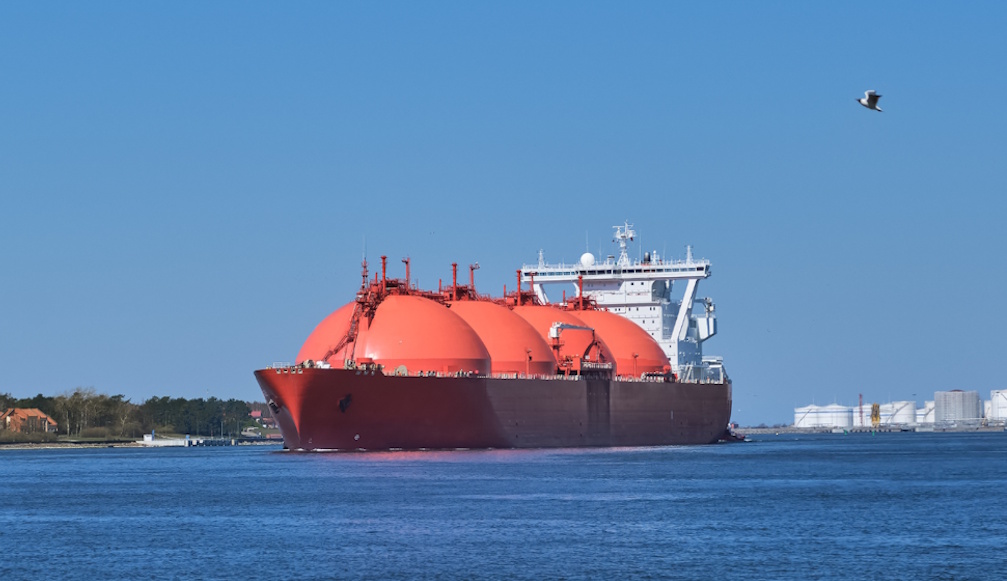
An LNG carrier leaving Darwin for Japan, South Korea or China does not have to navigate the Strait of Hormuz.
Nor does a vessel leaving Australia's enormous Western Australian LNG operations.
Australia is positioned close to the largest Asian LNG-consuming economies without its exports being trapped behind the world's most dangerous energy chokepoint.
That advantage existed before the Iran conflict.
The conflict has made its value much more obvious.
Energy security is no longer simply about finding the cheapest supplier.
Governments and major industrial customers increasingly have to ask another question:
Can the supplier reliably deliver the energy when the world is in crisis?
Australia has a powerful answer.
Beetaloo could feed Darwin LNG
There is already substantial LNG infrastructure in northern Australia.
INPEX operates the Ichthys LNG development near Darwin, with capacity of about 9.3 million tonnes annually.
Santos operates Darwin LNG, with capacity of about 3.7 million tonnes.
Santos also has approval for a second LNG train in Darwin.
That creates an obvious long-term possibility.
If Beetaloo reaches large-scale commercial production, some of its gas could potentially provide feedstock for expanded LNG exports from Darwin.
There are also proposals to move Beetaloo gas east.
APA is examining infrastructure that could eventually connect large-scale Beetaloo production with Queensland and Australia's east-coast gas network.
Jemena is separately progressing a proposed connection between Beetaloo and the existing Northern Gas Pipeline.
None of those large-scale proposals should be confused with what began operating this week.
They require investment, approvals, customers and years of construction.
But the strategic question has changed.
It is no longer:
Is there gas in Beetaloo?
Increasingly it is:
Where should Australia send it?
Australian gas first?
That question will become politically important.
Australia faces concerns about future gas availability in its southern states as traditional fields decline.
If enormous new volumes eventually come from Beetaloo, Australians will reasonably ask why domestic households and businesses should not receive some of that supply.
The Commonwealth is already developing its approach to gas reservation and future domestic supply.
Beetaloo therefore presents Australia with potentially competing opportunities.
Gas could support the Northern Territory.
It could help reinforce eastern Australian supply.
It could support manufacturing.
It could underpin industrial development in northern Australia.
It could supply new electricity-intensive industries.
And it could potentially be converted into LNG and exported into an Asian market increasingly concerned about energy security.
The correct answer may not be choosing just one.
A resource of sufficient scale could potentially serve several markets — provided the economics support the infrastructure required to move it.
Infrastructure is the next great challenge
Finding gas and producing gas are only part of the equation.
A giant gas field in remote Australia has limited value if there is no economical way of transporting enormous volumes to customers.
The existing Sturt Plateau Pipeline can move the initial production into the Territory system.
Large-scale development would require much more.
Pipelines are expensive.
Processing facilities are expensive.
LNG trains are extremely expensive.
Building several competing pieces of infrastructure can also make the final gas unnecessarily expensive.
The Commonwealth's Beetaloo strategic planning has previously warned that poorly coordinated or duplicated infrastructure could add billions of dollars to development costs.
That makes common-user infrastructure potentially important.
Australia has a remarkable resource.
The next challenge is designing the system around it intelligently.
There is another side to Beetaloo
Any serious assessment also has to acknowledge why development remains controversial.
Beetaloo is shale gas.
Extracting it involves hydraulic fracturing.
Environmental organisations oppose its development because of concerns including greenhouse emissions, water, landscape impacts and the scale of development that could eventually occur.
Those concerns have not disappeared because gas prices have risen or because Hormuz has become dangerous.
Development remains subject to Northern Territory and Commonwealth environmental regulation.
There are also questions about the ultimate economic benefits.
Forecasts of thousands of jobs and billions of dollars in economic activity depend upon how extensively the basin is eventually developed.
The first gas flowing this week does not prove every optimistic forecast about Beetaloo.
Nor does opposition to fossil fuels make the resource strategically irrelevant.
Both propositions can be true.
The debate should now be based upon what the resource actually is, what it could realistically produce, what development would cost and what benefits and consequences would follow.
Hormuz has changed the calculation
This may ultimately be the greatest consequence of the current international energy crisis for Australia.
Hormuz has demonstrated that energy security cannot be measured solely by the number of barrels of oil or cubic metres of gas theoretically available somewhere in the world.
Location matters.
Shipping routes matter.
Insurance matters.
Political stability matters.
Military security matters.
The ability to deliver the product matters.
Australia possesses enormous energy resources in a politically stable country, close to the world's largest prospective energy market.
Beetaloo adds another potentially enormous resource to that position.
Asian natural gas demand is expected to continue growing over the coming decade.
Japan, South Korea and China will continue thinking carefully about where their future energy comes from.
The Iran conflict has given them another reason to value diversification.
Australia should recognise what that means.
The Times View
The first gas from Beetaloo is not going to rescue the world's LNG market.
Forty terajoules a day is tiny compared with international energy consumption.
But focusing only on today's volume misses the significance of the event.
Australia has switched on another gas province.
For years, Beetaloo was principally an argument about what might happen one day.
One day has arrived.
The first gas is flowing.
The much larger questions now concern scale, infrastructure, environmental management, domestic supply and whether some of this enormous resource should eventually be exported as LNG.
The Strait of Hormuz has added another consideration.
Australia has just watched one of the world's largest LNG suppliers become severely constrained not because Qatar ran out of gas, but because geography prevented it from reliably getting that gas to its customers.
Australia does not have that problem.
That does not mean we should develop Beetaloo at any cost.
It means its strategic value should now be assessed in a world that has been reminded, very abruptly, that having energy and being able to deliver energy are two different things.
Beetaloo has gas.
This week Australia proved it can bring some of it to the surface.
What we do with the rest could become one of the country's most consequential energy decisions.