Iran threatens tighter Hormuz restrictions as oil passes US$95 — Australia’s fuel relief moves further away
- Written by: The Times
Just days ago, there were credible signs that the global oil crisis centred on the Strait of Hormuz might finally be beginning to ease.
Mines were being cleared.
Negotiations involving Iran and Oman offered the prospect of a temporary navigational corridor.
Increasing quantities of oil appeared to be escaping the Persian Gulf.
There was even evidence that conventional ship-tracking data had substantially underestimated the amount of crude passing through the Strait because some tankers were travelling without normal tracking signals.
Then the military confrontation escalated again.
The United States struck Iranian positions on Larak Island.
Iran retaliated with missile attacks against American military facilities.
Two Saudi crude-oil supertankers were attacked while leaving Hormuz.
The United States continued striking Iranian targets.
Iran threatened further restrictions on shipping.
And the international oil market responded.
Brent crude has now moved above US$95 a barrel.
For Australia, the important conclusion is becoming difficult to avoid.
The expected journey from war towards normal fuel markets has suffered a serious setback.
Oil has risen sharply
Brent crude moved above US$95 a barrel on September 2 after already recording a substantial rise during the previous trading session.
That represents a significant change in market sentiment.
Oil traders are no longer simply assessing whether sufficient petroleum can physically escape the Persian Gulf.
They are again pricing the possibility that renewed military escalation could interrupt those flows.
This distinction matters.
Oil prices contain more than the cost of producing oil.
During a geopolitical crisis they also contain a risk premium.
Markets effectively ask:
What is the probability of another tanker being attacked?
Could Iran deploy more mines?
Could the United States escalate further?
Could Gulf energy infrastructure be attacked?
Could Hormuz become substantially more difficult to navigate?
The answers to those questions have become less reassuring.
The Larak Island strike changed the trajectory
The immediate escalation began when US forces attacked Iranian positions on Larak Island, strategically positioned near the Strait of Hormuz.
American officials said Iranian forces were preparing rockets carrying sea mines that could have been deployed against shipping.
The implications were serious.
Mining Hormuz again could have reversed months of painstaking attempts to restore maritime traffic.
Iran subsequently retaliated by launching ballistic missiles towards American military facilities in Jordan.
The military damage from that particular attack appears to have been limited.
Its strategic significance was much greater.
Six months into the conflict, Iran demonstrated that despite enormous damage inflicted by the United States and Israel, it retained sufficient ballistic-missile capability to respond.
Further American attacks followed.
Iran responded with additional missile and drone activity.
The conflict had moved back towards escalation.
Then the tankers were attacked
Perhaps the most consequential development for the global economy was not an attack on a military installation.
It was an attack on commercial shipping.
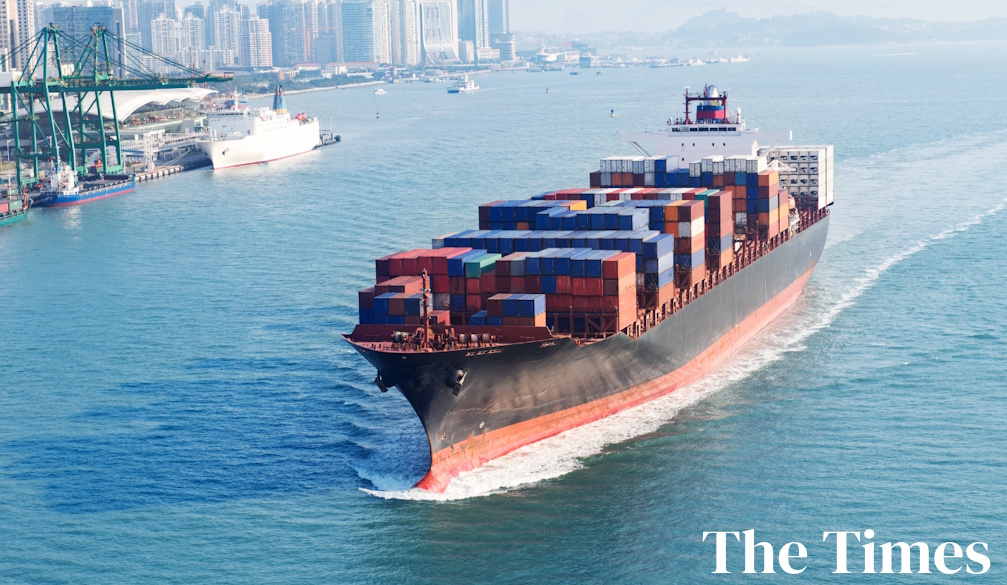
Two supertankers carrying Saudi Arabian crude were struck by unidentified projectiles while leaving the Strait of Hormuz.
Each vessel was reportedly carrying approximately two million barrels of crude.
No crew casualties were reported.
Responsibility for those attacks should not be attributed without reliable evidence.
But from the perspective of the oil market, responsibility is only part of the problem.
The attacks occurred.
Shipowners know it.
Insurers know it.
Tanker crews know it.
Oil traders know it.
A shipping company deciding whether to send a vessel worth tens of millions of dollars through a war zone must price the risk irrespective of which combatant ultimately caused the previous attack.
That is how military events become economic events.
Yet enormous quantities of oil are still getting through
There is an apparent contradiction.
At the same time that military risk has increased, substantial quantities of oil have apparently continued moving through Hormuz.
US Energy Secretary Chris Wright said approximately 17 million barrels of crude oil passed through the Strait on Monday, August 31.
If accurate, that would represent the largest volume to transit Hormuz since war-related restrictions severely disrupted the route.
That is encouraging.
It also helps explain one of the puzzles of recent weeks.
Visible tanker movements had suggested extraordinarily low oil flows.
But maritime analysts subsequently identified extensive movements by so-called dark tankers — vessels travelling with their Automatic Identification System signals switched off or otherwise not appearing in conventional ship-tracking counts.
The result is that more oil may have been moving through Hormuz than the visible ships suggested.
That is important information.
But it does not mean the crisis is over.
Seventeen million barrels in one day is not normality
A single large movement can occur because ships have accumulated while waiting for an opportunity to transit.
What matters is whether substantial flows can continue day after day.
That remains uncertain.
Conventional commodity-vessel movements through Hormuz have recently remained extraordinarily low.
Some daily counts have fallen to around five vessels.
On one recent day, none of the visible vessels was a liquid tanker.
Dark shipping complicates those figures considerably.
But dark shipping itself tells us something.
A genuinely normal international shipping system does not require large numbers of commercial vessels to conceal their movements through one of the world's most important waterways.
The test of recovery is therefore not whether oil can get through.
It is whether oil can move through normally, predictably and cheaply.
We are not there yet.
Iran is now threatening tighter restrictions
The latest warning from Iran's Revolutionary Guard makes the situation more difficult again.
Iran has indicated that traffic through Hormuz could face additional restrictions.
Whether Tehran ultimately implements those restrictions remains to be seen.
But oil markets cannot simply ignore the threat.
Iran possesses geography that gives it influence disproportionate to the size of its economy or conventional military forces.
It sits beside the maritime entrance to the Persian Gulf.
The Strait of Hormuz carries petroleum from some of the world's largest producing countries.
Iran therefore does not have to stop every tanker.
It merely has to create enough uncertainty to alter commercial behaviour.
That uncertainty has returned.
Iran itself is paying an enormous price
There is another side to the story.
The American campaign appears to be inflicting substantial economic damage on Iran.
Shipping estimates indicate Iranian crude loadings have fallen dramatically from levels around two million barrels a day earlier in the conflict to only a fraction of that amount during August.
That deprives Tehran of critical export revenue.
It also demonstrates the effectiveness of American pressure.
But it creates another strategic question.
As Iran's ability to export its own petroleum becomes increasingly constrained, does Tehran have more incentive to interfere with the ability of neighbouring Gulf producers to export theirs?
That possibility is one reason Hormuz remains so dangerous.
The United States can impose enormous costs on Iran.
Iran retains the ability to impose costs on the international economy.
Australia sits firmly within that second category.
Australia’s problem is increasingly refined fuel
The crude-oil price attracts the headlines.
It is not the whole Australian story.
Australia imports large quantities of refined petroleum products.
Australian petrol prices are influenced strongly by the Singapore Mogas 95 benchmark.
Diesel prices are influenced by Singapore Gasoil 10 ppm.
Jet fuel operates through its own international refined-product market.
Those markets are experiencing their own disruption.
Recent data indicate Asian refined-fuel imports have fallen substantially since the war began.
Middle Eastern exports have been disrupted.
At the same time, Russia has extended restrictions on diesel exports while its refining sector deals with separate disruptions.
Multiple pressures are therefore converging on the international diesel market.
That is particularly important for Australia.
Diesel is the fuel of the productive economy
Petrol prices dominate public discussion because motorists see them every day.
Diesel is arguably the more important economic fuel.
Australia's trucks use diesel.
Farm machinery uses diesel.
Mining equipment uses diesel.
Construction equipment uses diesel.
Regional businesses depend heavily upon diesel.
Higher diesel costs therefore travel through the economy.
They increase freight costs.
Freight increases the cost of food.
It increases retail distribution costs.
It affects construction.
It affects agriculture.
It affects mining.
Eventually those costs can contribute to inflation.
That is why the latest Hormuz developments are not simply another Middle Eastern foreign-policy story.
They can ultimately affect the price of groceries in an Australian supermarket.
Aviation remains exposed
Australia's airlines face the same international energy system.
Jet fuel represents one of their largest operating costs.
The consequences of expensive aviation fuel extend well beyond airline shareholders.
Higher costs can eventually affect ticket prices.
They can influence route economics.
They affect tourism.
They particularly matter to regional Australia, where aviation is frequently an essential service rather than a discretionary luxury.
Australia's geographic isolation also makes international aviation unusually important to trade and tourism.
A prolonged international jet-fuel shock therefore has consequences throughout the economy.
What about petrol?
Australian motorists should not assume that Brent moving above US$95 means petrol prices immediately rise by an equivalent amount.
Nor should they assume that Brent falling tomorrow would immediately produce cheaper petrol.
Australia's retail fuel supply chain contains delays.
The ACCC has previously explained that movements in international benchmark prices generally take around two weeks to work through supply chains in Australia's major cities.
Regional areas can take longer.
Retail petrol cycles can also temporarily obscure the underlying movement in wholesale costs.
The Australian dollar matters as well because international petroleum products are generally traded in US dollars.
The result is a complicated transmission mechanism.
But sustained international increases eventually matter.
The excise cushion is gone
There is another important difference between the present situation and earlier stages of the crisis.
The Australian Government's temporary fuel-excise assistance has ended.
The original intervention reduced the effective tax burden substantially before being progressively tapered.
The remaining temporary reduction ended on August 2.
That means Australians are now more directly exposed to movements in the underlying international fuel market.
If international petrol and diesel prices remain elevated, there is no longer the same temporary tax cushion insulating motorists.
Whether the government would intervene again if prices rose dramatically is ultimately a political and fiscal decision.
At present, there has been no announcement of another broad fuel-excise reduction.
Australia has fuel — this is not a shortage warning
The situation needs to be kept in perspective.
Australia is not presently running out of fuel.
The Federal Government has continued to report substantial petrol, diesel and aviation-fuel holdings.
Australia remains at Level 2 — Keep Australia Moving — under the National Fuel Security Plan.
Ships carrying fuel continue to travel towards Australia.
There is no basis for panic buying.
The more immediate danger is economic.
Australia can have fuel available while simultaneously paying substantially more for it.
That is exactly why the international refined-fuel market matters.
Availability and affordability are different problems.
Inflation becomes part of the story again
This is where Hormuz reaches Martin Place.
Australia's inflation problem does not originate solely with oil.
The Reserve Bank does not set interest rates according to the Brent crude price.
But sustained increases in fuel prices can spread through an economy.
Transport becomes more expensive.
Businesses face higher costs.
Air travel becomes more expensive.
Freight charges rise.
Some of those increases eventually reach consumers.
A temporary oil-price spike may have limited lasting significance.
A prolonged energy shock is different.
If the Iran conflict keeps crude and refined-product prices elevated for months, Australia's inflation outlook becomes more difficult.
That could influence the environment in which the Reserve Bank makes future interest-rate decisions.
The consequences of Hormuz can therefore eventually reach Australian mortgages as well as Australian petrol pumps.
What would genuine recovery look like?
Not another announcement.
Not one exceptionally busy day of oil movements.
And not merely a fall in Brent.
A genuine recovery would involve several things happening together.
Iran and the United States would stop exchanging attacks.
Mine-laying would cease.
Commercial tankers would return openly and consistently.
War-risk insurance premiums would fall.
Shipowners would no longer feel the need to conceal movements.
Gulf crude would reliably reach Asian refineries.
Middle Eastern refined-fuel exports would recover.
Singapore petrol and diesel benchmarks would fall.
And those lower international prices would eventually work through Australia's wholesale and retail fuel system.
Until that sequence begins, declarations that Hormuz has reopened should be treated cautiously.
The contradiction defines the crisis
The extraordinary feature of the present situation is that apparently contradictory things are happening simultaneously.
Huge quantities of oil can pass through Hormuz.
And tankers can still be attacked.
Iran's military capability can be severely degraded.
And Iran can still fire ballistic missiles.
The United States can dominate the conventional military contest.
And Iran can still influence the international oil price.
Crude supply can improve.
And Australia's refined-fuel costs can remain elevated.
That is why this conflict has proved so difficult to resolve economically.
The military battle and the fuel market are related.
They are not identical.
The Times View
The hoped-for progression towards normality in the Strait of Hormuz has suffered a serious setback.
There are encouraging signs.
Oil is moving.
Possibly much more oil than conventional tanker tracking initially suggested.
A reported 17 million barrels passing through Hormuz in a single day demonstrates that the Strait is not physically closed.
But that is not the same as saying Hormuz is functioning normally.
Two Saudi supertankers have been attacked.
The United States and Iran are exchanging military strikes again.
Iran is threatening tighter shipping restrictions.
Brent crude has moved above US$95.
And the Asian refined-fuel system upon which Australia depends remains under pressure.
For Australians, the lesson is straightforward.
Do not watch only the oil price.
Watch the tankers.
Watch Singapore petrol and diesel prices.
Watch insurance and freight.
Watch the Australian dollar.
And watch whether one successful day of shipping becomes a week, then a month.
When tankers once again sail routinely through Hormuz without becoming international news, we will know that the crisis is genuinely receding.
Until then, Australia has fuel.
But the prospect of substantially cheaper fuel has moved further away.