G7 backs Trump on Iran: What does Australia gain?
- Written by: The Times
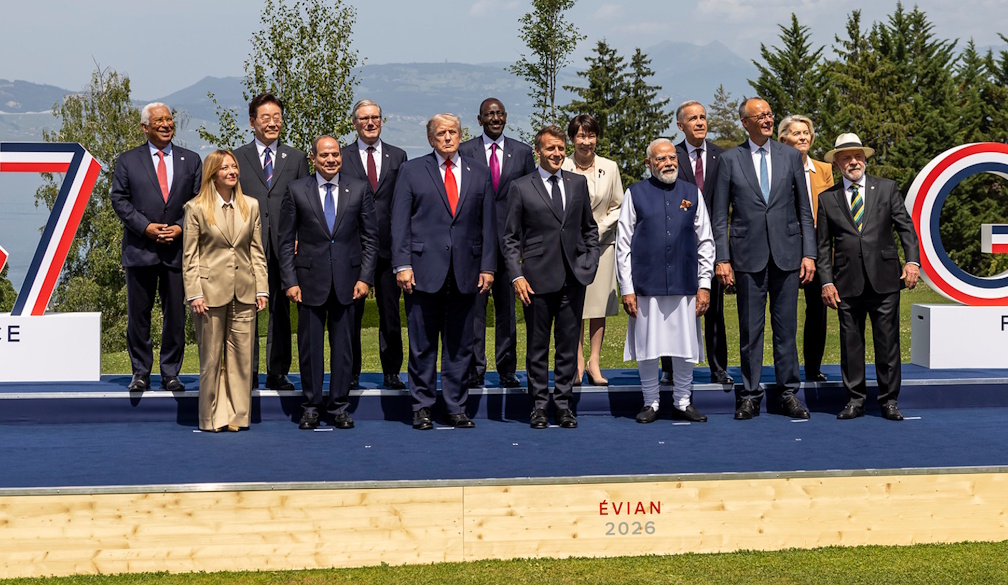
For most Australians, a meeting of the G7 on the other side of the world can seem distant and disconnected from everyday life. Yet the decisions made by the world's largest advanced economies often have immediate consequences for Australian households and businesses.
The G7's support for United States President Donald Trump's efforts to end the conflict with Iran is one such moment.
Whether supporters or critics agree with Trump's approach, the question for Australia is straightforward: if the fighting subsides, what is in it for us?
The first and most immediate benefit is energy security.
Much of the world's oil passes through the Strait of Hormuz. Every escalation in the Middle East raises concerns that shipping could be disrupted, sending global oil prices sharply higher. Australia imports much of its refined fuel, meaning motorists, transport companies, farmers and airlines quickly feel the effects whenever world oil prices spike. The G7 has welcomed measures aimed at restoring maritime traffic through the Strait, reflecting the importance of keeping this critical shipping route open.
The second benefit is inflation.
Higher fuel prices eventually find their way into almost everything Australians buy. Freight becomes more expensive, supermarkets face higher transport costs, manufacturers pay more for raw materials and electricity prices often remain under pressure. A more stable Middle East reduces the risk of another inflation shock just as many Australians are hoping interest rates continue to ease.
Third comes business confidence.
Companies invest when they believe conditions are becoming more predictable. Importers, exporters, retailers and manufacturers all prefer stable shipping routes and reliable energy prices. Reduced geopolitical risk makes long-term investment decisions easier and lowers uncertainty throughout the economy.
Australian exporters also stand to benefit.
Agricultural producers, miners and manufacturers all rely on efficient international shipping. Any reduction in insurance costs, freight delays or supply chain disruptions improves Australia's competitiveness in overseas markets.
Financial markets also welcome certainty.
Periods of conflict often trigger volatility in share markets, currencies and commodity prices. Investors generally respond positively when the risk of wider regional conflict begins to diminish, allowing businesses to plan with greater confidence.
There are, however, reasons for caution.
The G7's endorsement does not guarantee lasting peace. Important issues remain unresolved, including Iran's missile program and wider regional security concerns. Even President Trump has warned that military action could resume if agreements are breached.
Australia should therefore view the latest developments with cautious optimism rather than celebration.
If diplomacy succeeds, Australians may never notice the benefits directly. Petrol prices may stabilise rather than surge. Shipping costs may remain manageable. Inflationary pressures may ease instead of accelerating.
Sometimes the greatest economic benefit is not a dramatic boom, but the avoidance of another costly global crisis.
For Australia, that may prove to be the most valuable outcome of all.
G7 Summit: The Nine Key Declarations
Alongside support for the United States-led Iran initiative, G7 leaders issued nine significant declarations that could shape the global economy and international security over the coming months.
1. Iran and Middle East Stability
Backing diplomatic efforts to end the Iran conflict, reopen the Strait of Hormuz and reduce the risk of further regional escalation.
2. Ukraine
Reaffirming support for Ukraine, including additional military assistance and continued economic pressure on Russia.
3. Artificial Intelligence
Promoting responsible AI development while encouraging innovation and economic growth across advanced economies.
4. Global Economic Growth
Working together to improve resilience, strengthen supply chains and support long-term investment in member economies.
5. Critical Minerals
Reducing dependence on vulnerable supply chains by securing reliable sources of strategic minerals essential for modern manufacturing and defence.
6. Maritime Security
Supporting measures to protect commercial shipping and restore confidence in one of the world's most important trade routes through the Strait of Hormuz.
7. Organised Crime
Increasing cooperation against international drug trafficking, organised crime networks and money laundering.
8. Human Smuggling
Expanding efforts to combat people-smuggling and human trafficking while strengthening border security.
9. International Cooperation
Reaffirming that despite political differences, the world's leading democracies intend to cooperate on security, economic stability and emerging global challenges.
Why it matters to Australia
Many of these declarations have direct consequences for Australians. Stable energy supplies, safer shipping routes, lower inflation, secure export markets, stronger supply chains and improved international trade all support Australia's economic outlook. While the G7 cannot solve every global problem, its decisions influence the environment in which Australian businesses operate and Australian families manage their household budgets.