CLIMATE CHANGE: Science, Money and Motives — What’s Really Driving the Global Debate
- Written by: Times Media
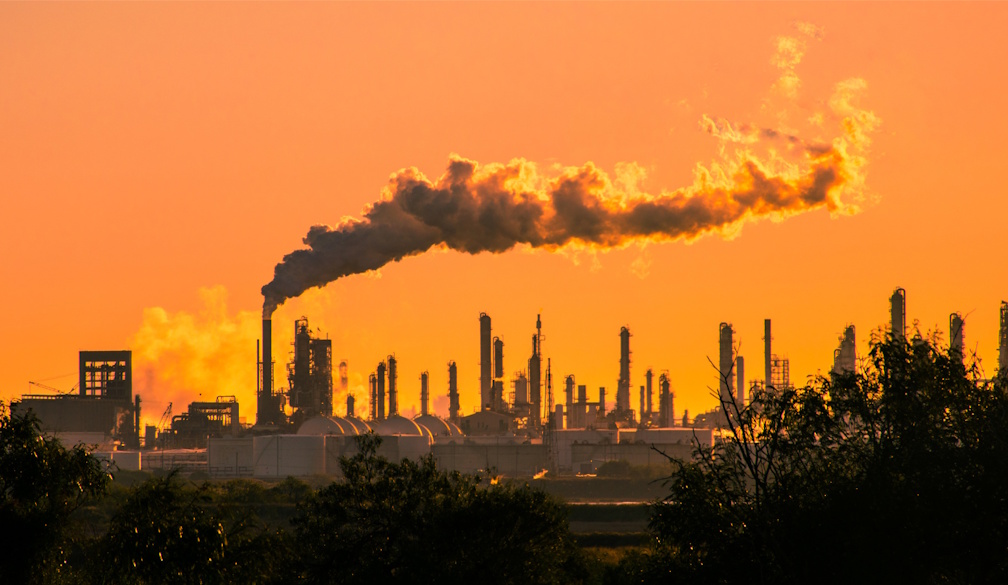
Climate change is no longer a fringe discussion. It sits at the centre of global policy, investment flows, industrial strategy and everyday consumer decisions. But alongside the science sits a growing wave of scepticism, confusion and suspicion — particularly around money, influence and who ultimately benefits.
So, is climate change “a thing”? And if it is, who is shaping the narrative?
The Science: Settled or Still Contested?
From a scientific standpoint, climate change is well established as a measurable phenomenon. Global temperatures have risen over the past century, polar ice has retreated, and extreme weather events are becoming more frequent and intense.
The more nuanced question is not whether climate change exists, but the degree of human contribution versus natural climate variability.
Most climate scientists attribute a significant portion of recent warming to human activity — primarily:
- Burning fossil fuels (coal, oil, gas)
- Deforestation reducing carbon absorption
- Industrial processes and agriculture
However, critics point to:
- Historical climate cycles long before industrialisation
- The complexity of climate systems and modelling limitations
- The difficulty in isolating human influence from natural variability
The reality sits somewhere in between: climate systems are complex, but human activity is widely considered a meaningful accelerating factor.
The Money: A Multi-Trillion-Dollar Ecosystem
Where the debate becomes more charged is in the economics.
Climate change is not just a scientific issue — it is now a massive global industry.
Capital is flowing into:
- Renewable energy (solar, wind, battery storage)
- Electric vehicles (EVs)
- Carbon credits and emissions trading schemes
- Government subsidies and infrastructure programs
- ESG (Environmental, Social, Governance) investment funds
This has created a powerful financial ecosystem involving:
- Governments
- Corporations
- Financial institutions
- Technology manufacturers
It is not orchestrated by a “supreme leader,” but rather driven by aligned incentives. Governments want to meet targets, companies want growth, and investors want returns. When all three align, capital moves quickly — and at scale.
China: The Biggest Polluter and the Biggest Beneficiary
No discussion is complete without looking at China.
China presents one of the great paradoxes of the climate era:
- It is the largest emitter of greenhouse gases globally
- It continues to rely heavily on coal for energy
- Yet it dominates renewable manufacturing and supply chains
China leads in:
- Solar panel production
- Battery manufacturing
- Electric vehicle production
- Rare earth mineral processing
This creates an irony that is hard to ignore:
- Western nations push aggressive decarbonisation policies
- Those policies increase demand for green technologies
- Much of that technology is manufactured in China
In effect, climate policy in developed economies is helping to fuel Chinese industrial growth, even as China continues high-emission activity domestically.
The Automotive Shift: A New Industrial Revolution
China’s rise is particularly evident in the motor industry.
Electric vehicles are central to climate policy, and Chinese manufacturers are rapidly gaining global market share due to:
- Lower production costs
- Vertical integration of battery supply chains
- Strong government backing
Western automakers are now playing catch-up, reshaping entire industries in the process.
Climate policy has effectively triggered a once-in-a-generation industrial reset, with clear winners and losers.
The Influence Question: Coordination or Convergence?
The idea of a “telemarketing-style operation” driving climate messaging is provocative — but reality is less conspiratorial and more structural.
There is no single command centre directing global climate activism. Instead, what exists is a network effect:
- NGOs and advocacy groups campaigning for action
- Governments promoting policy agendas
- Media amplifying climate narratives
- Corporations aligning branding with sustainability
- Social media accelerating message distribution
This creates the appearance of coordination, but it is better understood as converging interests amplified by modern communication channels.
Digital platforms allow ideas — accurate or exaggerated — to spread rapidly. That includes:
- Scientific findings
- Activist messaging
- Corporate marketing
- Public fear and urgency
The result is a constant feedback loop that can feel overwhelming and, at times, engineered.Public Perception: Between Concern and Cynicism
For everyday Australians, the issue is increasingly practical:
- Energy prices
- Vehicle choices
- Housing efficiency requirements
- Government policy and taxation
Many accept climate change as real but remain sceptical about:
- The cost of solutions
- The fairness of global burden-sharing
- Whether policies are driven by science or economics
There is also growing concern that:
- Households bear the cost
- Corporations and governments capture the benefitsThe Bottom Line
Climate change is both:
- A scientific reality under active study, and
- A powerful economic and political force reshaping the global order
There is no single mastermind directing events. But there is no denying that enormous sums of money, policy influence and industrial transformation are flowing through the system.
The real question for Australians is not whether climate change exists — but:
- Who benefits from the response
- Who pays for it
- And whether the balance is fair
As the world transitions, one thing is certain: climate change is no longer just about the environment. It is about economics, power and the future structure of global industry.