Trump in China: How Beijing Is Selling the Visit to the Chinese Public
- Written by: The Times
Chinese state media and government messaging surrounding Donald Trump’s visit to Beijing has been carefully calibrated. The tone has not been triumphalist or openly confrontational. Instead, Chinese media outlets have largely framed the visit as evidence that China remains indispensable to global stability, trade and diplomacy — even as tensions persist over Taiwan, technology and Iran.
For Chinese audiences, the message appears to be this: despite years of tariffs, sanctions and political confrontation, the United States still needs China.
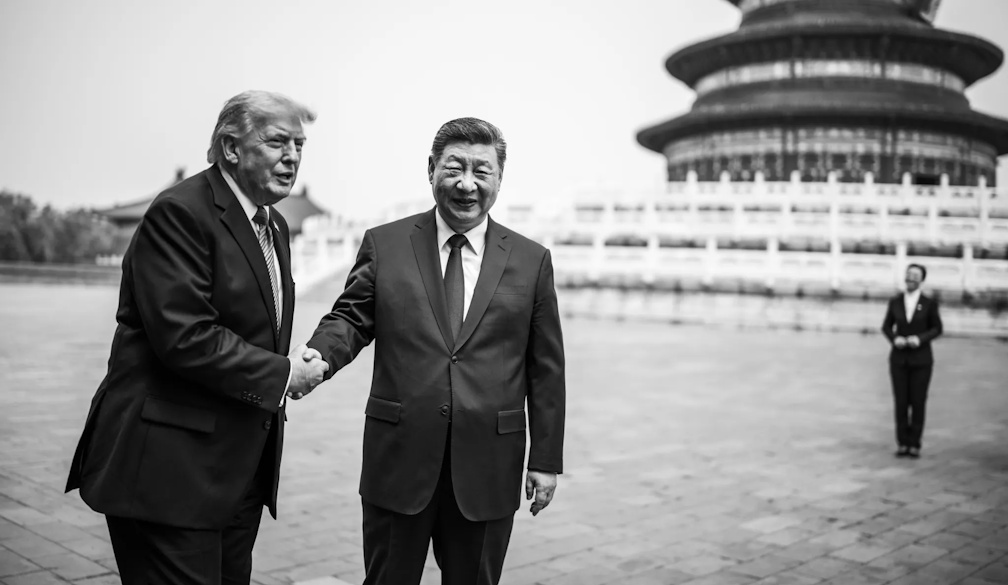
Chinese coverage has strongly emphasised mutual economic benefit and the symbolism of cooperation between Trump and Xi Jinping. State media highlighted ceremonial receptions, state banquets and personal interactions between the two leaders, presenting the relationship as one between powerful equals rather than rivals on the verge of conflict.
Chinese reports repeatedly stressed “stability” in US-China relations. Beijing appears eager to reassure domestic businesses and investors that economic engagement with America remains viable despite geopolitical tensions. Chinese commentary has particularly focused on trade, aviation deals, energy cooperation and expanded market access discussions.
An important component of the visit — and one heavily noted in both Western and Chinese reporting — is the entourage of American business leaders travelling alongside Trump.
Executives linked to major American corporations including technology, aviation and finance firms reportedly joined parts of the visit or associated business discussions. Reports referenced figures such as Elon Musk, Jensen Huang and senior executives connected to Boeing and Mastercard.
That business delegation matters enormously to Beijing’s narrative.
Chinese media has portrayed the presence of American corporate leaders as proof that influential parts of the US business community still want access to Chinese markets despite strategic rivalry between the two governments. The optics are powerful for the Chinese Communist Party: America’s political leadership may criticise China publicly, but America’s corporate elite still flies to Beijing seeking trade and opportunity.
For China’s domestic audience, this reinforces a long-running government theme that China’s economy remains too large and too important for the West to isolate successfully.
Taiwan, however, remains the central unresolved issue.
Chinese state media made a point of publicising Xi Jinping’s warnings to Trump over Taiwan. According to Chinese accounts, Xi reportedly described Taiwan as the most important and dangerous issue in the bilateral relationship and warned that mishandling the matter could lead to confrontation or conflict.
Importantly, Chinese coverage appears designed to show strength and consistency on Taiwan while simultaneously portraying China as the restrained and patient actor seeking stability.
This balancing act is politically important for Beijing. Chinese nationalism surrounding Taiwan has intensified significantly in recent years. The Communist Party cannot appear weak domestically, especially while economic growth pressures and international tensions persist.
Yet Chinese media also appears keen to reassure audiences that war is not inevitable and that dialogue with Washington continues.
Iran has emerged as another major issue shaping coverage of the summit.
The ongoing Iran conflict has elevated China’s geopolitical importance because Beijing maintains relationships with Tehran while also remaining critical to global energy supply chains. Chinese media has emphasised calls for stability, opposition to nuclear escalation and the importance of keeping trade routes open, particularly the Strait of Hormuz.
Interestingly, Chinese coverage has generally avoided presenting Beijing as subordinate to Washington’s Middle East agenda. Instead, the messaging suggests China is acting as a responsible great power pursuing regional stability in its own interests.
At the same time, American concerns about alleged Chinese assistance to Iran linger in the background. US officials have previously accused Chinese firms of supporting Iranian military and oil operations, although Beijing has denied direct military involvement.
Chinese reporting on the Trump visit therefore serves multiple domestic purposes simultaneously.
First, it projects China as globally respected and diplomatically central.
Second, it reassures Chinese businesses and citizens that economic engagement with America remains alive despite tensions.
Third, it demonstrates that Beijing will not compromise on Taiwan.
And fourth, it reinforces the Communist Party narrative that China is now a mature global superpower capable of dealing with Washington as an equal.
Perhaps the most striking feature of the coverage is what it says indirectly about the changing balance of power.
In earlier decades, American presidents visiting China were often portrayed as dominant Western leaders engaging with a rising power. The tone today is noticeably different. Chinese media increasingly presents these meetings as negotiations between two competing giants — with Beijing confident enough to publicly lecture Washington on Taiwan while welcoming American billionaires and executives eager to maintain access to the Chinese market.
Whether the summit ultimately delivers concrete breakthroughs may matter less to Beijing than the image it creates.
For Chinese state media, the optics alone appear valuable: Trump in Beijing, surrounded by American business leaders, seeking cooperation with the very country many in Washington once believed could be economically isolated.